

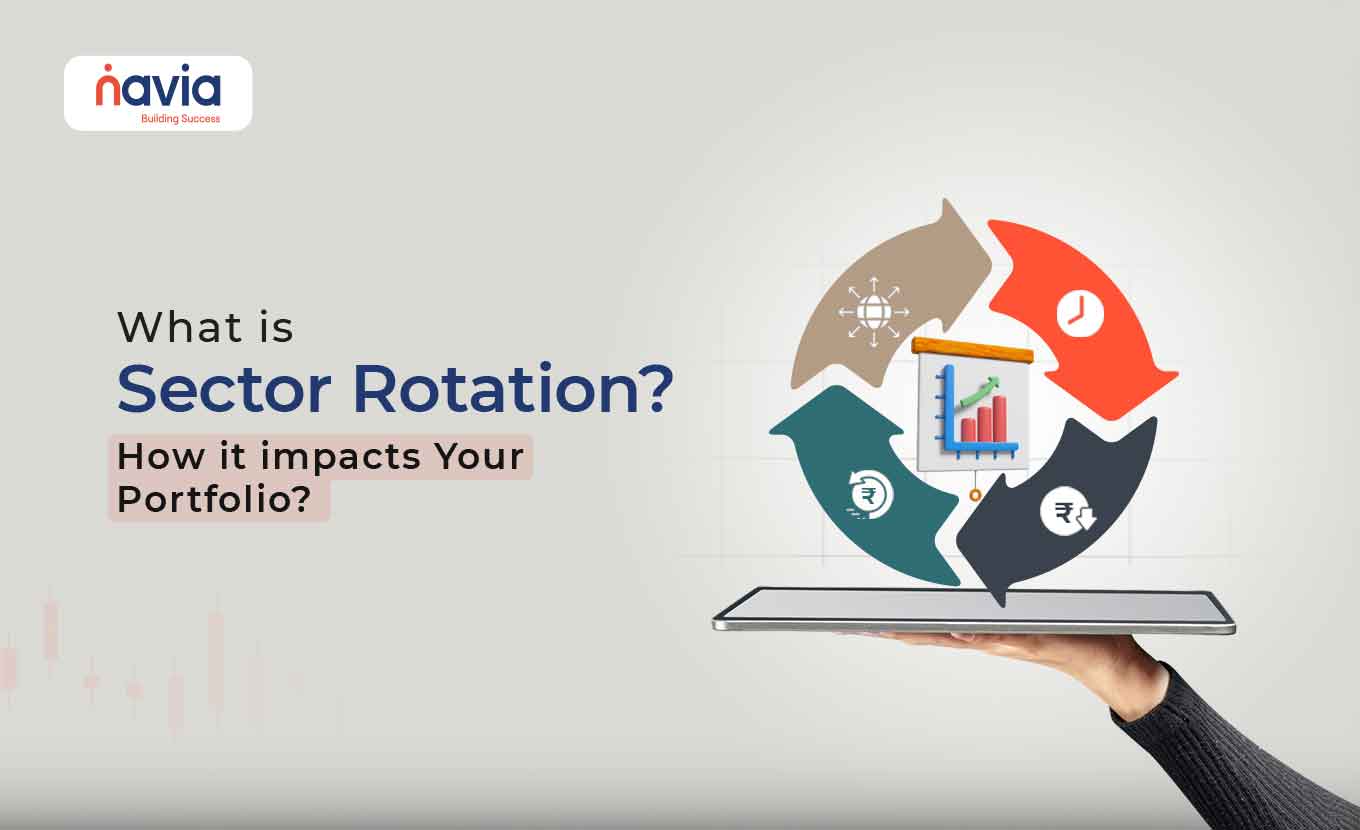
What is Sector Rotation? And How It Impacts Your Portfolio?
The stock market doesn’t move in a straight line; it will outperform at different time and industries while others lag. The concept is similar for sectors too, so this cyclical pattern is known as sector rotation. Some investors use this strategy in an attempt to improve returns and manage risk.
If you are a beginner or a seasoned trader, understanding sector rotation in the stock market will help to align your portfolio with the rhythm and economic cycles. In this blog we can explore the sector’s rotation in detail and see how it will impact your portfolio.
💡 Quick Answer
Sector rotation is the movement of investments from one industry or sector to another, based on market conditions and economic changes. It follows the four stages of the economic cycle — expansion, peak, contraction and recovery — because different sectors tend to outperform at different points: cyclical sectors when the economy is booming, defensive stocks during downturns. Done well it can improve returns and manage risk; mistimed, it can lag a simple buy-and-hold strategy.
- What is Sector Rotation in the Stock Market?
- How Stock Rotation Works?
- Sectoral Rotation Strategies
- Balance Between Cyclical and Defensive
- Invest in Dividend Yield Stocks
- Diversify Across Market Cap
- Frequently Rebalancing
- What are the Benefits of Sector Rotation?
- Drawbacks of Sector Rotation
- Wrap Up
- Frequently Asked Questions
What is Sector Rotation in the Stock Market?
Sector rotation means the movement of investments from one industry or sector to another, based on market conditions and economic changes. Investors shift capital between sectors such as energy, tech, healthcare, finance, and consumer goods; it depends on which is expected to perform best at a given time.
The idea behind industry rotation is that different sectors outperform during different phases of the economic cycle. When the economy is booming, the cyclical sectors may lead, and during downturns, defensive stocks often shine.
How Stock Rotation Works?
Sector rotation is tied with the economic cycle and that includes four stages;
- Expansion Phase- Economic activity grows so the consumer confidence automatically increases
- Peak Phase- Growth will be slow and inflation may rise
- Contraction/Recession Phase- Economic slowdown and declining earnings
- Recovery Phase- Economy begins to rebound; investor optimism returns
If investors track where they are in this cycle, they can easily implement sector rotation strategy to shift their holdings towards sectors and get the benefit in current and upcoming phase. For the phase-by-phase map of which Indian sectors have typically led at each point, see our companion guide on which sectors lead in each market cycle phase.
Sectoral Rotation Strategies
You can implement several approaches to execute sector rotation strategies. Some of them are detailed below;
Balance Between Cyclical and Defensive
Maintaining a mix of cyclical stocks (performing well) and defensive stocks (offering stability during downturns) helps to reduce risk and smoothen portfolio performance across market cycles. It ensures growth during upswings and protection during recessions.
Invest in Dividend Yield Stocks
Dividend yield stocks offer regular income through dividends and tend to be less volatile. They can provide steady returns even during uncertain markets, making them a preferred choice for long-term and income-focused investors.
Diversify Across Market Cap
Allocating investments across large-cap, mid-cap, and small-cap stocks spreads risk and captures opportunities in different segments of the market. Large-caps offer stability, while mid- and small-caps bring potential for higher growth.
Frequently Rebalancing
Portfolio rebalancing involves adjusting asset allocations periodically to maintain your intended risk-reward ratio. As market movements shift your portfolio weightings, rebalancing ensures you stay aligned with your investment goals and risk tolerance.
What are the Benefits of Sector Rotation?
| Factors | Definition |
|---|---|
| Enhanced Returns | By shifting capital to sectors that are performing well or are expected to do so, investors can potentially outperform broad market indices. |
| Risk Management | Avoiding underperforming sectors helps reduce portfolio drag, especially during economic slowdowns. |
| Diversification | Rotating between sectors encourages portfolio diversity across different industries. |
| Dynamic Exposure | Instead of sticking with static asset allocation, rotation provides flexibility to adapt based on current data and economic cues. |

Drawbacks of Sector Rotation
| Factors | Definition |
|---|---|
| Requires Market Timing | Successfully rotating sectors requires knowing not only where we are in the cycle—but also what’s coming next. That’s not easy. |
| Higher Costs | Frequent rebalancing or trading may result in transaction costs and potential tax liabilities. |
| Can Underperform | If sector rotation is mistimed, your portfolio might lag a simple buy-and-hold strategy. |
| Overreacting to News | Relying too heavily on media and short-term sentiment can lead to irrational moves. |
Wrap Up
Sector rotation is a thoughtful investment approach that can enhance performance if executed correctly. Some investors attempt to align portfolios with economic cycles, though this requires careful research and carries risk. So, it’s necessary to use solid research, avoid impulsive decisions, and consult with a financial advisor if you are in doubt.
Tracking rotation in practice is its own subject: sector indices, relative strength and daily heatmaps all show which sectors are leading right now. Our guide to which sectors lead in each cycle phase covers how to read the current market, and FII buying and sector rotation covers how foreign institutional flows push capital between sectors. Navia provides tools and resources to help you understand sector rotation and track market movements.
Key Takeaways
- Sector rotation is the movement of investments from one industry or sector to another, based on market conditions and economic changes.
- It is tied to the economic cycle and its four stages: expansion, peak, contraction or recession, and recovery.
- Cyclical sectors may lead when the economy is booming, while defensive stocks often hold up better during downturns.
- Common strategies are balancing cyclical and defensive holdings, holding dividend-yield stocks, diversifying across market caps, and rebalancing regularly.
- The benefits are enhanced returns, risk management, diversification and dynamic exposure.
- The drawbacks are that it requires market timing, raises transaction costs and tax liabilities, can lag buy-and-hold if mistimed, and tempts overreaction to news.
Did you find this article helpful?
Your feedback helps us write better content.

Frequently Asked Questions
How do I know where to move my money depending on the economic cycle?
Study the macroeconomic indicators like GDP growth, inflation, interest rates, and employment data. Match sectors to economic stages: defensive sectors during recessions and cyclical sectors during recoveries.
What is the meaning of sector rotation?
Sector rotation refers to the practice of moving investments between different sectors of the economy based on where we are in the business or market cycle.
What is an example of sector rotation?
Historically, in recovery phases, sectors like banking and infrastructure have sometimes outperformed, though outcomes vary.
Is sector rotation a long-term strategy?
It can be both short-term (based on earnings or sentiment) or long-term (based on macroeconomic cycles).
What tools help with sector rotation?
Sector ETFs, sector rotation charts, economic calendars, and technical indicators like relative strength and moving averages can be useful.
DISCLAIMER: Investments in securities market are subject to market risks, read all the related documents carefully before investing. The securities quoted are exemplary and are not recommendatory. Full disclaimer: https://bit.ly/naviadisclaimer.