

High Frequency Trading Explained: What A Retail Trader Should Know?
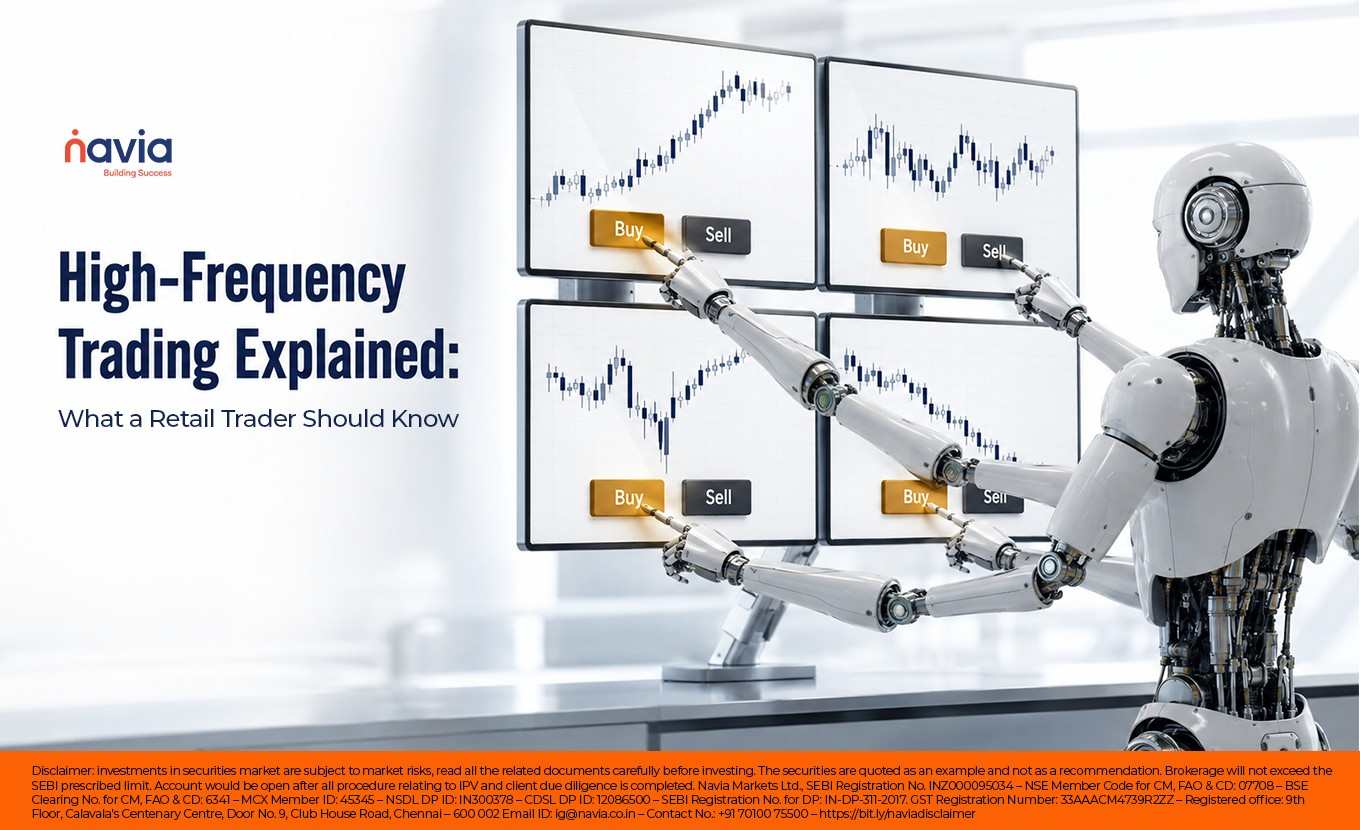
High-frequency trading (HFT) can influence trading conditions in financial markets. HFT firms may provide market liquidity, which can help narrow the bid-ask spread. However, liquidity can change quickly during periods of market stress. This may increase spreads and trading risks for retail traders. This guide explains HFT, its impact on retail traders, and relevant Securities and Exchange Board of India (SEBI) regulations.
💡 Quick Answer
High-frequency trading uses automated systems to place and manage orders at very high speeds. HFT firms can add liquidity and narrow bid-ask spreads on normal days, but may withdraw quoting when volatility rises, widening spreads. Retail traders cannot run HFT strategies themselves. SEBI and exchange controls aim to keep markets orderly.
What is high-frequency trading and why does it matter to you?
High-frequency trading (HFT) uses automated systems to place and manage trades at very high speeds. HFT firms can contribute to market liquidity by providing buy and sell orders. As a result, HFT activity may influence bid-ask spreads and order execution conditions. However, retail traders generally cannot operate HFT strategies themselves due to their technology and infrastructure requirements.
Think of HFT as one part of modern market infrastructure. Its activity can affect liquidity and trading conditions, especially during periods of high market activity. Therefore, understanding HFT can help retail traders better understand how orders interact with financial markets.
How HFT helps retail traders every day?
Bid-Ask Spreads Can Be Tighter
HFT firms can add liquidity by placing buy and sell orders. This activity may contribute to narrower bid-ask spreads in active markets. However, spreads vary with market conditions, liquidity, and trading activity. Tighter spreads can reduce transaction costs for retail traders.
Market Liquidity Can Improve
HFT systems can continuously place and update buy and sell orders. This activity may support market liquidity and smoother order execution. However, execution speed and available liquidity depend on market conditions. HFT is one part of modern market making activity.
Prices Can Update Faster
HFT systems can process market information and update orders rapidly. This activity can support faster price discovery when new information reaches the market. However, price updates depend on many market participants and trading systems, not HFT alone.

The hidden risks HFT creates
Liquidity Can Fall
In calm markets, HFT firms may contribute to market liquidity. However, they can reduce quoting activity when volatility or risk rises. As a result, bid-ask spreads may widen and available liquidity may fall. This can make order execution harder for retail traders.
Spoofing Can Distort Market Signals
Traders may place large orders without intending to execute them. They may later cancel those orders after influencing market perceptions. This practice can give a false impression of demand or market liquidity. SEBI and exchanges monitor trading activity and may act against such prohibited practices. Retail traders should understand that misleading orders can affect market conditions.
Latency Can Give HFT Firms a Speed Advantage
Some HFT firms use co-location and advanced systems to reduce execution delays. They may use these speed advantages in strategies such as latency arbitrage. Retail traders generally cannot match this infrastructure or speed. However, whether a specific strategy is permitted depends on applicable market rules and regulations.
The myth of flash crashes and retail danger
The 2010 Flash Crash
On 6 May 2010, the Dow Jones Industrial Average fell sharply within minutes. Regulators investigated the event and examined the role of HFT. The investigation found that a large sell order contributed to the decline. HFT activity also influenced market liquidity during the event.
Flash Crashes Can Be Rare but Significant
Markets use circuit breakers and other controls to manage extreme price movements. These measures can temporarily pause trading when specified conditions occur. However, they cannot eliminate market risks. Retail traders should understand that prices and liquidity can change quickly during periods of stress.
Real Risk: Stress Periods
A key concern is liquidity withdrawal during periods of market stress. During the March 2020 COVID crash, market volatility increased sharply across global markets. Bid-ask spreads and execution conditions can change during such periods. Therefore, retail traders should consider liquidity and volatility when assessing trading risks.
How Does SEBI Help Safeguard Retail Traders?
Order-to-Trade Ratios
Exchanges use order-to-trade ratio rules to monitor excessive order activity. These controls can help manage unnecessary order traffic and support orderly markets. However, they do not guarantee faster execution for retail traders.
Co-Location Controls
Some HFT firms use co-location to reduce delays in accessing exchange systems. Exchanges have rules governing co-location and access. These measures aim to support fair and orderly market access.
Kill Switches
HFT systems operate under exchange and regulatory requirements. Exchanges and members can use controls to stop trading systems when necessary. These safeguards can help limit risks from malfunctioning or erroneous systems.
Spoofing Surveillance
SEBI and exchanges monitor trading activity for practices such as spoofing and other prohibited conduct. Regulatory surveillance and enforcement can help maintain market integrity. However, these measures cannot eliminate every risk faced by retail traders. For the rules that govern retail use of automated strategies, see our guide to the SEBI algo trading rules in India.
Conclusion
High-frequency trading (HFT) can influence trading conditions for retail traders. On normal days, HFT activity may support market liquidity, tighter bid-ask spreads, and efficient order execution. However, liquidity conditions can change during periods of market stress, which may widen spreads and affect execution. SEBI regulations and exchange controls aim to support fair and orderly markets, but they cannot eliminate all trading risks. Understanding these factors can help retail traders make informed decisions. The Navia All-in-One App provides market information and trading tools to help users monitor market conditions.
Key Takeaways
- HFT uses automated systems to place and manage trades at very high speeds, and retail traders generally cannot operate these strategies themselves.
- On normal days HFT can tighten bid-ask spreads, support market liquidity and speed up price discovery, which can reduce transaction costs.
- HFT firms can reduce quoting when volatility rises, so spreads may widen and liquidity may fall exactly when execution matters most.
- Spoofing and latency arbitrage are the two practices retail traders most often worry about; SEBI and exchanges monitor and act against prohibited conduct.
- Circuit breakers and other controls can pause trading in extreme moves, but they cannot eliminate market risk or guarantee an exit price.
- Exchange safeguards include order-to-trade ratios, co-location rules, kill switches and spoofing surveillance.
Did you find this article helpful?
Your feedback helps us write better content.

FREQUENTLY ASKED QUESTIONS
Does high-frequency trading help or hurt retail traders?
Both effects are possible. HFT can support market liquidity and influence bid-ask spreads during normal trading conditions. However, liquidity can change during market stress, which may widen spreads. The overall impact depends on market conditions.
Can retail traders do high-frequency trading themselves?
Retail traders can use automated trading systems, but HFT requires specialized technology, infrastructure, and very low-latency connections. Retail traders generally cannot match the speed and infrastructure used by specialized HFT firms. However, participation depends on applicable exchange and regulatory requirements.
What is spoofing and how does SEBI address it?
Spoofing involves placing orders with an intention to cancel them before execution. Such activity can create misleading signals about supply, demand, or market liquidity. SEBI and exchanges monitor trading activity and can take action against prohibited practices.
Can a flash crash affect my portfolio?
Flash crashes can cause sharp price movements and temporary liquidity changes. Circuit breakers and other market controls can pause trading when specified conditions are met. However, these safeguards cannot eliminate losses or guarantee that investors can exit at a desired price.
How can I benefit from tighter bid-ask spreads?
A tighter bid-ask spread can reduce the difference between the price available to buy and sell. However, spreads depend on liquidity, volatility, and market conditions. Retail traders should compare actual execution prices and overall trading costs rather than assume HFT guarantees better execution.
Is latency arbitrage unfair to retail traders?
Latency arbitrage can give firms with faster infrastructure an execution-speed advantage. HFT firms may use low-latency systems and exchange connectivity to act quickly on price differences. However, whether a specific activity is permitted depends on applicable exchange and regulatory rules. Retail traders should understand that execution speed can vary across market participants.
DISCLAIMER: Investment in securities market are subject to market risks, read all the related documents carefully before investing. The securities quoted are exemplary and are not recommendatory. Full disclaimer: https://bit.ly/naviadisclaimer.