

Everything You Need to Know About Algo Trading
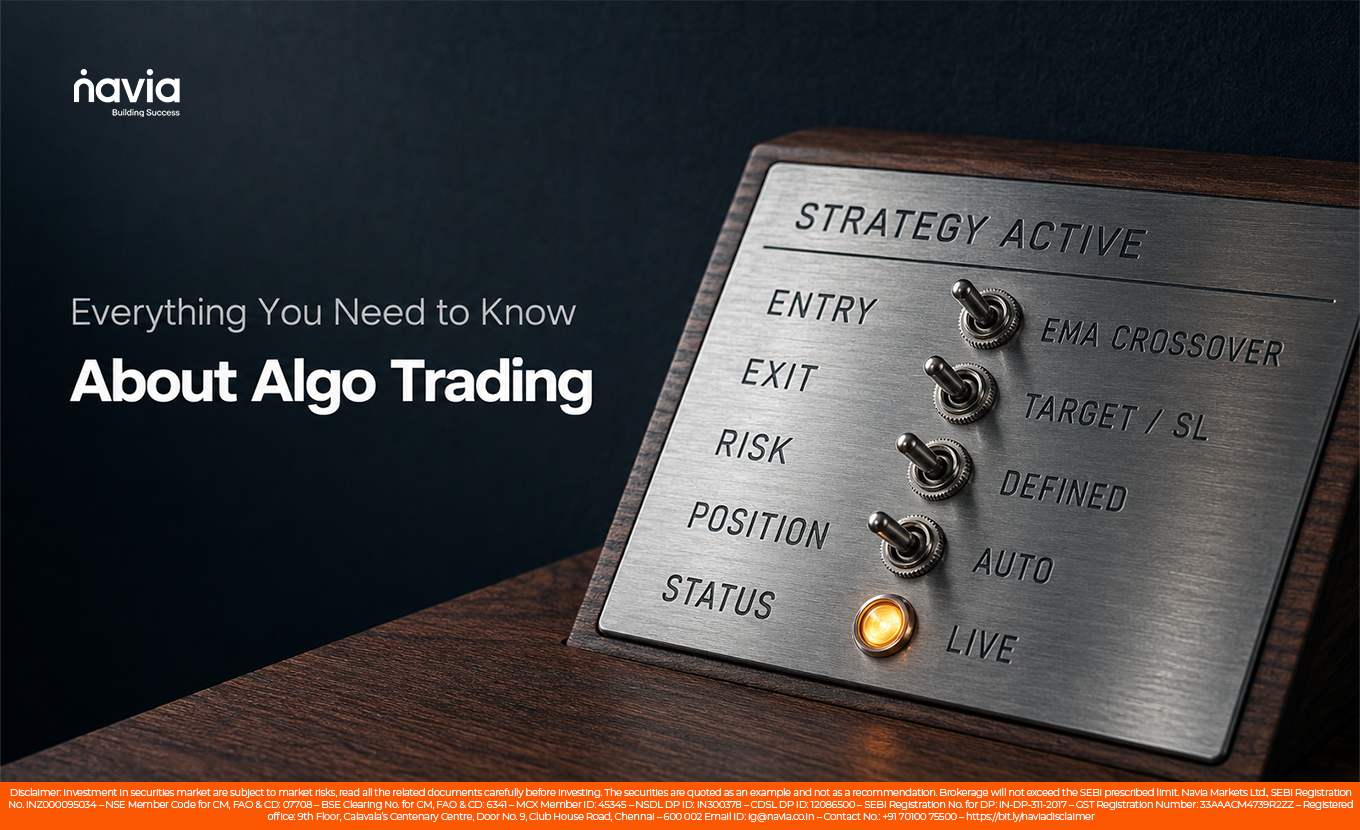
Algorithmic trading, or algo trading, uses computer programs to place orders based on predefined rules, such as price, time, or trading volume. These systems execute trades automatically when the specified conditions are met. Algo trading accounts for a significant share of trading activity in the Indian stock market. This guide explains how algorithmic trading works and outlines the regulatory framework governing it.
💡 Quick Answer
Algo trading uses computer programs to place buy or sell orders automatically when predefined conditions are met. It is permitted for retail investors in India, subject to SEBI and stock exchange regulations, with a framework introduced in 2025 covering broker oversight, unique order identification, API access controls and user authentication. It does not guarantee profits.
How Does Algo Trading Actually Work?
In algo trading, a trader defines a set of predefined rules for placing buy or sell orders. These rules can be based on factors such as price, time, trading volume, or other market conditions. Once the strategy is activated, the algorithmic trading system continuously monitors the market and automatically places orders when the specified conditions are met. By automating order execution, algo trading can reduce manual intervention and execute orders more quickly than manual trading, subject to market conditions and system performance.
Is Algo Trading Legal for Retail Investors in India?
Yes, algo trading is permitted for retail investors in India, subject to the applicable SEBI and stock exchange regulations. SEBI introduced a regulatory framework for retail algo trading in 2025, with implementation requirements phased in by stock exchanges and brokers. Investors using algorithmic trading should ensure that the platform and strategy comply with the applicable regulatory requirements.
What Do the New SEBI Algo Trading Rules Actually Require?
SEBI’s regulatory framework for algo trading introduced additional requirements for brokers, algo providers, and retail investors. Under this framework, brokers are responsible for facilitating algo trading in compliance with the applicable regulations. Orders placed through approved algorithmic trading systems are subject to exchange-level identification and monitoring. The framework also includes requirements relating to API access, user authentication, and risk controls. In certain cases, algo trading providers offering black-box or proprietary algorithms may be subject to additional regulatory requirements, as prescribed by SEBI and the stock exchanges.
| Requirement | What It Means |
|---|---|
| Broker Oversight | Brokers are responsible for facilitating algo trading in accordance with applicable regulatory requirements. |
| Unique Order Identification | Orders placed through approved algorithmic trading systems are assigned unique identifiers for tracking and monitoring by the exchange. |
| API Access Controls | API access is subject to the security and access requirements specified by the broker and applicable regulations. |
| User Authentication | Additional authentication measures may be required to enhance the security of API-based algo trading. |
| Black-Box Algorithms | Providers offering proprietary or black-box algo trading solutions may be subject to additional regulatory requirements. |
Advantages and Disadvantages of Algo Trading
Algo trading can execute orders automatically based on predefined rules, helping reduce manual intervention and enabling faster order execution. It may also support consistent execution by following the programmed strategy without emotional decision-making. However, algorithmic trading does not guarantee profits, and the performance of any strategy depends on factors such as market conditions, strategy design, and risk management. Investors should understand the associated risks before using algo trading, as losses are possible regardless of the execution method.
How Can You Actually Start With Algo Trading?
Before using algo trading, it is important to understand how the chosen strategy generates buy and sell signals. If you use a third-party algorithmic trading solution, review the available disclosures and ensure it complies with the applicable regulatory requirements. Confirm that your broker supports algo trading in accordance with SEBI and stock exchange guidelines. Consider evaluating a strategy carefully and ensure you understand its features, limitations, and associated risks before using it in live markets. Past performance, if any, is not indicative of future results.
Conclusion
Algo trading has become more widely accessible to retail investors through regulated platforms. SEBI’s regulatory framework has introduced additional requirements relating to oversight, transparency, and risk management for algorithmic trading. Understanding how algo trading works, along with the applicable regulations and associated risks, can help investors make informed decisions. As with any investment approach, algo trading should be used only after carefully evaluating its features, limitations, and suitability for your financial objectives.
Key Takeaways
- Algo trading uses computer programs to place buy or sell orders automatically when predefined rules, based on factors such as price, time or trading volume, are met.
- It is permitted for retail investors in India, subject to the applicable SEBI and stock exchange regulations, under a framework SEBI introduced in 2025.
- Brokers are responsible for facilitating algo trading in compliance with applicable regulations, and orders placed through approved systems are subject to exchange-level identification and monitoring.
- The framework also covers API access, user authentication and risk controls, and providers offering black-box or proprietary algorithms may face additional regulatory requirements.
- Algo trading does not guarantee profits — performance depends on strategy design, market conditions and risk management, and losses are possible regardless of the execution method.
DID YOU FIND THIS INTERESTING?
We’d love to hear from you –

Frequently Asked Questions
What is algo trading in simple terms?
Algo trading uses computer programs to automatically place buy or sell orders based on predefined rules set by the trader.
Is algo trading allowed for retail investors in India?
Yes. Algo trading is permitted for retail investors in India, subject to the applicable SEBI and stock exchange regulations.
Who is responsible for algo trading orders?
Under the applicable regulatory framework, brokers are responsible for facilitating algo trading in compliance with SEBI and stock exchange requirements.
What is a black-box algo?
A black-box algorithm is an algorithmic trading strategy whose underlying logic is not disclosed to the user. Depending on its features and mode of operation, such algo trading solutions may be subject to additional regulatory requirements under the applicable SEBI and stock exchange framework.
Does algo trading guarantee profits?
No. Algo trading automates order execution based on predefined rules, but it does not guarantee profits. The outcome depends on factors such as strategy design, market conditions, and risk management.
What security measures apply to algo trading?
SEBI’s regulatory framework includes requirements relating to API access controls, user authentication, and other security measures, as applicable under the relevant regulations and broker implementation.
DISCLAIMER: This article is for general educational purposes only and does not constitute investment advice or a recommendation to use any specific algo trading strategy, provider, or platform. Algo trading, including F&O-linked strategies, carries significant risk and does not guarantee returns; SEBI data shows that a majority of individual F&O traders incur losses. Rules and compliance requirements are set by SEBI and are subject to change; please verify current requirements on the official SEBI website. Investments and trades in the securities market are subject to market risks; please read all related documents carefully before trading.