

EGR vs Gold ETF vs Gold Petal: Understanding India’s New Digital Gold Ecosystem
- What is EGR?
- Difference Between EGR, Gold ETF and Gold Petal
- Why EGR is Structurally Different?
- Advantages of EGR Over Gold ETF
- Gold ETF Market Characteristics
- Understanding Gold Petal on MCX
- Current EGR Delivery and Vault Centres
- How Physical Delivery Works?
- Vault Storage and Handling Charges
- Is EGR Cheaper Than Physical Gold?
- Common Product Characteristics
- Conclusion
The National Stock Exchange of India (NSE) has recently launched Electronic Gold Receipts (EGRs), introducing a new exchange-traded format to buy, hold and eventually take delivery of gold in dematerialised form. EGR aims to represent physical gold through electronic trading and vault-backed holding.
For Indian investors, gold has always been more than just an investment. It is a traditionally used asset class, a historically discussed during periods of uncertainty, and often an emotional asset. Until now, investors had three major exchange-based ways to gain exposure to gold:
EGR now adds a fourth option that sits somewhere between physical gold ownership and electronic investing.
💡 Quick Answer
Electronic Gold Receipts (EGR), Gold Exchange-Traded Funds (ETF) and Gold Petal all offer exchange-based exposure to gold, but they work in very different ways. EGR gives you direct, vault-backed ownership of physical gold in dematerialised form; a Gold ETF is a mutual-fund-style instrument prized mainly for its liquidity; and Gold Petal is an MCX futures contract built for traders and hedgers. The right choice depends on whether you value actual ownership and eventual physical delivery, everyday liquidity, or short-term trading and leverage.
What is EGR?
Electronic Gold Receipts (EGRs) are exchange-traded electronic receipts representing physical gold stored in SEBI-approved vaults. Investors can buy and sell EGRs through their trading and demat accounts, just like shares.
Unlike Gold ETFs, EGR is not a mutual fund product. Instead, it directly represents ownership of physical gold held in accredited vaults.
Available denominations currently include:
- 100 mg
- 1 gram
- 10 gram
- 100 gram
EGRs are available in 99.5% and 99.9% purity variants.
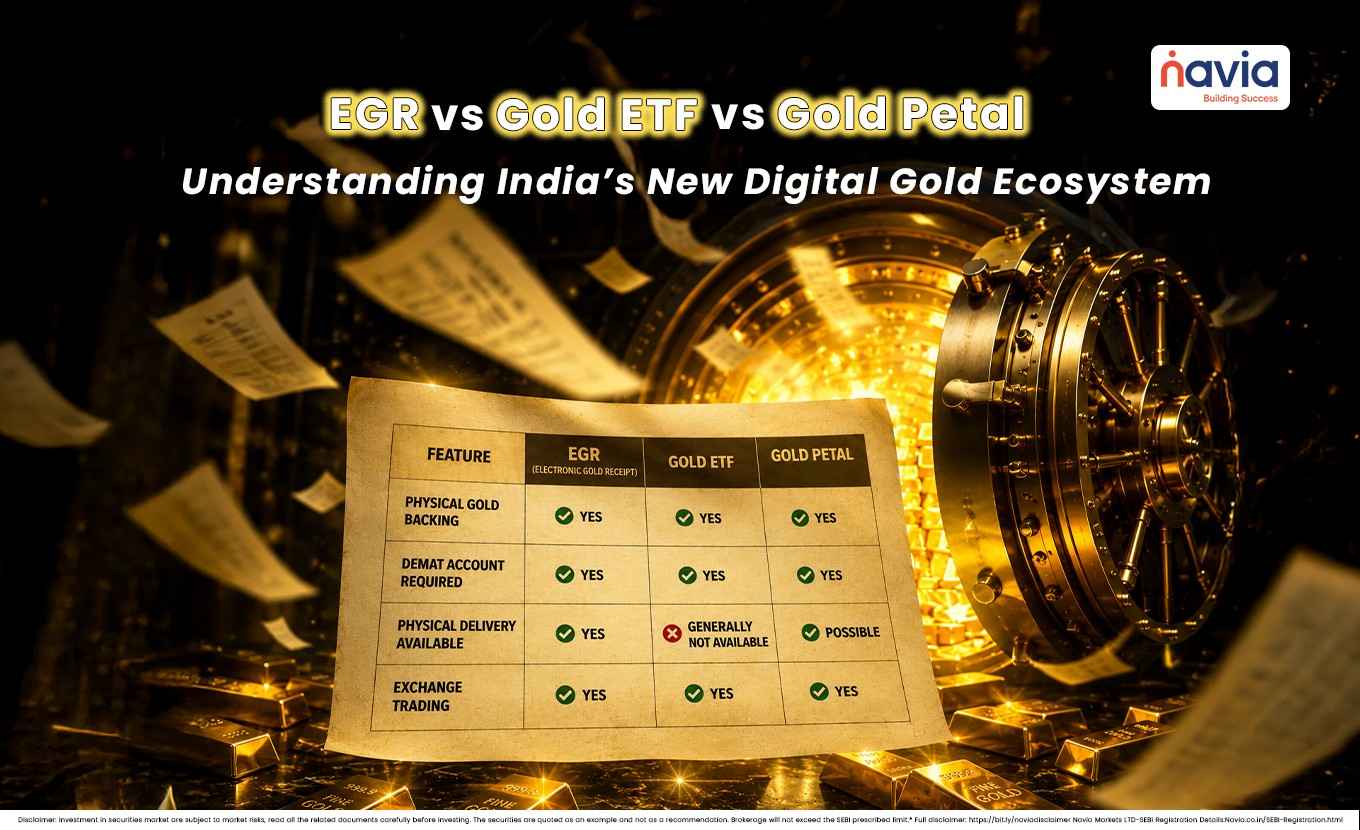
Difference Between EGR, Gold ETF and Gold Petal
| Feature | EGR | Gold ETF | Gold Petal (MCX) |
|---|---|---|---|
| Nature | Direct ownership of vaulted gold | Mutual fund backed by gold | Commodity futures contract |
| Exchange | NSE/BSE | NSE/BSE | MCX |
| Held In | Demat account | Demat account | Commodity trading account |
| Physical Delivery | Yes | Limited/rare | Yes at expiry |
| Expense Ratio | No AMC expense ratio | Yes | No |
| Common Market Characteristics | Vault-backed gold holding | Gold-linked mutual fund structure | Trading and hedging |
| Liquidity | Still evolving | High | High |
Why EGR is Structurally Different?
Gold ETF is primarily a financial investment product. Gold Petal is primarily a trading instrument. EGR, however, is closer to actual ownership of physical gold in electronic form.
This is the structural distinction behind EGR.
With EGR:
- The investor directly owns gold represented electronically
- There is no mutual fund layer
- Gold is stored in accredited vaults
- Physical conversion is possible later
This structure may be relevant to Indian investors who emotionally prefer ownership-based holding preference.
Advantages of EGR Over Gold ETF
Direct Ownership Structure
EGR represents direct ownership of physical gold rather than units of a mutual fund.
Cost Structure Comparison
Gold ETFs charge annual expense ratios. EGR avoids fund management expenses and cost structures may differ over long holding periods.
Physical Conversion Process
Investors can accumulate gold digitally and later convert it into physical bars or coins through approved vaults.
Standardised Purity
Gold stored under the EGR framework follows exchange-grade purity and verification standards.
Gold ETF Market Characteristics
Despite the advantages of EGR, Gold ETFs currently enjoy:
- Higher trading liquidity
- Narrower bid-ask spreads
- Wider investor acceptance
- SIP availability
- Established infrastructure
Since EGR is still relatively new, trading volumes and liquidity are still developing.
Understanding Gold Petal on MCX
Gold Petal is a commodity derivative contract traded on MCX. It is designed primarily for traders, hedgers and market participants who wish to trade short-term gold price movements.
Unlike EGR:
- Gold Petal prices may differ from spot gold prices due to futures pricing
- Leverage is available
- Contracts expire
- It is commonly used for active trading than long-term ownership

Current EGR Delivery and Vault Centres
Current operational EGR vault and delivery centres include:
- Ahmedabad
- Mumbai
- Delhi
- Kolkata
- Chennai
- Bengaluru
For South Indian investors, the availability of Chennai and Bengaluru vault centres is operationally relevant as it provides additional delivery locations on Mumbai.
One of the accredited vault facilities in Chennai is operated through Sequel Logistics in Guindy.
How Physical Delivery Works?
The process for taking physical delivery from EGR is straightforward:
- Buy EGR units in your demat account
- Accumulate the desired quantity
- Submit a redemption or rematerialisation request through your broker or depository participant
- The EGR gets extinguished
- Equivalent physical gold is released from the accredited vault
- Pay GST and applicable vault handling charges
- Collect physical gold after identity verification
Investors should verify minimum redemption quantities, available denominations and withdrawal timelines before investing.
Vault Storage and Handling Charges
One of the discussion point about EGR is that vault storage may be expensive. In reality, current vault costs are vary by vault and denomination.
Indicative charges include:
- Vault storage: Approximately ₹0.20 to ₹0.50 per gram per month
- GST on storage fee: 18%
- Physical withdrawal charges: Approximately ₹50 to ₹200
- Assaying charges if required: ₹300 to ₹600
- GST on physical redemption: 3% of gold value
For example:
Holding 100 grams of gold through EGR may cost approximately ₹25 to ₹50 per month in vault charges.
Compared to Gold ETF expense ratios of 0.5% to 1% annually, EGR can become cost structures may differ for long-term investors.
Is EGR Cheaper Than Physical Gold?
For investment purposes, EGR is often different cost structure than buying jewellery or even many physical coins and bars.
EGR does not directly involve:
- High making charges
- Jewellery wastage
- Locker costs
- Retail purity verification processes
- Retail jeweller premiums
However, if the investor eventually converts EGR into jewellery, making charges will still apply at that stage.
Common Product Characteristics
Choose EGR if:
- You want long-term ownership of gold
- You may eventually take physical delivery
- You prefer lower carrying cost
- You value purity and exchange-backed infrastructure
Choose Gold ETF if:
- Liquidity matters most
- You want SIP investing
- You want simple portfolio allocation
Choose Gold Petal if:
- You are a trader or hedger
- You understand futures markets
- You use leveraged futures exposure
Conclusion
EGR represents an new development in India’s gold market. It bridges the gap between traditional physical gold ownership and modern electronic investing.
Today, Gold ETFs remain more liquid and operationally mature. However, EGR has the represents a newer market structure as one of the exchange-traded gold format to own investment-grade gold in India over the coming years.
For investors who value actual ownership, purity assurance and eventual physical delivery, EGR could become a alternative market structure to both Gold ETFs and traditional physical gold purchases.
Key Takeaways
- EGR gives you direct, vault-backed ownership of physical gold held in dematerialised form, unlike a Gold ETF, which is a mutual-fund structure.
- Gold ETFs currently offer greater liquidity, tighter spreads and SIP access, while EGR trading volumes are still developing.
- Gold Petal on MCX is a futures contract designed for traders and hedgers rather than long-term owners.
- EGR allows eventual physical delivery of gold from accredited vaults after redemption, subject to GST and vault handling charges.
- Your choice depends on your priority: ownership and delivery point to EGR, liquidity and simplicity to a Gold ETF, and leveraged trading to Gold Petal.
Did you find this article helpful?
Your feedback helps us write better content.

DISCLAIMER: Investment in securities market are subject to market risks, read all the related documents carefully before investing. The securities quoted are exemplary and are not recommendatory. Full disclaimer: https://bit.ly/naviadisclaimer.