

Can Equity Delivery Brokerage Be Zero? Understanding the Costs
Yes, zero brokerage on equity delivery is real. But new investors have so many doubts about it. Let’s understand the term with an example; to bring prosperity, people perform in the Muhurat Trading section. But historically, brokerage charges formed part of the overall transaction cost for many investors.
But this is 2026, the brokerage industry has evolved significantly in recent years. If it’s a festive occasion or a regular day, the rise of the zero brokerage on equity delivery model has changed how Indians build long-term wealth. Sounds interesting, right? This guide will help you understand how you can own a piece of India’s top companies without paying a middleman for the privilege.
💡 Quick Answer
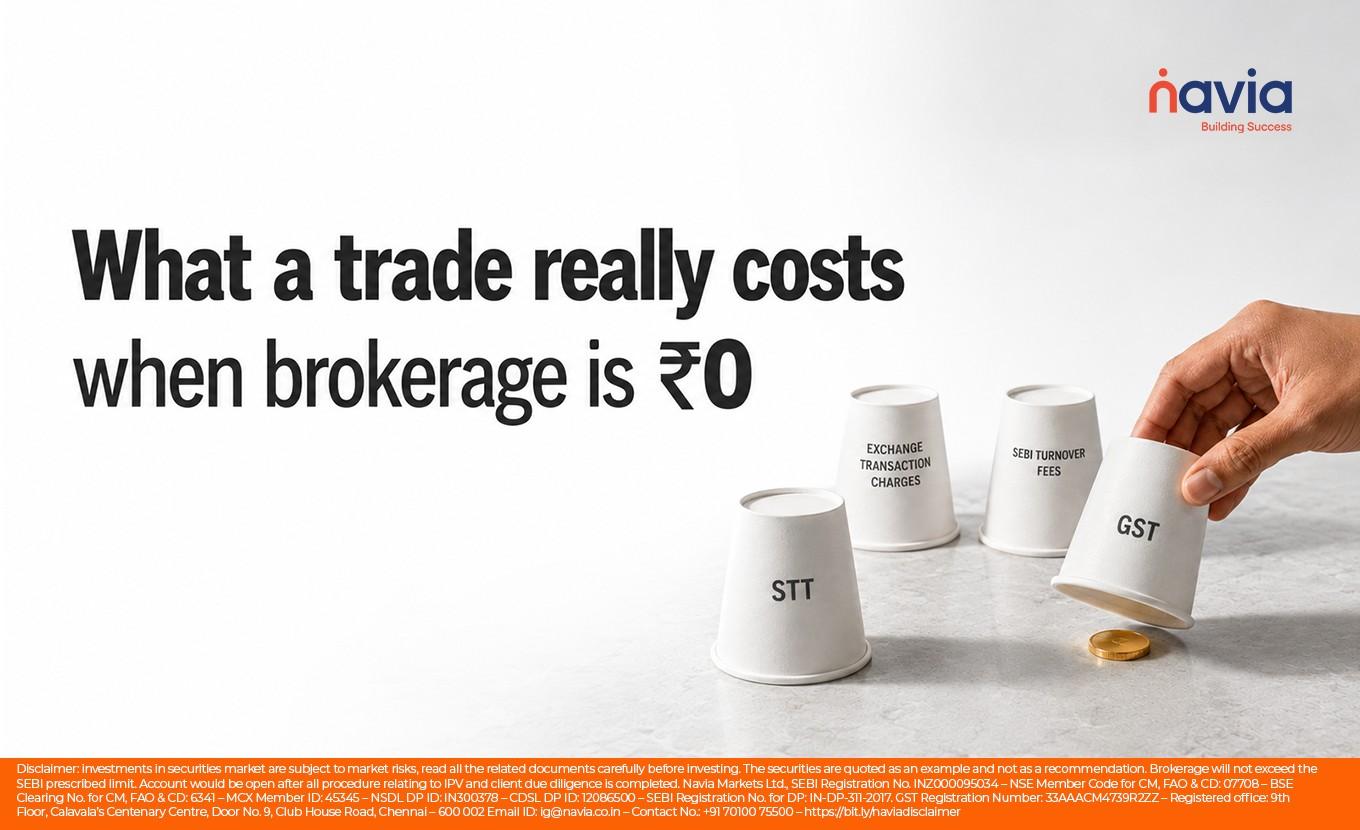
Yes — zero brokerage on equity delivery is real. Many SEBI-registered discount brokers now charge ₹0 commission on delivery trades, letting you buy and hold shares for the long term without paying a middleman. You still pay statutory costs — Securities Transaction Tax (STT), GST, stamp duty and exchange/depository fees — but the broker’s own fee can genuinely be zero. Before you commit, weigh platform stability, Annual Maintenance Charges (AMC) and support quality, not just the “zero” label.
What is Equity Delivery?
Before diving into the details of costs, let’s understand the product. “Delivery trading” is the process of buying shares and holding them overnight or for years. The holding shares are moved into your Demat Account and make you a legal shareholder of the company.
But what’s the difference compared to intraday trading? In intraday trading you buy and sell shares on the same day, but delivery isn’t like that. It is commonly used by investors with medium- to long-term investment horizons.
What are Equity Delivery Brokerage Charges?
In the olden days, brokers charged a particular percentage of the total transaction value. For example, if you bought ₹1,00,000 worth of shares, you should pay ₹500 just to enter the trade. For a complete breakdown of what you actually pay beyond brokerage, see our guide to demat account charges.
But now, people ask, “what are equity delivery brokerage charges in today’s market?” Some brokers offer zero brokerage on equity delivery trades, while others may continue to charge brokerage. Investors should review the applicable brokerage schedule before opening an account. Under the zero brokerage for equity delivery model, discount brokers waived their service fees entirely for long-term investors. With brokers offering zero brokerage on equity delivery, no brokerage is charged on eligible delivery trades — though other statutory charges may still apply.
Finding the Right Partner: Which Broker is Best for Equity Delivery?
There are so many options you can find today, but choosing a broker with zero equity delivery can be overwhelming. It helps to know exactly what to check before opening a zero brokerage demat account and to weigh the real advantages of a zero brokerage trading account. Before making a decision, look beyond just the “zero” label and consider the points below:
- Platform Stability: Does the app crash during high market volatility?
- Ease of Use: Is the interface intuitive for long-term tracking?
- Hidden Costs: Does the broker charge high Annual Maintenance Charges (AMC)?
- Margin Trade Funding (MTF) Availability: While you are buying for delivery, sometimes you may want to purchase more shares than your current cash allows.
- Quality of Customer Support: Does the broker provide a responsive human support line?
Conclusion
The shift to zero brokerage on equity delivery is successful for the common investor, because it allows you to practice “dollar-cost averaging” or a Systematic Investment Plan (SIP) approach to stocks without worrying about the transaction costs. Many long-term investors even pair it with a zero balance demat account to keep fixed costs low. But the selection of the broker is up to your own risks. Before making a decision, you should consider the points that are given above.
When selecting a broker, investors should compare brokerage, platform features, service quality, charges, and regulatory registration — and also ensure that every rupee of yours is safe today and is going directly to support your long-term investment objectives.
Happy purchasing with digital media & stay alert today for a worry-free delivery tomorrow.
Did you find this article helpful?
Your feedback helps us write better content.

Key Takeaways
- Zero brokerage on equity delivery means the broker’s own commission on delivery trades is ₹0 — statutory charges like STT, GST, stamp duty and exchange/depository fees still apply.
- Budget 2026 left the STT on equity delivery unchanged while raising it on speculative futures and options trades.
- Look past the “zero” label: check platform stability, ease of use, AMC and hidden costs, MTF availability and customer support.
- You can legally hold multiple demat accounts, so a zero-brokerage account can sit alongside a full-service one.
- Safety comes from SEBI registration and CDSL/NSDL custody, not from the fee being zero.
Frequently Asked Questions
Is “Zero Brokerage” actually 100% free?
No. While the brokerage fee (the commission paid to the broker) is ₹0, you are still responsible for statutory charges mandated by the government and SEBI. Like, STT, Exchange Transaction Charges, etc.
Did Budget 2026 increase taxes on equity delivery?
Fortunately, Budget 2026 primarily targeted speculative trading. While STT on Futures rose to 0.05% and Options to 0.15%, the STT for Equity Delivery remained unchanged at 0.1%.
Can I open a zero-brokerage account if I already have a demat account elsewhere?
Yes, you can hold multiple demat accounts in India. Many investors maintain a “Full-Service” account for research and a separate zero brokerage account for their core long-term equity delivery portfolio to save on costs.
Is it safe to use a “Zero Brokerage” broker?
Safety depends on SEBI registration, not the fee structure. If your broker is a SEBI-registered member of the exchanges (NSE/BSE) and your shares are held in a depository like CDSL or NSDL, your assets are secure.
DISCLAIMER: Investments in the securities market are subject to market risks, read all the related documents carefully before investing. The securities quoted are exemplary and are not recommendatory. Brokerage will not exceed the SEBI prescribed limit.