

Why We Fear Losses More Than We Enjoy Gains?
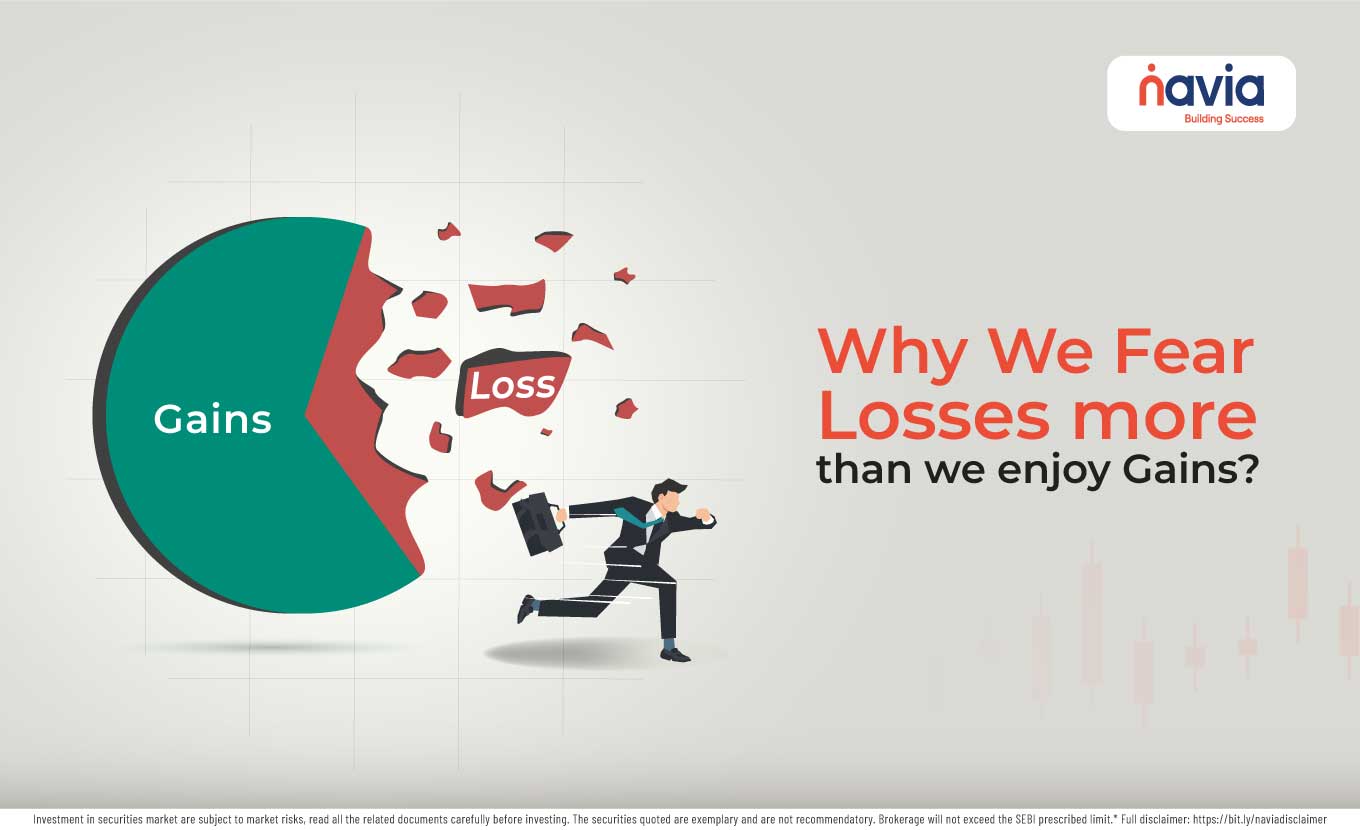
One of the most puzzling things in investing is this: people react much more strongly to losing ₹10,000 than to gaining the same amount. This isn’t just intuition—it’s a well-studied behavioral bias known as Prospect Theory, developed by Nobel laureates Daniel Kahneman and Amos Tversky.
💡 Quick Answer
Prospect Theory, from Daniel Kahneman and Amos Tversky, describes how people actually decide under risk rather than how a purely rational model says they should. Its central finding is asymmetry: an equivalent loss hurts more than a gain pleases, so we are not consistently rational about risk. Survival instinct, the extra emotional weight the brain gives to losses, and the habit of judging outcomes against a starting reference point all reinforce it. In portfolios that becomes holding losers, booking winners too early, overreacting to corrections, and avoiding equity altogether. Reframing volatility, anchoring on goals, automating, and diversifying are what counteract it.
What is Prospect Theory?
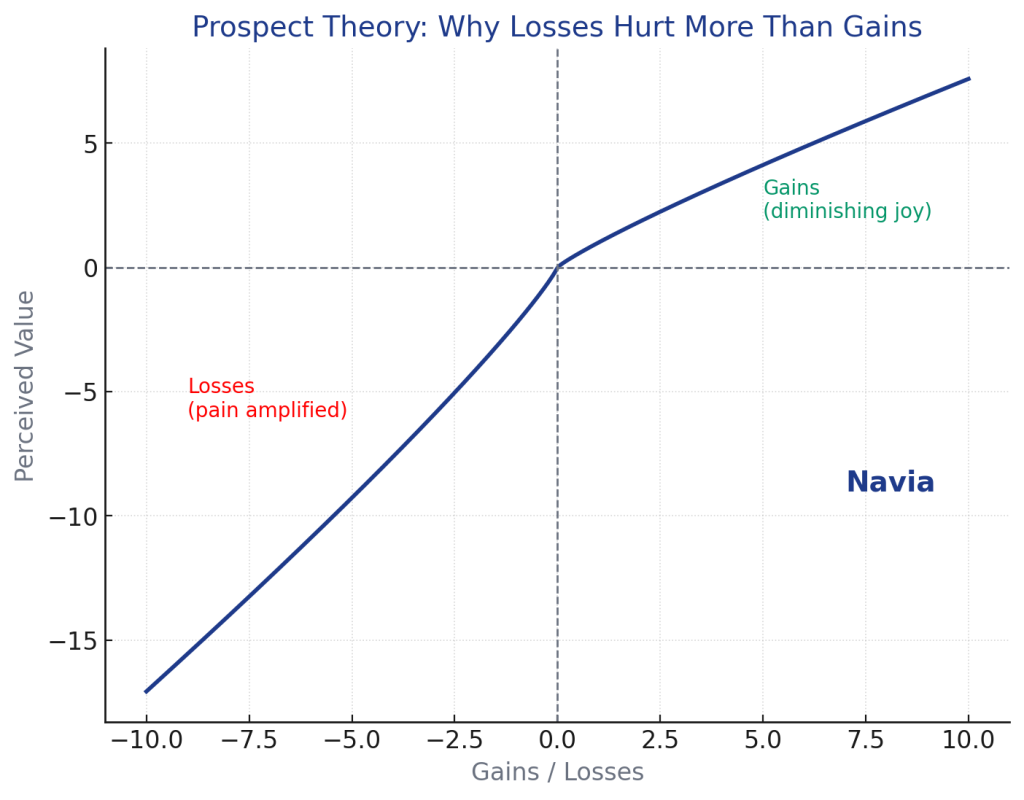
Prospect Theory explains how people actually make decisions under risk. It shows that:
- ➣ Losses hurt more than equivalent gains feel good.
- ➣ People are not always rational. They weigh potential outcomes differently, often leading to suboptimal financial decisions.
Simply put: losing ₹1,000 feels almost twice as painful as the joy of gaining ₹1,000. That single asymmetry underlies a large share of the biases catalogued in behavioral finance and how emotions drive market bubbles.
Why Does This Happen?
- 🔸 Survival Instincts – From an evolutionary view, avoiding loss (danger) was critical for survival. This instinct carries over into money decisions.
- 🔸 Emotional Weight – Our brain’s emotional centers are more active when processing losses than gains.
- 🔸 Reference Points – We judge outcomes based on where we started rather than absolute wealth.
The reference-point habit is why the price you paid keeps hijacking decisions it should have no say in — the mechanism behind the disposition effect and the endowment effect.

How it Shows Up in Investing?
Prospect Theory plays out every day in the stock markets:
- ➜ Holding on to Losers: Investors often refuse to sell a stock at a loss, waiting endlessly for it to “bounce back.”
- ➜ Booking Profits Too Early: Many sell winners too quickly, locking in small gains but missing long-term compounding.
- ➜ Overreacting to Market Corrections: A 10% market drop feels like a disaster, even if the long-term trend is intact.
- ➜ Avoiding Equity Investing: Some investors stick only to FDs or gold, fearing losses in equities, even though history shows equities generate higher returns over time.
Refusing to close a position that has stopped working is the same reflex viewed from another angle — see why we cling to things that don’t work. And when a correction is under way, an objective sentiment reading such as the Market Mood Index or the Fear and Greed Index is a useful counterweight to the feeling in your stomach.
How to Overcome the Loss Aversion Trap?
- ⦿ Reframe Losses as Part of the Game – Volatility is not permanent loss. It’s the price of long-term returns.
- ⦿ Set Clear Goals – Anchor your decisions on long-term goals (retirement, education fund) rather than daily price swings.
- ⦿ Automate Discipline – Use Systematic Investment Plans (SIPs) and systematic investing to reduce emotional decision-making.
- ⦿ Diversify – A balanced portfolio reduces the fear of individual losses.
- ⦿ Focus on Probabilities, Not Emotions – Look at data, not just feelings. Over time, equities have outperformed despite short-term losses.
Automating is the step that does the heavy lifting, because a rule written in advance is not renegotiated during a crash — the case made in knowledge does not beat emotions and in breaking promises to our future self.
Final Words
Prospect Theory reminds us that our brains are wired to fear losses more than we celebrate gains. But in investing, this bias can lead to poor decisions—holding losers, exiting too early, or avoiding equities altogether.
At Navia, we design platforms, tools, and advisory services to help clients rise above these behavioral traps. By combining discipline with the right technology—like SIP automation and AI-driven insights—you can stay invested with confidence. The shortcuts that feed this bias are unpacked in mental shortcuts in investing, and the ego that defends them in when ego manages your portfolio.
Remember, wealth is built not by avoiding every loss, but by staying the course long enough for gains to compound.
Key Takeaways
- Prospect Theory describes decisions as people actually make them under risk, not as a rational model assumes they should.
- Its core finding is asymmetry: an equivalent loss registers more strongly than a gain, so risk is judged emotionally rather than arithmetically.
- Survival instinct, heightened emotional processing of losses, and judging outcomes from a reference point rather than absolute wealth are the drivers.
- In portfolios it produces four familiar errors: holding losers, selling winners early, overreacting to corrections, and avoiding equity entirely.
- Volatility is not the same thing as permanent loss. Treating it as the price of long-term returns is the reframe that unlocks the rest.
- Related reading: the disposition effect, why we cling to things that don’t work, the endowment effect, and knowledge does not beat emotions.
Did you find this article helpful?
Your feedback helps us write better content.

DISCLAIMER: Investment in securities market are subject to market risks, read all the related documents carefully before investing. The securities quoted are exemplary and are not recommendatory. Full disclaimer: https://bit.ly/naviadisclaimer.