

Why is Silver More Volatile Than Gold? Key Reasons Explained
- Market Size and Liquidity Constraints
- The Dual Identity: Industrial vs. Precious Metal
- Supply Chain Rigidities: The "Byproduct" Factor
- Leverage and Speculative Activity
- Silver vs. Gold in the Indian Context
- Conclusion
- Frequently Asked Questions
Gold is often viewed as the relatively stable asset of investments, because it is generally considered less volatile and commonly used for long-term value holding. On the other hand, silver behaves more like a more volatile asset, because it is subject to high price fluctuations and capable of sharp price movements.
For investors, understanding why silver is more volatile than gold is important for understanding risk. While both metals often move in the same direction, the silver volatility index may show high price fluctuations compared to gold.
This blog helps you understand the structural and economic reasons behind silver volatility and what it may indicate for investors in detail.
Market Size and Liquidity Constraints
The most fundamental reason why silver is so volatile compared to gold is the difference in market capitalization. Although more silver exists physically, the total dollar value of the investable silver market is just a fraction of the gold market.
Because the gold market is so large, it can handle large capital flows with comparatively lower price impact. In a thinner market, large trades may influence price movements. This lower liquidity also leads to wider bid-ask spreads; that makes silver may increase transaction costs during periods of high stress.
The Dual Identity: Industrial vs. Precious Metal
We know that gold is a monetary asset and a commonly considered a store of value. Its demand is driven by central bank reserves, jewelry, and investors seeking a used as an inflation hedge. As a result, gold generally shows lower volatility because its demand is relatively stable even economic downturns situations too.
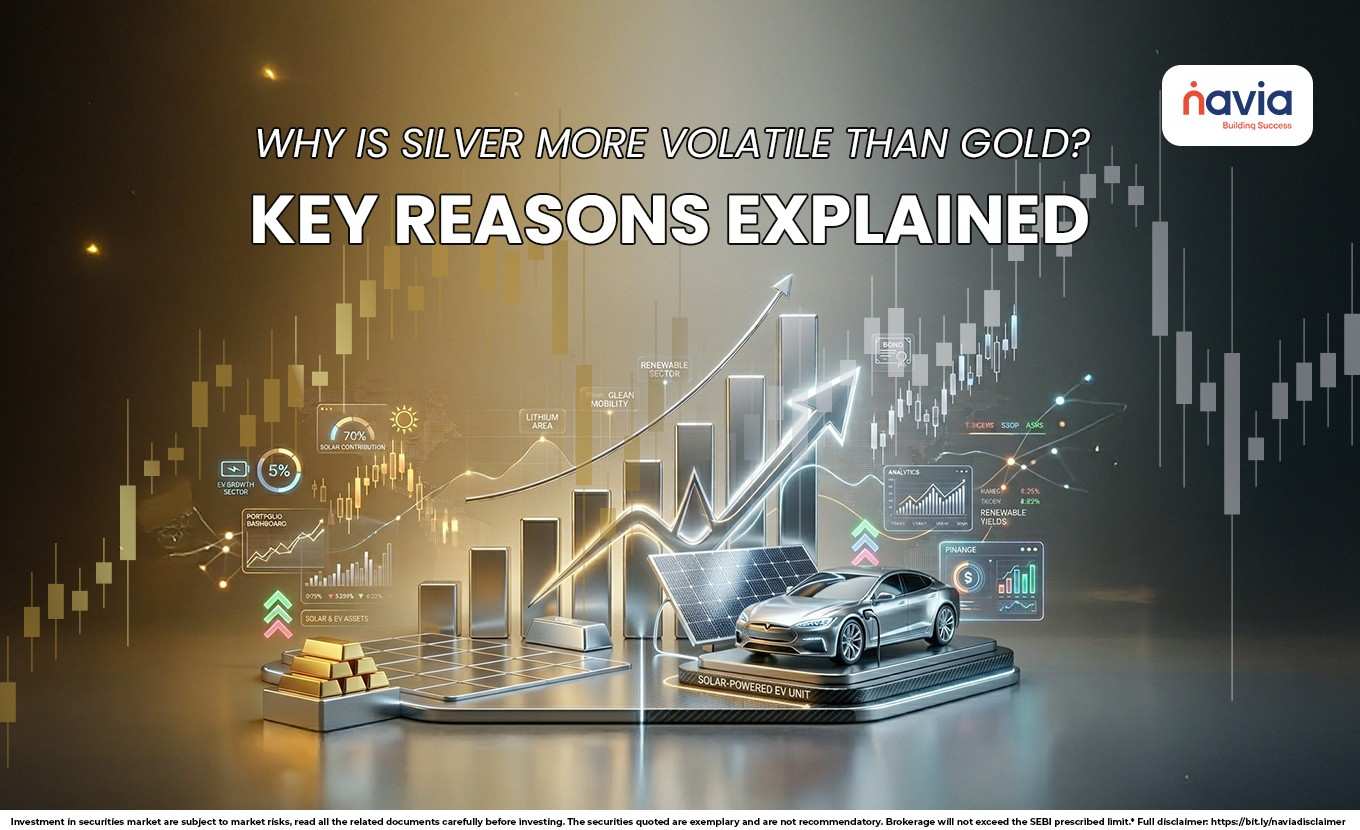
But silver has a dual personality, because it is a precious metal, but more than 50% of its global demand comes from heavy industry. It is a critical component in;
🔸 Solar Panels
🔸 Electronics
🔸 Electric Vehicles (EVs)
This industrial tie makes silver so volatile. When the economy is booming, silver benefits from both investment and industrial demand. However, when manufacturing slows down, silver prices can decline even if gold may remain relatively stable.
Supply Chain Rigidities: The “Byproduct” Factor
If you ask why silver is more volatile than gold, one must look at how it is pulled from the ground. Unlike gold, where most mined are dedicated solely to finding the yellow metal, roughly two-thirds of silver is produced as a byproduct of mining other metals like copper, lead, and zinc.
It creates a imbalance between supply and demand. If the price of silver spikes, miners cannot simply turn on more production because their primary focus is the other metals. This supply of inelasticity means, when demand urges, the price may increase significantly to find a balance, that leads to periods of high volatility.

Leverage and Speculative Activity
Silver trades at a much lower price point per ounce; it is accessible to retail investors and short-term speculators. In the futures and options market, silver offers relatively higher leverage.
A 5% move in the price of silver can may result in significant fluctuations in a leveraged portfolio. It often triggers positions closures due to margin requirements, where traders are may need to sell positions rapidly. This speculative activity is a key driver of the silver volatility index peaks.
Silver vs. Gold in the Indian Context
Many Indian investors ask, “is silver more expensive than gold in India?” or “is silver more valuable than gold?” On a per gram basis, gold remains significantly higher in price per unit due to its scarcity and historical status. Now a single ounce of gold can still purchase roughly 80 to 90 ounces of silver, depending on the current Gold-Silver Ratio.
When considering which metal is stronger, silver or gold, the answer depends on your goal. Gold is commonly used for capital preservation and hedging against a falling Rupee. On the other hand, silver is may show higher price movement during industrial demand phases.
Conclusion
Silver’s reputation for being higher volatility is a structual feature; it’s a structural feature of its market. Its smaller size, dual-demand profile, and supply constraints ensure that it will always be the more more sentistive to market changes in the precious metal family.
For investors, the key is balance. Gold provides the used for stability, while silver may show higher price movement. So, understanding why silver is more volatile than gold, you can observe market conditions during vol crushes and be aware of price fluctuations.
Do You Find This Interesting?
We’d Love to Hear from you-

Frequently Asked Questions
Why is silver more volatile than gold?
Silver exhibits two to three times the volatility of gold, may exhibit sharper price fluctuations. Key drivers of these movements include its smaller market size, lower liquidity, and dual role as both an industrial and investment asset. Furthermore, silver’s lower price point attracts more speculative retail investment compared to gold.
Why is silver called Devil’s metal?
Silver is frequently termed the “devil’s metal” because its extreme price swings and variable price movements make it may be difficult to predict.
Is silver riskier than gold for investment?
Silver exhibits higher volatility than gold, with daily price fluctuations typically two to three times greater. While gold is viewed as a store of value, silver functions more as an industrial and investment-linked asset.
Is silver better for short-term trading?
Silver is commonly used by experienced market participants due to its rapid price of swings and high volatility, may involve higher short-term price movements compared to the steadier, slower, and costlier nature of gold.
Should beginners trade silver or gold?
Gold is amay be considered by beginners because of its safe-haven status and lower volatility, offering stability as an inflation hedge for long-term investors. Conversely, silver may involve higher risk tolerance and deep knowledge of market cycles, making its increased volatility better suited for experienced, active market participants.
DISCLAIMER: Investment in securities market are subject to market risks, read all the related documents carefully before investing. The securities quoted are exemplary and are not recommendatory. Full disclaimer: https://bit.ly/naviadisclaimer.