

How to do Commodity Trading in India?
- What is Commodity Trading?
- How to Trade Commodities in India?
- 1. Trading Through Commodity Exchanges
- Major Commodity Exchanges in India
- 2. Commodity Futures Trading
- 3. Spot Market Trading
- 4. Trading via Commodity ETFs and Mutual Funds
- 5. Online Commodity Trading
- Steps to Start Online Commodity Trading in India:
- Regulatory Framework for Commodity Trading in India
- Why Trade Commodities in India?
- Benefits of Commodity Trading
- Risks of Commodity Trading
- Conclusion
- Frequently Asked Questions
In India, the commodity market plays a crucial role in its economic structure. Commodity trading in India has evolved significantly over the years, providing a structured and regulated environment for investors, traders, and businesses.
Whether you’re a beginner or an experienced trader, understanding how to trade commodities in India can help you make informed decisions.
💡 Quick Answer
Commodity trading means buying and selling raw materials such as gold, silver, crude oil, natural gas and agricultural products, either to hedge against price swings or to speculate on them. In India it runs on SEBI-regulated exchanges, mainly through futures contracts, and you trade it via a SEBI-registered broker.
What is Commodity Trading?
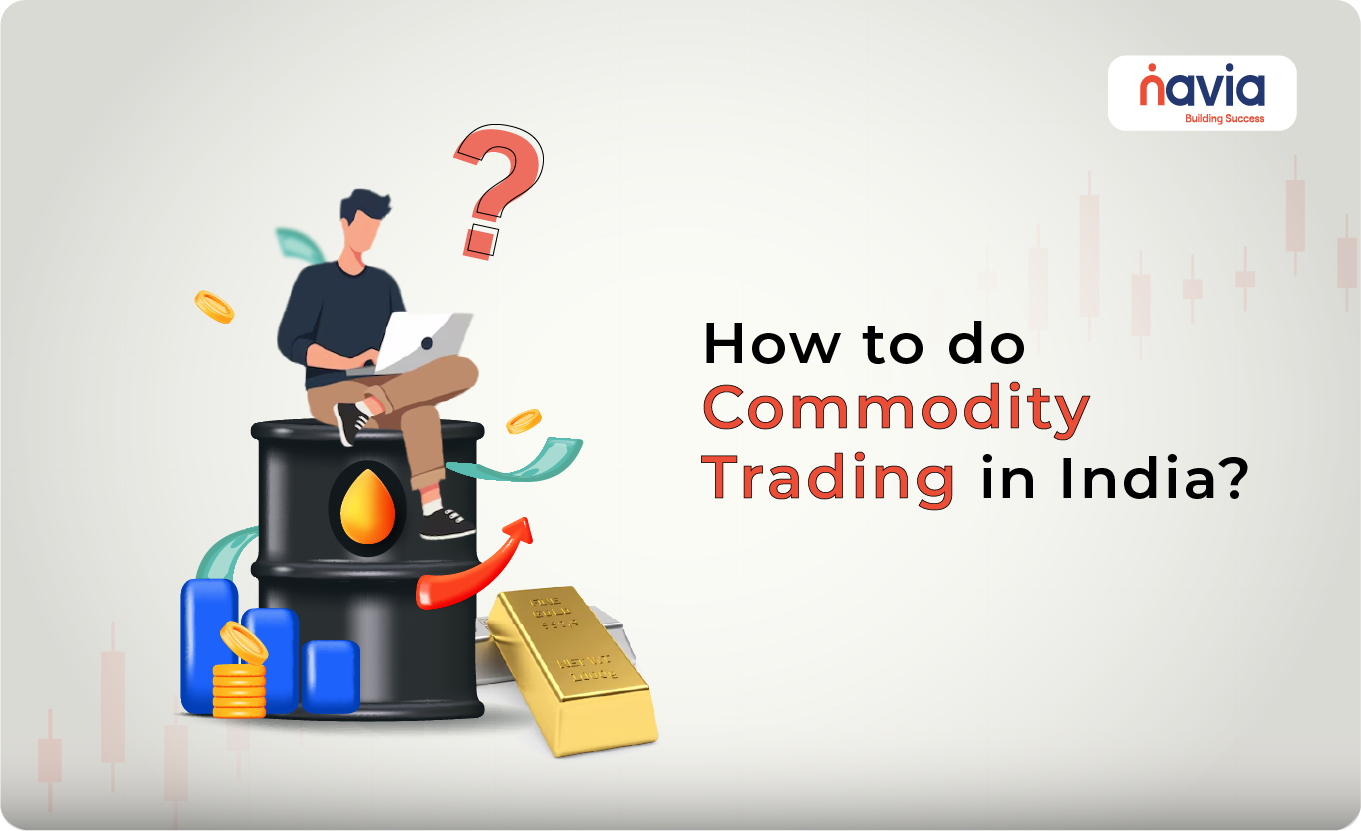
Commodity trading involves buying and selling raw materials or primary goods such as gold, silver, crude oil, natural gas, agricultural products, and metals. The objective is either to hedge against price fluctuations or to speculate on price movements for profit.
How to Trade Commodities in India?
1. Trading Through Commodity Exchanges
Commodity trading in India takes place through regulated commodity exchanges. The Securities and Exchange Board of India (SEBI) governs and regulates these exchanges to ensure fair and transparent transactions.
Major Commodity Exchanges in India
| Commodity Exchange | What It Trades |
|---|---|
| Multi Commodity Exchange of India (MCX) | India’s largest commodity exchange, primarily dealing with metals and energy commodities. |
| National Commodity and Derivatives Exchange (NCDEX) | It specializes in agricultural commodities. |
| Indian Commodity Exchange (ICEX) | Trades diamonds and other select commodities. |
| National Multi-Commodity Exchange (NMCE) | Offers trading in various agricultural and non-agricultural commodities. |
Each exchange has a list of standardized contracts for different commodities, enabling traders to buy and sell based on agreed terms. (However, Navia offers MCX commodity exchange only).
2. Commodity Futures Trading
Most commodity trading in India happens through commodity futures contracts. These are agreements between buyers and sellers to trade a commodity at a predetermined price on a future date.
Why Trade in Futures?
- Hedging: Farmers, producers, and industries use futures contracts to hedge against price volatility.
- Speculation: Traders and investors buy and sell futures to profit from price fluctuations.
Example of Commodity Futures Trading:
A trader expects gold prices to rise in the next month. He buys a gold futures contract at ₹55,000 per 10 grams. If gold prices rise to ₹57,000 per 10 grams, he can sell the contract and make a profit of ₹2,000.
3. Spot Market Trading
The spot market (or physical market) allows traders to buy and sell commodities for immediate delivery. Unlike futures contracts, where trading is based on speculation, the spot market deals with real-time supply and demand.
Example: A rice miller buys wheat from a farmer directly at the prevailing market price to process it into flour.
While the spot market is crucial for actual commodity buyers, retail investors typically prefer futures trading for its liquidity and leverage.
4. Trading via Commodity ETFs and Mutual Funds
If you don’t want to trade directly in futures or spot markets, you can invest in Commodity Exchange-Traded Funds (ETFs) and Commodity Mutual Funds.
- Gold ETFs allow you to invest in gold without holding physical gold.
- Commodity Mutual Funds invest in a mix of commodity-based assets.
These options provide exposure to commodities without the complexity of futures trading.
5. Online Commodity Trading
With the advancement of technology, commodity trading in India has gone digital. Investors can trade commodities online through SEBI-registered brokers.
Steps to Start Online Commodity Trading in India:
- Open a Commodity Trading Account – Choose a SEBI-registered broker offering commodity trading like Navia.
- Complete KYC Verification – Submit identity proof, PAN card, Aadhaar, and bank details.
- Deposit Margin Money – Commodity trading requires a minimum margin deposit.
- Choose Your Commodity – Select from metals, agriculture, energy, or livestock.
- Place Your Trade – Buy or sell futures contracts based on market analysis.
- Monitor and Exit Trade – Keep track of market trends and close the trade when profitable.
Navia’s commodity trading app allows you to invest in gold, crude oil or silver with zero brokerage, no order limit and No Subscriptions.
Regulatory Framework for Commodity Trading in India
Commodity trading is regulated by SEBI, which ensures transparency and prevents manipulation.
Key regulations include:
- Compulsory KYC compliance for traders.
- Position limits to prevent excessive speculation.
- Daily price limits to control volatility.
- Commodity Transaction Tax (CTT) applied to futures trading.
Why Trade Commodities in India?
Benefits of Commodity Trading
- Hedge Against Inflation – Commodities, especially metals and energy, act as a hedge against rising inflation.
- Diversification – Adding commodities to your portfolio reduces risk.
- High Liquidity – Commodity futures have high trading volume, making them liquid investments.
- Lower Margin Requirement – Unlike stocks, you don’t need the full investment amount upfront.
Risks of Commodity Trading
- High Volatility – Prices fluctuate due to geopolitical and environmental factors.
- Leverage Risks – High leverage can lead to significant losses.
- Regulatory Changes – Government policies can impact prices and market conditions.
Conclusion
Commodity trading in India has grown into a robust and highly regulated market, offering diverse investment opportunities. Whether you are a hedger, speculator, or long-term investor, commodities can be an excellent addition to your portfolio.
Key Takeaways
- Commodity trading involves buying and selling raw materials or primary goods such as gold, silver, crude oil, natural gas, agricultural products and metals, either to hedge against price fluctuations or to speculate on price movements.
- Trading happens on regulated commodity exchanges. The Securities and Exchange Board of India (SEBI) governs and regulates these exchanges to ensure fair and transparent transactions.
- Most commodity trading in India happens through futures contracts — agreements to trade a commodity at a predetermined price on a future date. The spot market handles immediate delivery instead.
- If you do not want to trade futures or spot directly, Commodity Exchange-Traded Funds (ETFs) and Commodity Mutual Funds give exposure without the complexity.
- To start, open a commodity trading account with a SEBI-registered broker, complete KYC, deposit margin, choose your commodity and place the trade. Note the risks: high volatility, leverage and regulatory change.
Frequently Asked Questions
What is commodity trading?
Commodity trading involves buying and selling raw materials or primary goods such as gold, silver, crude oil, natural gas, agricultural products and metals. The objective is either to hedge against price fluctuations or to speculate on price movements for profit.
How do I start commodity trading in India?
Open a commodity trading account with a SEBI-registered broker offering commodity trading, complete KYC verification by submitting identity proof, PAN card, Aadhaar and bank details, deposit the required margin money, choose your commodity from metals, agriculture, energy or livestock, place your trade and then monitor it and close the trade when profitable.
Who regulates commodity trading in India?
Commodity trading is regulated by the Securities and Exchange Board of India (SEBI), which ensures transparency and prevents manipulation. Key regulations include compulsory KYC compliance for traders, position limits to prevent excessive speculation, daily price limits to control volatility, and Commodity Transaction Tax (CTT) applied to futures trading.
What is the difference between the futures market and the spot market?
Commodity futures are agreements between buyers and sellers to trade a commodity at a predetermined price on a future date. The spot market, or physical market, allows traders to buy and sell commodities for immediate delivery and deals with real-time supply and demand. Retail investors typically prefer futures trading for its liquidity and leverage.
What are the risks of commodity trading?
Prices are highly volatile and fluctuate due to geopolitical and environmental factors, high leverage can lead to significant losses, and government policies can impact prices and market conditions. Against that, commodities can hedge against inflation, diversify a portfolio, offer high liquidity and need a lower margin than the full investment amount upfront.
Did you find this article helpful?
Your feedback helps us write better content.

DISCLAIMER: Investments in the securities market are subject to market risks, read all the related documents carefully before investing. The securities quoted are exemplary and are not recommendatory. Brokerage will not exceed the SEBI prescribed limit. Full disclaimer: https://bit.ly/naviadisclaimer