

What is Leverage in the Stock Market?
In the fast-moving world of investing, leverage in the stock market has become a popular strategy for traders. It allows you to increase your market exposure using borrowed funds. It has the power to boost profits, but it also increases the risk of losses, so a proper understanding of leverage trading is essential for both beginners and experienced traders.
This guide breaks down the meaning of leverage trading, how it works, the types of leverage and the pros and cons involved. Let’s explore the topic.
💡 Quick Answer
Leverage means using borrowed capital to control a larger position than your own funds allow. At a 5:1 ratio, ₹1,000 of your money controls ₹5,000 of stock. It magnifies gains and losses equally, carries an interest cost, and can trigger a margin call if the position moves against you. In India it is legal and regulated by SEBI, and it is generally better suited to experienced, short-term traders.
What is Leverage in Stock Market?
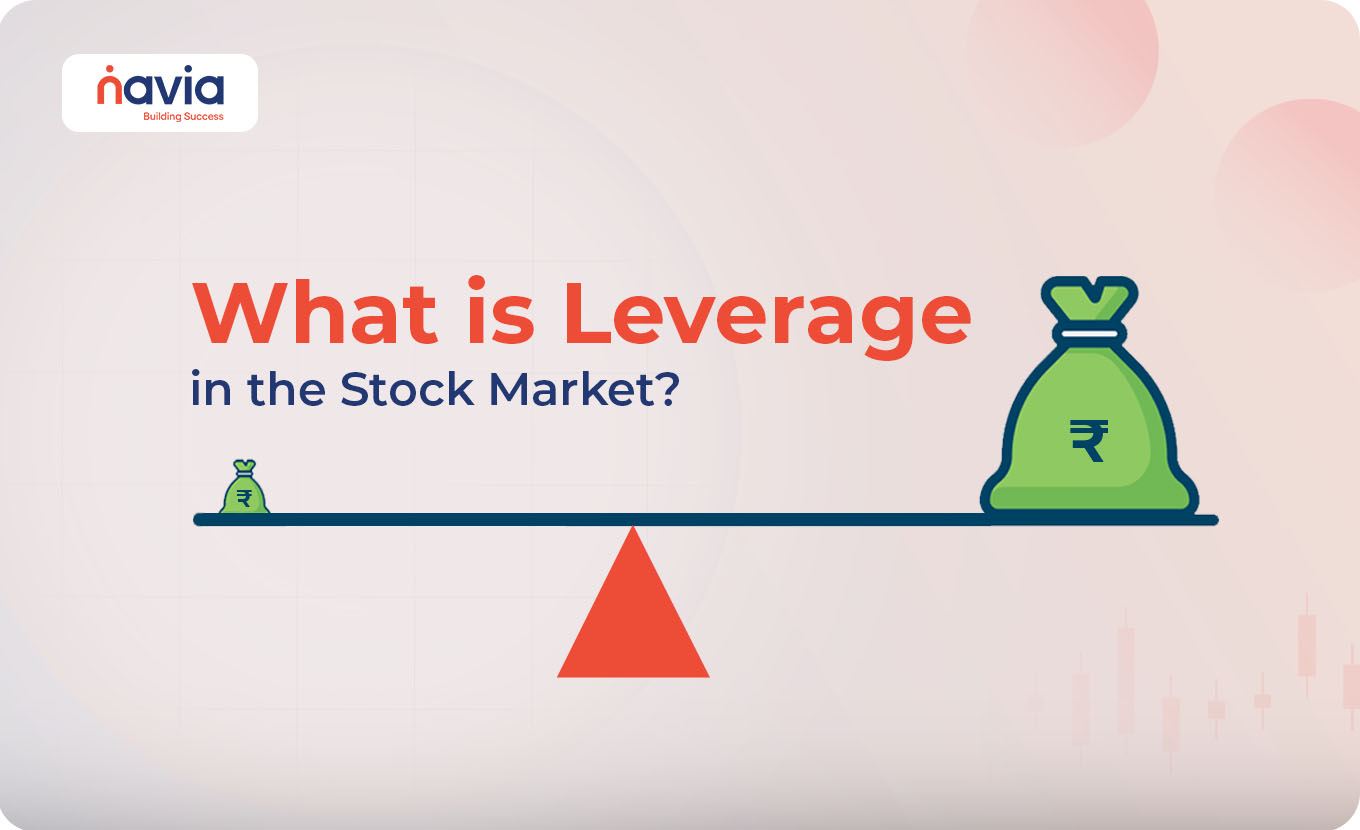
Leverage in the stock market refers to the practice of using borrowed capital to increase the potential return of an investment. The concept is simple: you commit a small amount of your own capital and borrow the rest to gain greater exposure to the market.
For example, if a trader uses a 5:1 leverage ratio, they can control ₹5,000 worth of stocks by investing only ₹1,000 of their own funds. The remaining ₹4,000 is borrowed, often from a broker. The gap between what you put in and what you actually control is explained further in notional and leverage exposure.
How Leverage in Stock Market Works?
Let us understand the process through an example.
If you want to buy 100 shares of a company trading at ₹100 each, without leverage you would need ₹10,000. But if your broker offers 5:1 leverage, you only need to invest ₹2,000, borrowing the remaining ₹8,000 from your broker.
If the stock price rises to ₹110, your 100 shares are worth ₹11,000. You can repay the ₹8,000 loan and you are left with ₹3,000, which is a ₹1,000 profit on your ₹2,000 investment.
However, if the stock price falls to ₹90, your shares are worth ₹9,000. After repaying ₹8,000, you are left with only ₹1,000, which means a 50% loss.
Advantages and Disadvantages of Leverage in Stock Trading
| Advantages | Disadvantages |
|---|---|
| Allows investors to control larger positions with a smaller capital outlay | A small price drop in a leveraged position can result in heavy financial damage |
| Traders can use their capital more efficiently, freeing up funds to diversify into other investments | Using leverage (especially borrowed money) often involves paying interest, which can eat into your potential profits |
| Investors can access high-value stocks or market opportunities | Leveraged positions are sensitive to market volatility |
| A small positive change in stock price can result in a substantial return in a short period | It encourages impulsive or overconfident trading behavior, leading to poor decisions and increased emotional stress |
| Many institutional and professional traders use it as a key component to maximize potential in volatile markets | If the value of your investment drops below a certain level, your broker may issue a margin call, requiring you to deposit more money or sell assets at a loss |
The interest cost in that second row is easy to underestimate; see MTF interest rates and how they affect your trading returns. The margin-call scenario in the last row is covered in what liquidation in MTF means.

Who Should Use Leverage in Stock Market?
Leverage is not suitable for everyone. It is mostly used by:
- Experienced traders: those who understand market risks and already have a solid trading strategy.
- Short-term traders: especially in day or swing trading, where positions are held for short periods.
- Forex traders: where high leverage is common and sometimes necessary because individual price movements are small.
Whichever group you fall into, it is worth reading the common mistakes to avoid while using Margin Trading Facility before you take a leveraged position.
Different Types of Leverage in Trading
| Types of Leverage | Description |
|---|---|
| Margin Trading | Borrowing money from a broker to buy more stocks than you can afford |
| Derivatives Leverage | Using instruments like options or futures that control large positions with small upfront costs |
| CFD Leverage | Contracts for Difference allow traders to speculate on price changes with high leverage |
| Forex Leverage | Currency trading typically offers high leverage (up to 100:1 or more) |
| Intraday Leverage | Brokers offer higher leverage for positions squared off within the same trading day |
| Leverage via ETFs | Some ETFs are leveraged to provide 2x or 3x the return of the underlying index. |
For the margin-trading row specifically, our beginner’s guide to using MTF in the stock market walks through the whole process, and how collateral value impacts margin availability explains how much leverage your holdings actually unlock.
Does Navia Provide Leverage in Trading?
Yes, Navia does provide leverage in trading through its Buy Today, Pay Later (Margin Trading Facility – MTF) option.
With this feature, traders can:
- Buy stocks today by paying only a fraction of the total amount.
- Pay the balance later while holding the shares in their demat account.
- Continue to enjoy delivery benefits since the shares are actually purchased and credited.
If you need to top up an open position later, see our guide to adding margin to an MTF position.
Conclusion
Leverage in the stock market is a powerful tool that can help traders and investors enhance their returns, but it comes with considerable risk. If you don’t understand the mechanics, it can lead straight to losses, so learn what leverage is, how it works and what its pros and cons are before deciding. Consider your risk tolerance, keep a clear strategy, and never invest more than you can afford to lose.
Investors considering leverage should carefully evaluate their risk tolerance, strategy, and broker facilities before using it.
Key Takeaways
- Leverage uses borrowed capital to control a position larger than your own funds allow.
- A 5:1 ratio means ₹1,000 of your capital controls ₹5,000 of stock, with ₹4,000 borrowed.
- Gains and losses are magnified by the same factor, so a modest adverse move can wipe out a large share of your capital.
- Borrowed money carries interest, which eats into any profit on a longer hold.
- Leverage comes in several forms: margin trading, derivatives, CFDs, forex, intraday and leveraged ETFs.
- It is legal in India and regulated by SEBI, with specific limits on intraday and derivatives leverage.
Did you find this article helpful?
Your feedback helps us write better content.

Frequently Asked Questions
What is leverage in trading?
Leverage in trading means borrowing funds from a broker to control a larger position than your capital allows. It helps amplify both gains and losses, making it a powerful yet risky strategy for traders.
Is trading with leverage a good idea?
Leverage trading can increase exposure, but it also magnifies losses. It may suit experienced traders who understand the risks.
Is leverage trading legal in India?
Yes, leverage trading is legal in India, but it is regulated by SEBI. There are specific rules about how much leverage brokers can offer, especially for intraday and derivatives trading.
How to calculate leverage?
Leverage is calculated using the formula:
Leverage = Total Position Value / Margin Required
Can beginners use leverage trading?
While beginners can use leverage, it’s generally not recommended without proper knowledge. Leverage magnifies both gains and losses, so new traders should first learn risk management before trading with borrowed capital.
DISCLAIMER: Investments in securities market are subject to market risks, read all the related documents carefully before investing. The securities quoted are exemplary and are not recommendatory. Full disclaimer: https://bit.ly/naviadisclaimer.