

Bond Yields Explained: Meaning, Importance & How to Calculate Them
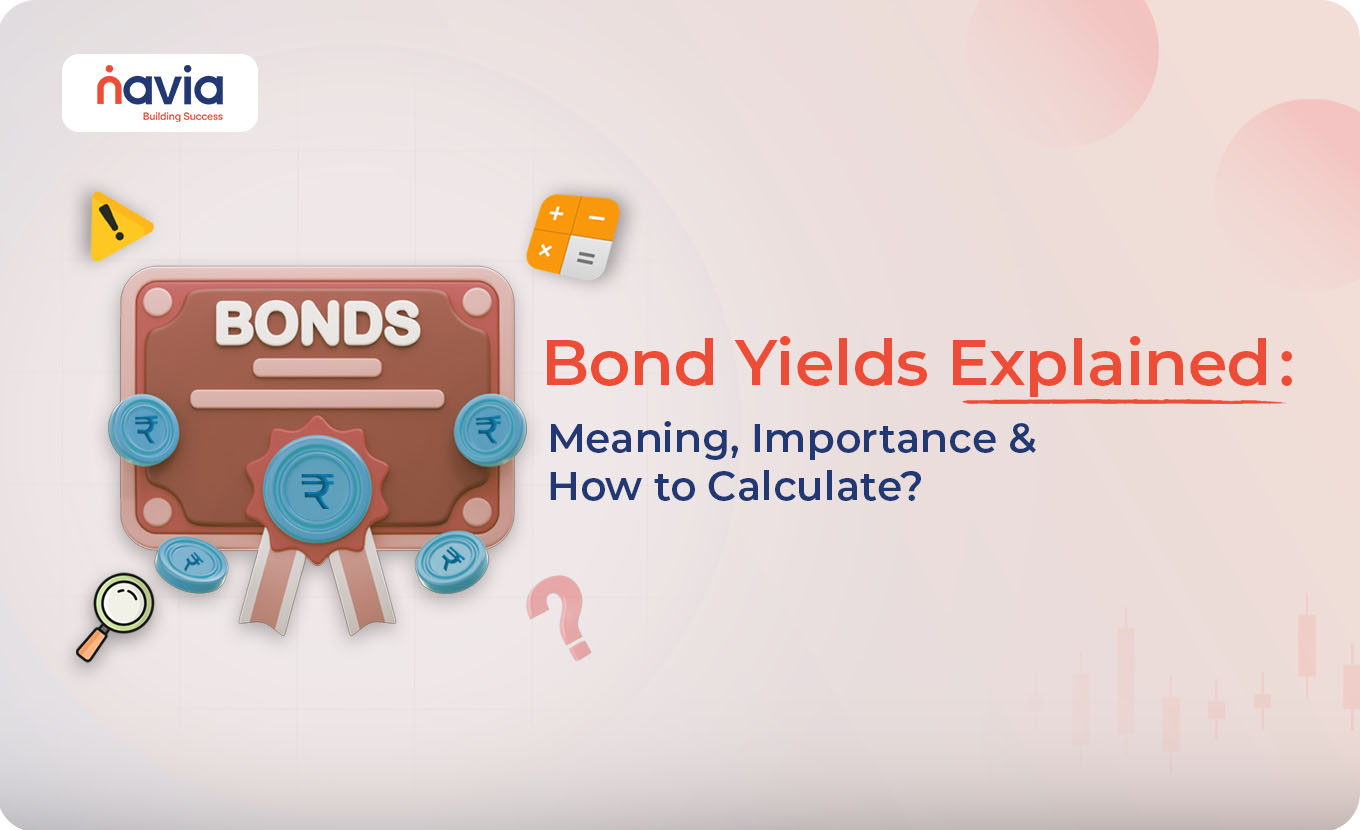
Bond yield plays a crucial role in fixed-income investing. Whether you are a seasoned investor or a beginner, knowing what bond yields are, how bonds and yields work and how a yield is calculated leads to smarter investment decisions. This blog explains the fundamentals of bond yields, the difference between yield and bond price, and how the various types of yield affect your portfolio. Let’s dive in.
💡 Quick Answer
Bond yield is the return an investor earns on a bond. The simplest measure is current yield: annual coupon divided by current market price, multiplied by 100. Yield and price move in opposite directions — when the price falls, the yield rises. Yield to Maturity, Yield to Call and Yield to Worst give progressively more complete pictures for bonds held to maturity or called early.
What is Bond Yield?
Bond yield means the return an investor earns on a bond. In simple terms, if you invest in a bond and hold it to the end, the yield shows your yearly return. The price of a bond changes with the market, and the yield changes with the price you paid.
The concept helps investors understand how much they can expect to earn from holding a bond over time. Keep in mind that yields fluctuate with interest rates and market conditions — both of which are shaped by RBI policy. For the wider picture, see India’s bond market in 2026.
How to Calculate Bond Yields?
Current yield is the simplest form of bond yield. You can calculate it with the formula below.
Current Yield = (Annual Coupon Payment / Current Market Price of the Bond) × 100
For example, if a bond pays ₹1,000 annually and is currently priced at ₹10,000, the current yield will be:
(₹1,000 / ₹10,000) × 100 = 10%
There are more comprehensive methods too:
- Yield to Maturity (YTM): the total return you can expect if you hold a bond until it matures, taking into account its price, face value, interest payments and time remaining.
- Yield to Call (YTC): some bonds can be “called” or repaid early. YTC assumes the bond is called before maturity and calculates the yield accordingly.
- Yield to Worst (YTW): the lowest yield you could receive if the bond is called before maturity. It helps assess downside risk.
Whatever the yield looks like on paper, the issuer’s credit quality decides how likely you are to actually receive it. Our guide to bond ratings in India explains what AAA, AA, A and BBB really mean.
Difference Between Bond Yield and Bond Price
Many investors confuse bond price with bond yield, but the two are inversely related:
- When the bond price goes up, the yield goes down.
- When the bond price goes down, the yield goes up.
For example, if you buy a bond for ₹1,000 with a 10% coupon, you earn ₹100 per year. If the bond price drops to ₹900, new buyers still receive ₹100 per year, making the yield higher for them. This relationship matters because it shows how sensitive a bond’s return is to movements in market interest rates.

Types of Bond Yields
Understanding the types of bond yields gives you better insight into what you are earning and the risks attached to it:
| Types of Bond Yields | Definition |
|---|---|
| Nominal Yield | Also known as coupon rate, it is the interest rate stated on the bond when issued |
| Current Yield | Reflects the return based on the current market price, not the face value |
| Yield to Maturity (YTM) | Considers all future coupon payments, the purchase price, and time to maturity |
| Yield to Call (YTC) | Helps investors evaluate callable bonds where the issuer might repay early if interest rates fall |
| High Yield Bonds | Also known as junk bonds, are bonds that offer higher interest rates to compensate for their lower credit ratings and higher risk of default |
What you keep from a yield also depends on tax treatment; see taxation on bonds in India. And if you are considering bonds as a counterweight to equities, read how corporate bonds can stabilize your returns.
Conclusion
Bond yield is a vital concept in fixed-income investing. It helps you assess potential returns and risks, compare investment opportunities and align your bond portfolio with your goals. Whether you are a conservative investor looking for steady income or trying to balance a diversified portfolio, understanding bond yields gives you an edge.
Investors should evaluate bond yields carefully to align fixed-income investments with their overall portfolio goals.
Key Takeaways
- Bond yield is the return you earn on a bond, and it moves with the price you pay for it.
- Current yield = (annual coupon ÷ current market price) × 100, the simplest of the yield measures.
- Bond price and yield move inversely: a falling price raises the yield for a new buyer.
- Yield to Maturity accounts for price, face value, coupons and time remaining.
- Yield to Call and Yield to Worst matter for callable bonds and show the downside case.
- High-yield (junk) bonds pay more precisely because their credit rating and default risk are worse.
Did you find this article helpful?
Your feedback helps us write better content.

Frequently Asked Questions
What does bond yield tell investors?
Bond yield tells you how much return you can expect from your bond investment. It also offers insights into market expectations, interest rate movements, and the issuer’s creditworthiness.
How can I use bond yield in real life?
Bond yields provide insights that investors may consider when assessing fixed-income opportunities and market conditions.
Who buys high bond yields?
High bond yields often attract:
- Risk-tolerant investors
- Institutional buyers
- Investors in high-inflation or rising rate environments
However, high yield typically comes with higher risk, so due diligence is essential.
Can we calculate a bond yield?
Yes, bond yields can be calculated using various formulas:
- Current Yield (basic)
- Yield to Maturity (YTM) (complex, requires financial calculator)
- Yield to Call (YTC)
Tools like Excel or online calculators simplify the process for retail investors.
DISCLAIMER: Investments in securities market are subject to market risks, read all the related documents carefully before investing. The securities quoted are exemplary and are not recommendatory. Full disclaimer: https://bit.ly/naviadisclaimer.