

A Guide to the Three Inside Down Candlestick Pattern
In the stock market environment in 2026, the can influence how market participants interpret price movements often comes down to timing. While many traders rely on lagging indicators, some market participants look for specific “signatures” in the market—patterns that may indicate weakening buying momentum.
One of the most potent of these signals is the three inside down candlestick pattern. As a triple-candle formation, it offers a “story” of market psychology, transitioning from extreme optimism to a cold, bearish reality. In this guide, we’ll explore how to identify and understand how traders commonly interpret the pattern.
💡 Quick Answer
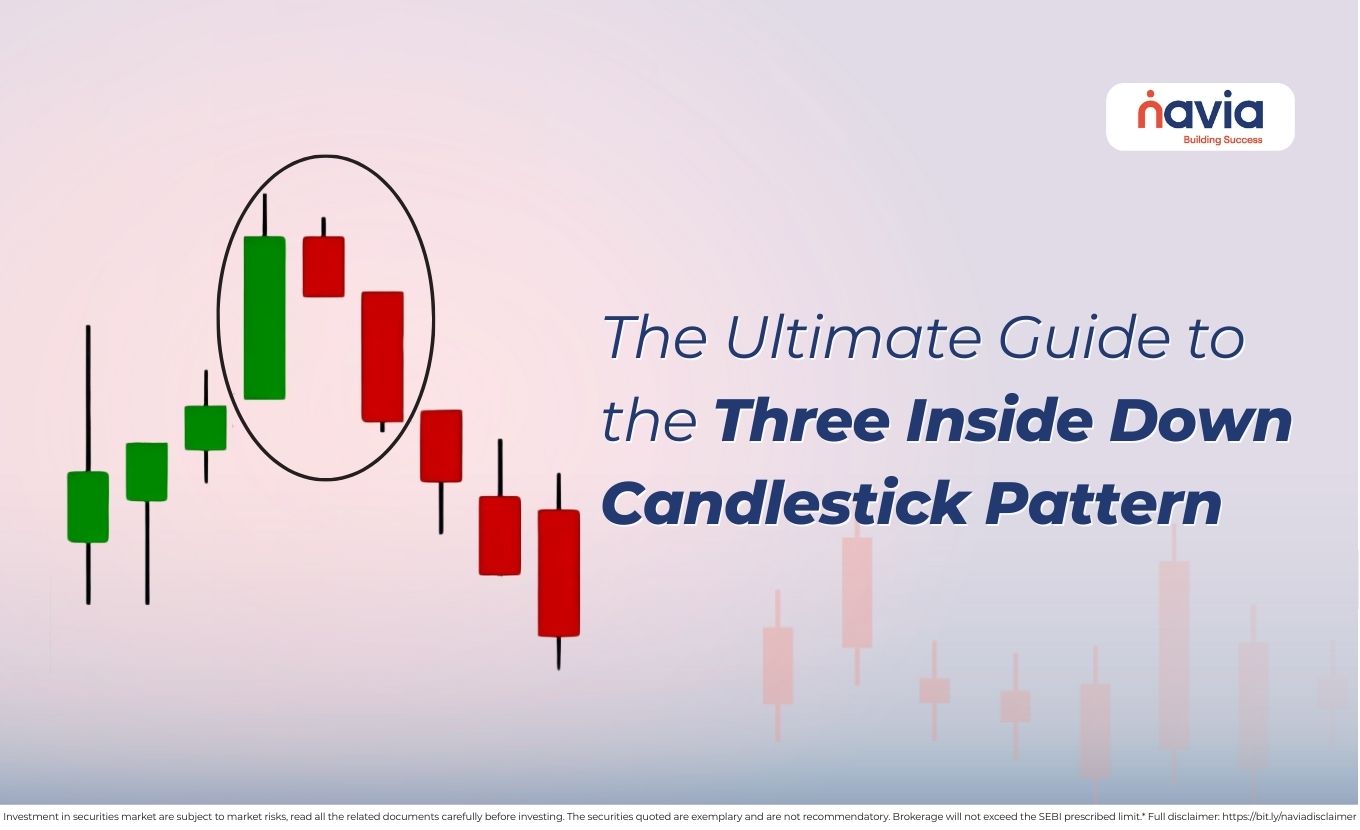
The three inside down is a three-candle bearish reversal that forms at the top of an uptrend: a large green candle, a small red candle contained inside its body (a bearish Harami), and a third red candle that closes below the first candle’s low—confirming sellers have taken control. It is the mirror image of the three inside up pattern.
What is the Three Inside Down Candlestick Pattern?
The three inside down candlestick pattern is a bearish reversal formation that typically appears at the peak of an uptrend. It is essentially an “upgraded” version of the Bearish Harami. While a Harami consists of only two candles and often requires extra confirmation, the three inside down candlestick pattern includes that confirmation as part of its very structure.
This pattern is often interpreted as a shift from buying interest to selling pressure. For traders on platforms, spotting this early can be the difference between catching a trend reversal at the top or getting trapped in a “bull trap.”
Anatomy of the 3 Inside Down Candle Pattern
To trade this effectively, you must understand the role each of the three candles plays in the narrative.
| The First Candle (The Bullish Peak) | The pattern begins with a large, strong bullish (green/white) candle. This candle represents the climax of the current uptrend. Buying activity appears dominant, and sentiment is highly optimistic. |
| The Second Candle (The Hesitation) | The second candle is smaller and bearish (red/black). Crucially, its entire body—from open to close—is contained within the body of the first candle. This is known as an “inside bar.” It shows that the bulls tried to push higher but failed, and the bears managed to close the price lower than the previous day’s close. |
| The Third Candle (The Confirmation) | The third candle is a long bearish candle that closes below the low of the first candle. This is the most important part of the 3 inside down candlestick pattern. It proves that the selling pressure appears to strengthen, and may indicate a potential change in trend direction. |
Market Psychology: Why It Works
The effectiveness of the three inside down candlestick pattern lies in the shifting emotions of market participants:
- Day 1: Everyone is buying. The “Fear of Missing Out” (FOMO) is at its peak.
- Day 2: The “Gap Down” or lower open on the second day surprises the bulls. The price stays within the previous day’s range, creating a “wait-and-see” atmosphere. Some market participants may reduce positions.
- Day 3: Selling activity may increase. As the price breaks below the first candle low, long-term holders start hitting the sell button to protect profits, and additional market participation may occur, creating a continued downward price movement.

How Traders Commonly Interpret the Three Inside Down Pattern?
Spotting the pattern is only half the battle; interpretation of the pattern is an important part of technical analysis. Here is a commonly discussed technical-analysis approach (educational purpose only):
| Confirm the Context | A 3 inside down candlestick pattern is meaningless if it appears in a sideways or choppy market. It is often evaluated after a sustained uptrend or near a known resistance level to be considered a potential reversal indication. |
| Entry Strategy | Some traders monitor price action after the third candle closes or on the open of the fourth candle. You can enter the moment the third candle breaks below the low of the first candle. |
| Risk Management Considerations | Some traders use nearby price levels for risk management. This is the “line in the sand.” If the price returns to this level, the bearish thesis is invalidated. |
| Price Levels Traders Often Monitor | Look for the next major support zone or use a 2:1 Reward-to-Risk ratio. Since this is a reversal pattern, the ensuing downtrend can often be quite long, so consider trailing your stop-loss to manage positions. |
Common Pitfalls to Avoid
- Ignoring Volume: If the third candle of the three inside down candlestick pattern forms at very low volume, it might be a confirm institutional selling. Look for a surge in volume on the third day to confirm institutional selling.
- Over-Trading: Not every three-candle sequence is a trade. Ensure the first candle is truly “large”, and the second is truly “inside.” If the second candle is too big, the pattern loses its analytical significance.
- Neglecting Indicators: Always pair the 3 inside down candle pattern with tools like the Relative Strength Index (RSI). If the RSI is in the “Overbought” zone (above 70) when the pattern forms, the some traders use RSI as an additional confirmation tool..
Conclusion
The three inside down candlestick pattern is one of the frequently referenced “roadmaps” for short-term and intraday traders. It doesn’t just show you price movement; it shows you a shift in power. By waiting for that third bearish candle to close, you are essentially waiting for additional confirmation to you before you risk a single rupee.
As markets become more algorithmic in 2026, these classic price action patterns remain the most consistent way to read the “human” side of the market. For the bullish mirror image of this setup, study the three inside up pattern, and compare it with the bearish three outside down pattern.
Did you find this article helpful?
Your feedback helps us write better content.

Related Candlestick Patterns
- Three Inside Up pattern (bullish opposite)
- Bearish Mat Hold pattern
- Bearish Three Outside Down pattern
- Bearish Kicker pattern
- Bearish Abandoned Baby pattern
- Three Outside Up pattern
- Bullish Kicker pattern
- Tweezer Top pattern
- Tweezer Bottom pattern
Key Takeaways
- A three-candle bearish reversal that appears at the top of an uptrend.
- Candle 2 is a bearish Harami (inside candle 1); candle 3 closes below candle 1’s low to confirm.
- It is an “upgraded” Bearish Harami with built-in confirmation.
- A volume surge on the third candle strengthens the signal.
- The direct opposite of the three inside up pattern.
Frequently Asked Questions
What is the three inside down candlestick pattern?
The three inside down candlestick pattern is a bearish reversal formation that appears at the top of an uptrend. It consists of three consecutive bars:
➢ First Candle: A large bullish (green) candle that continues the uptrend.
➢ Second Candle: A small bearish or bullish candle that is completely contained within the body of the first candle (an “inside bar”).
➢ Third Candle: A large bearish (red) candle that closes below the low of the first candle, confirming the reversal.
What does the three inside candle mean?
A “three inside” formation (whether Up or Down) tells a story of trend exhaustion.
◆ The first large candle shows the current trend is at its peak.
◆ The second “inside” candle shows a sudden drop in volatility and indecision; the market is “pausing” because buyers and sellers are reaching an equilibrium.
◆ The third candle shows which side won the battle. In a Three Inside Down, it means the bears have successfully overwhelmed the bulls.
How to trade with inside candles?
Trading inside candles effectively requires a “breakout” strategy. Here is the standard professional approach:
✔ Identify the Mother Bar: The large candle that precedes the inside candle is the “Mother Bar.” Mark its high and low.
✔ Wait for the Breakout: Place a Sell Stop just below the low of the mother bar (for bearish setups) or a Buy Stop just above its high (for bullish setups).
✔ Confirm with the Third Candle: Most successful 2026 traders wait for the third candle to close outside the mother bar’s range to avoid “fakeouts.”
✔ Stop Loss: Place your stop loss on the opposite side of the Mother Bar.
What is the commonly studied pattern in trading?
While “most powerful” is subjective, the Engulfing Pattern and the Pin Bar are widely considered the most reliable due to their clear rejection of price levels. However, in terms of statistical accuracy, three-candle patterns like the Three Inside Down or Evening Star are often more powerful because they include a built-in “confirmation” candle, which filters out many false signals.
DISCLAIMER: Investment in securities market are subject to market risks, read all the related documents carefully before investing. The securities quoted are exemplary and are not recommendatory. Full disclaimer: https://bit.ly/naviadisclaimer.