

Q1 FY27 NIFTY 50 Earnings: Understanding the Quarterly Results
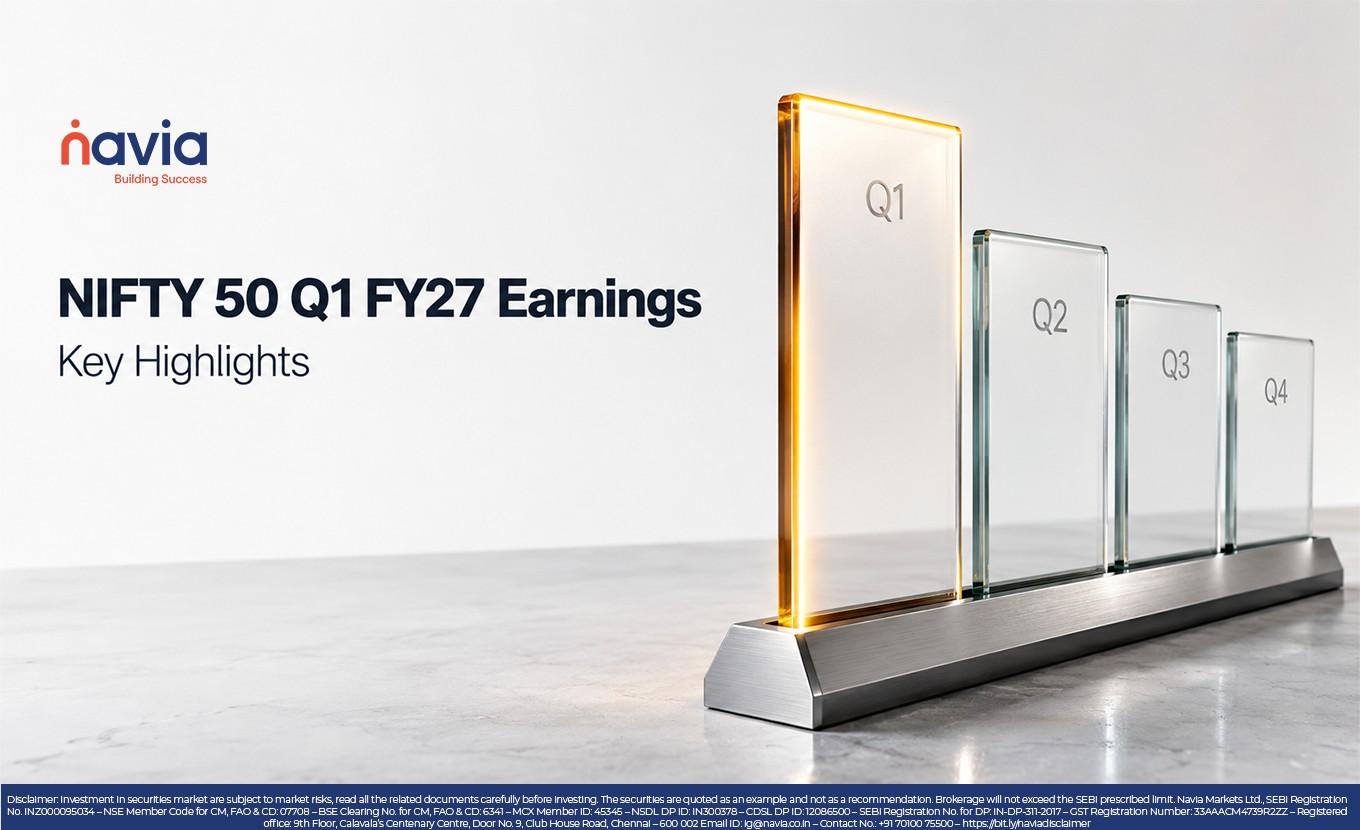
The Q1 FY27 earnings season offers an early look at the financial performance of NIFTY 50 companies for the April–June 2026 quarter. Quarterly results help investors understand revenue growth, profitability, and sector performance across India’s largest listed companies. This article reviews the results announced up to the publication date and highlights the key trends emerging from the earnings season. The overall earnings picture will become clearer as more companies announce their Q1 FY27 quarterly results.
💡 Quick Answer
Q1 FY27 covers the April to June 2026 quarter, the first quarter of FY2026–27. Early NIFTY 50 results point to healthy revenue and operating-profit growth but softer net-profit growth, as rising costs squeeze margins — with industrials, automobiles, energy and financial services among the stronger sectors. The overall picture firms up as more companies report.
Why Are Analysts Watching This Quarter Closely?
The NIFTY 50 declined during Q4 FY26 amid geopolitical tensions and changing global market conditions. Q1 FY27 brought a recovery, and the index posted positive returns during the April–June quarter. At the same time, companies started reporting their quarterly results. These results help investors compare market performance with business performance across sectors.
What Do Early Numbers and Estimates Show?
Brokerage previews paint a fairly similar picture across the board. Analysts expect Nifty 50 companies to post strong revenue growth. Most estimates fall in the mid-teens percentage range, year-on-year. EBITDA, a measure of core operating profit, should grow at a similar pace. Net profit growth, however, looks much softer, in the high single digits. This gap between sales growth and profit growth is the real story this quarter.
Why Doesn’t Revenue Growth Always Mean Profit Growth?
Revenue growth means a company sold more products or services. It can also be earned from higher selling prices. However, higher revenue does not always increase profits. Rising raw material costs, employee expenses, and interest costs can reduce profit margins. The Q1 FY27 quarterly results help investors compare revenue growth, profitability, and margin trends across companies.

Which Sectors Look Strong This Quarter?
The Q1 FY27 earnings season shows performance across different sectors. Based on the quarterly results announced so far, industrials, automobiles, energy, and financial services have reported healthy business performance. Companies across other sectors have reported mixed results, reflecting differences in demand, costs, and business conditions. As more companies announce their Q1 FY27 results, the sector-wise performance picture may become clearer.
Q1 FY27 at a Glance
| Metric | Analyst Estimate (YoY) |
|---|---|
| Revenue Growth | Roughly mid-teens percentage growth |
| EBITDA Growth | Similar healthy pace to revenue |
| Net Profit (PAT) Growth | High single-digit percentage growth |
| Nifty 50 Index Move (Q1 FY27) | Recovered by 6.6%, after a 14% dip in Q4 FY26 |
| Stronger Sectors | Industrials, autos, energy, financials |
| Weaker Sectors | Exports, consumer-facing businesses |
How does this information help?
Index-level trends provide a broad view of the market. However, individual companies may report different financial results and business performance. It is always advised to go through a company’s quarterly results, other financial statements, and regulatory disclosures before any investment decision. As more Q1 FY27 results become available, investors can monitor new disclosures to stay informed. The Navia All-in-One App provides access to market updates and company announcements in one place.
Conclusion
The Q1 FY27 earnings season highlights how NIFTY 50 companies performed during the April–June 2026 quarter. The quarterly results released so far offer early insights into the financial performance of NIFTY 50 companies across sectors. These results help investors understand how costs and business conditions affect company performance. As more companies announce their Q1 FY27 results, the overall earnings picture will provide a broader view of the quarter.
DID YOU FIND THIS INTERESTING?
We’d love to hear from you –

Key Takeaways
- Q1 FY27 covers the April to June 2026 quarter, the first quarter of FY2026–27.
- Analysts expect strong revenue and EBITDA growth, but net-profit growth is likely softer.
- Rising raw-material, employee and interest costs can widen the gap between sales and profit.
- Industrials, automobiles, energy and financial services have reported healthier performance so far.
- Index-level trends are a broad guide; always review a company’s own results before investing.
FREQUENTLY ASKED QUESTIONS
What period does Q1 FY27 cover?
Q1 FY27 shows the first quarter of the 2026–27 FY. It includes business performance from April through June 2026.
Why did the NIFTY 50 rise during Q1 FY27?
The NIFTY 50 recorded positive returns during the April–June 2026 quarter. Market performance reflected several domestic and global factors, while companies announced their Q1 FY27 quarterly results.
Why can profit growth increase more slowly than revenue growth?
Higher revenue does not necessarily mean it should result in higher profits. Rising raw material costs, employee expenses, and interest costs can reduce profit margins.
Which are the sectors to report strong performance in Q1 FY27?
Based on the Q1 FY27 quarterly results announced so far, industrials, automobiles, energy, and financial services have reported healthy business performance. Additional results may provide a broader sector-wise view.
Should investors rely only on index-level earnings trends?
No. Index-level trends provide a broad market view. Review a company’s quarterly results, financial statements, and business fundamentals before making any investment decision.
When will the Q1 FY27 earnings season conclude?
Companies announce their quarterly results according to the applicable regulatory timelines. The overall Q1 FY27 earnings picture becomes clearer as more companies release their results.
DISCLAIMER: Investment in securities market are subject to market risks, read all the related documents carefully before investing. The securities quoted are exemplary and are not recommendatory. Full disclaimer: https://bit.ly/naviadisclaimer