

What Happens When Shares Aren’t Delivered? Short Delivery Explained
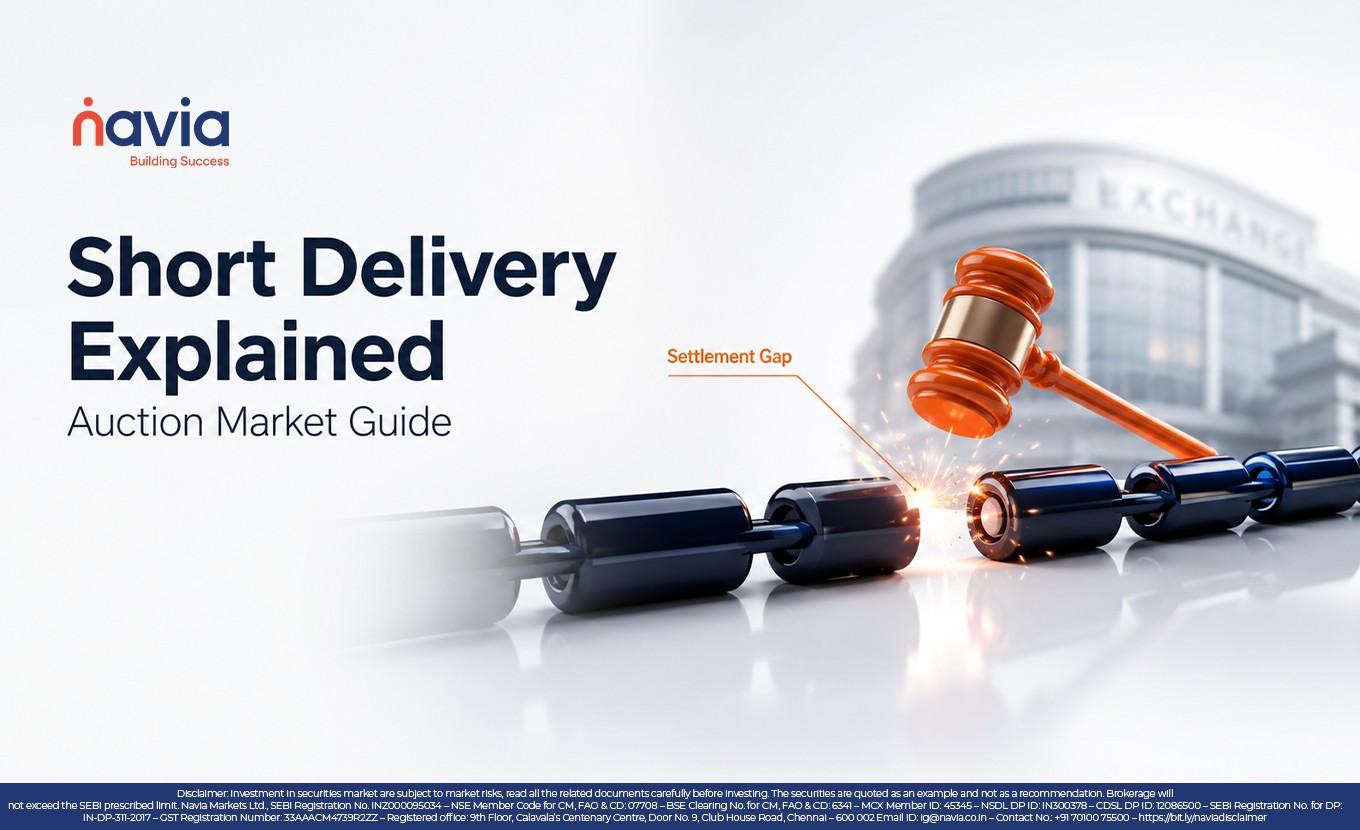
Short delivery occurs when a seller is unable to deliver the shares sold by the applicable settlement deadline, resulting in a delivery shortfall. The exchange’s clearing corporation facilitates settlement in accordance with the applicable exchange and clearing corporation framework. Where a delivery shortfall occurs, the auction mechanism may be used to complete settlement. This blog explains how the short delivery and auction settlement process works, so you can better understand what happens if one of your trades is affected by a delivery shortfall.
💡 Quick Answer
Short delivery is when a seller cannot deliver the shares they sold by the T+1 settlement deadline. The exchange’s clearing corporation then applies a valuation debit to the defaulting seller and runs an auction (generally on T+1, settling T+2) to source the shares for the buyer. If the auction fails, the trade is settled through a close-out. Buyers usually need to do nothing; sellers should keep shares available in the demat account before selling.
What Exactly Is Short Delivery?
Under the current T+1 settlement cycle, if you sell shares on Monday, they are required to be delivered by Tuesday. If the shares are not delivered within the applicable settlement timeline, the transaction is treated as a short delivery under the applicable exchange framework. The exchange’s clearing corporation facilitates settlement in accordance with the applicable exchange and clearing corporation framework, and how trade settlement works determines these deadlines. Where a delivery shortfall occurs, the auction mechanism may be used to complete settlement instead of cancelling the trade.
How Does BTST Trading Lead to Short Delivery?
One common cause of short delivery is BTST (Buy Today, Sell Tomorrow) trading. Since shares are credited to your demat account only after settlement is completed, selling them before they are available for delivery may result in a delivery shortfall if the purchase settlement is delayed. Accordingly, some brokers may impose restrictions on BTST transactions based on their risk management policies until the shares are available for delivery.
What Happens Immediately After a Short Delivery?
Once the exchange identifies a delivery shortfall under the applicable settlement framework, it debits the defaulting seller’s account by an amount known as the valuation debit, calculated in accordance with the applicable exchange and clearing corporation framework. This helps secure funds against the shortfall while the clearing corporation initiates the auction process to procure the required shares, where applicable.
How Does the Auction Market Actually Work?
The auction market is a separate trading session, accessible only to exchange members, that is used to procure shares not delivered by the defaulting seller. The auction process is conducted in accordance with the applicable exchange settlement schedule and, under the current framework, generally takes place on T+1. Where the required shares are successfully procured through the auction, they are delivered to the original buyer, with settlement generally completing on T+2.
| Day | What Happens |
|---|---|
| T (Trade Day) | Trade executes; seller must deliver shares |
| T+1 | Exchange identifies the shortfall; valuation debit applied; auction conducted |
| T+2 | Auction settlement completed. Where the auction is successful, the buyer receives the shares. Where it is unsuccessful, settlement is completed through the applicable close-out mechanism. |

What Happens If the Auction Fails?
If the required shares are not successfully procured through the auction, settlement is completed in accordance with the applicable close-out methodology prescribed by the exchange and clearing corporation. Under the applicable exchange rules, the defaulting seller may incur additional financial obligations arising from the close-out process.
What Should You Do as a Buyer or Seller?
As the buyer, you generally do not need to take any action. Where a transaction is affected by a short delivery, the exchange’s clearing corporation manages the auction or close-out process in accordance with the applicable framework, and your broker may notify you, subject to its communication process. As the seller, ensure that the shares intended for delivery are available in your demat account before placing a delivery sell order to help avoid a delivery shortfall.
Conclusion
A short delivery may seem concerning at first, but the auction market and close-out mechanism are designed to facilitate settlement in accordance with the applicable exchange and clearing corporation framework. Understanding the sequence—delivery shortfall, valuation debit, auction process, settlement, and, where applicable, close-out—can help you better understand how such situations are handled. As a seller, ensure that only shares available for delivery in your demat account are sold to help avoid delivery shortfalls.
Key Takeaways
- Short delivery = a seller fails to deliver sold shares by the T+1 settlement deadline, creating a delivery shortfall.
- The exchange applies a valuation debit to the seller and runs an auction (generally T+1, settling T+2) to source the shares for the buyer.
- If the auction fails, the trade is settled via a close-out; the buyer is protected, and the defaulting seller may bear additional costs.
- BTST (Buy Today, Sell Tomorrow) is a common trigger — selling before your own purchase settles; sellers should keep shares in the demat account first.
- Related reading: block deal vs bulk deal and how to read a contract note.
Did you find this article helpful?
Your feedback helps us write better content.

Frequently Asked Questions
What does short delivery mean in the stock market?
Short delivery occurs when a seller fails to transfer the shares they sold to the buyer’s demat account by the T+1 settlement deadline.
Does the buyer lose money if the seller short delivers?
Generally no. The exchange guarantees settlement through the auction market, and if the auction fails, the buyer receives cash compensation through a close-out instead.
When does the auction for short-delivered shares take place?
On T+1, the same day the shortfall gets identified, with the auction settlement completing on T+2.
Why does BTST trading sometimes cause short delivery?
Because you’re selling shares before your own purchase settlement fully completes, occasionally leaving you unable to deliver on time — which is why some brokers may restrict BTST sales until shares are confirmed in your account.
What is a valuation debit?
It’s the amount the exchange debits from a defaulting seller’s account immediately after a short delivery, calculated in accordance with the applicable exchange and clearing corporation methodology.
What happens if the auction can’t find enough sellers?
The exchange completes settlement through the applicable close-out mechanism in accordance with the relevant exchange and clearing corporation rules.
DISCLAIMER: Investment in securities market are subject to market risks, read all the related documents carefully before investing. The securities quoted are exemplary and are not recommendatory. Full disclaimer: https://bit.ly/naviadisclaimer