

The Availability Heuristic in Investing – Why Recent News Shapes Your Decisions
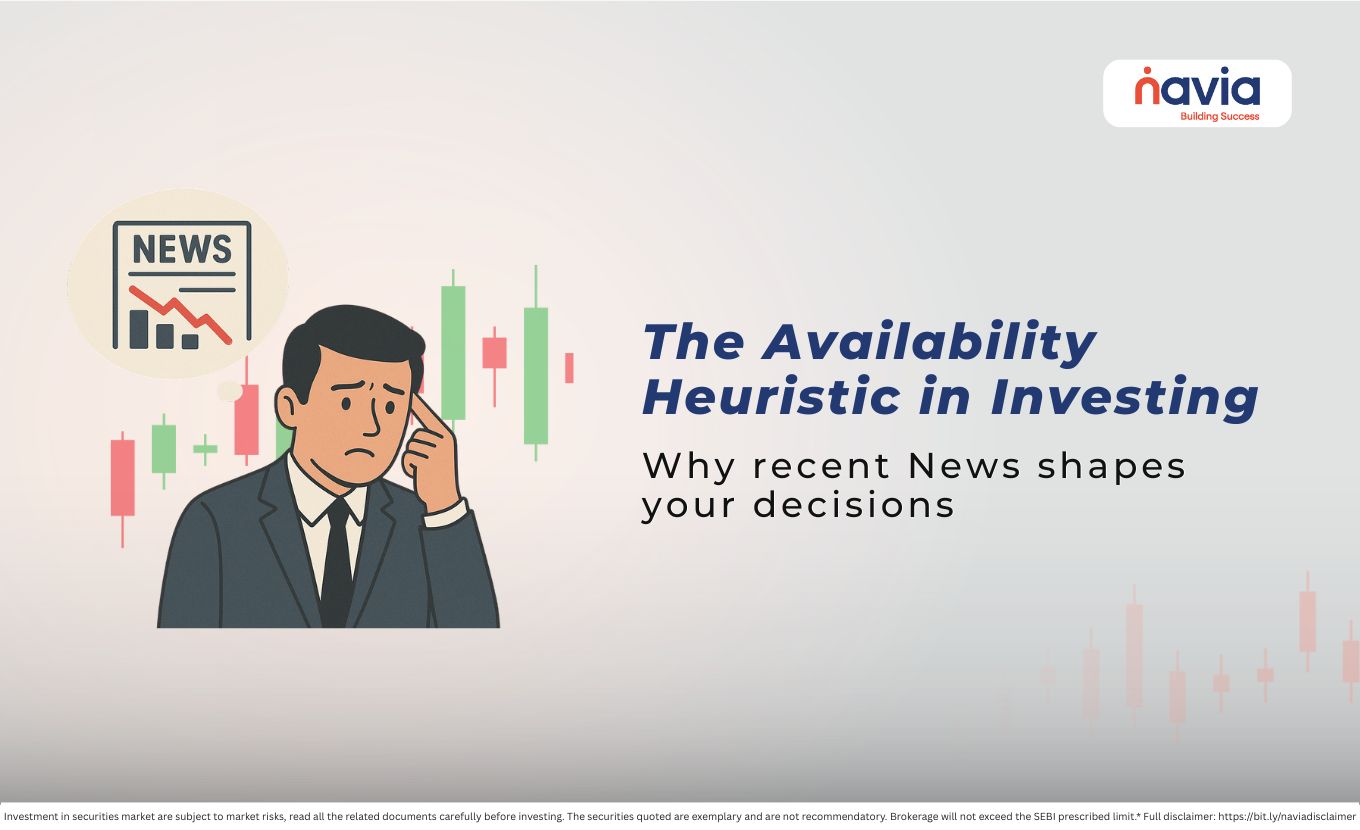
Have you ever avoided investing in airline stocks right after hearing about a plane crash? Or rushed to buy a stock just because it was all over the news for hitting record highs? If yes, you’ve experienced the Availability Heuristic in action.
💡 Quick Answer
The availability heuristic is a mental shortcut where you judge how likely something is by how easily an example springs to mind. In investing, a recent crash, a loud headline or a friend’s big win feels far more probable than it actually is, so money follows memory instead of evidence. The fix is process: rely on research, track records and valuations rather than impressions, stay diversified, and judge every decision against a 5–10 year horizon instead of the latest news cycle.
What is the Availability Heuristic?
The availability heuristic is a mental shortcut where people rely on the most recent, vivid, or easily recalled information to make decisions — instead of considering all the data objectively.
In investing, this often means making choices based on:
- Recent market events (crashes, rallies)
- Media headlines (news hype, scandals)
- Personal experiences (a friend’s big win or loss)
It is one of a family of mental shortcuts the brain uses to save effort. We cover the wider set in mental shortcuts in investing, and the way those shortcuts compound into full-blown manias in behavioral finance and market bubbles.
Everyday Examples in Investing
Market Crashes in Memory
After the 2020 market crash, many investors stayed away from equities for months, even when markets had already started recovering — because the crash was still fresh in their minds. The sting of that loss does the damage: as we explain in why we fear losses more than we enjoy gains, a vivid loss is recalled far more easily than a quiet, steady recovery.
IPO Buzz
A hyped IPO makes headlines, and investors rush to apply, even if the company’s fundamentals are weak. How that story is worded matters as much as the numbers behind it — see the framing effect in investing.
Sector News
After reading news about rising gold prices, investors suddenly feel gold is the safest bet, forgetting long-term diversification. The recalled price often becomes a reference point you refuse to move away from, which is the subject of anchoring bias in investing.

Why the Availability Heuristic is Dangerous?
- Skews Judgment: You give too much weight to recent or dramatic events.
- Leads to Herd Mentality: You follow the crowd because “everyone is talking about it.”
- Short-Term Focus: You ignore long-term fundamentals and strategy.
- Missed Opportunities: Avoiding investments due to fear or hype may cost future gains.
It also distorts what you do with the holdings you already own. Vivid recent gains tempt you to book profits early while losers are left to rot — the pattern described in the disposition effect — and a stock you personally picked feels more valuable simply because its story is easier to recall, which is the endowment effect at work.
How to Overcome the Availability Heuristic?
- Look Beyond Headlines – Don’t act only on the latest news or noise.
- Rely on Data – Use research, track records, and valuations instead of memory-based impressions.
- Diversify – Spreading investments across asset classes reduces the impact of emotional reactions.
- Think Long-Term – Remind yourself that today’s hype or fear won’t matter as much over a 5–10 year horizon.
One warning sign is certainty. When a handful of memorable wins convinces you that you can read the market, you have drifted into the overconfidence trap — and once your identity is tied to a call, letting go gets harder still, as we describe in when ego manages your portfolio.
Key Takeaway
The availability heuristic makes investors overreact to what’s fresh in memory rather than what’s true in reality.
Smart investing means resisting the temptation to chase what’s hot in the news or to panic from recent shocks. Instead, focus on fundamentals, long-term goals, and disciplined decision-making.
Investors can cut through market noise by focusing on data-driven, long-term strategies.
Key Takeaways
- The availability heuristic is judging probability by how easily an example comes to mind, not by how often it actually happens.
- Recent crashes, hyped IPOs and dramatic sector news are recalled easily, so they get far more weight in a decision than they deserve.
- Its usual side effects are herd behaviour, a short-term focus, and opportunities missed out of fear.
- Written research, track records and valuations are the antidote, because they do not fade or exaggerate the way memory does.
- Diversification limits the damage when a vivid story does slip past your process.
- Judging decisions over a 5–10 year horizon strips most of the emotional charge out of today’s headline.
Did you find this article helpful?
Your feedback helps us write better content.

DISCLAIMER: Investment in securities market are subject to market risks, read all the related documents carefully before investing. The securities quoted are exemplary and are not recommendatory. Full disclaimer: https://bit.ly/naviadisclaimer.