

Stock Buybacks Explained: How They Impact Share Prices
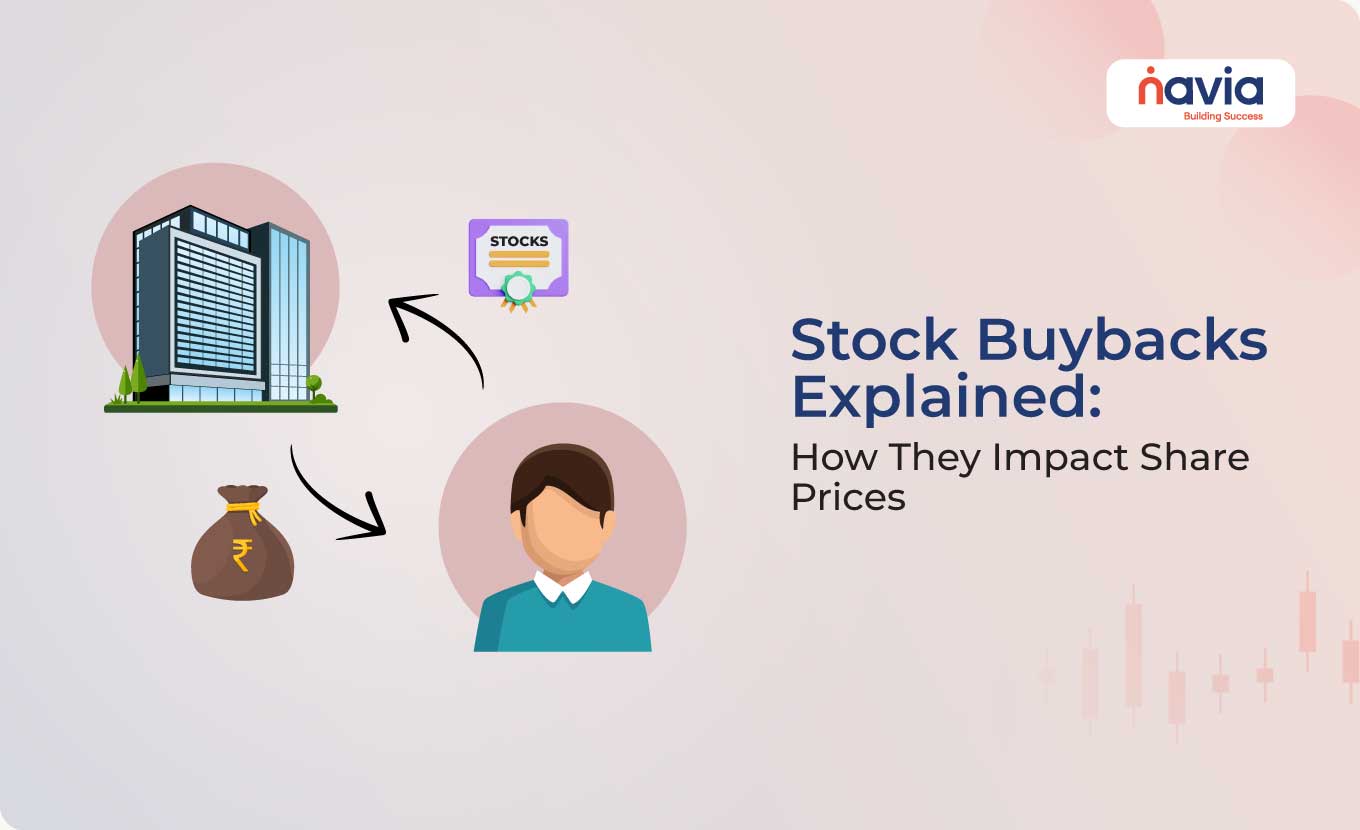
In recent years, stock buybacks have become a popular topic in the investing world. You may have seen headlines about companies announcing buyback programs, on that time you will be wondered. Actually, what are stock buybacks, and who do they matter? Both seasoned investors and beginners who should understand the buybacks are the key to making sense of stock market trends.
This blog will teach you about share buybacks meaning, their importance, how they work and most importantly how they impact share prices in detail.
💡 Quick Answer
A buyback is a company repurchasing its own shares, which cuts the number of shares outstanding. With the same profit spread over fewer shares, earnings per share rises, and the announcement is usually read as management signalling that it considers the stock undervalued. Indian companies do this through a tender offer, an open market purchase, a Dutch auction or a direct offer. A buyback is not automatically good news, though — it can be funded with debt, used to flatter ratios, or come at the expense of reinvesting in the business.
What Are Stock Buybacks?
Stock buybacks are also known as share repurchases; they happen when a company buys back its own shares from the stock market. By doing this, the particular company’s number of outstanding shares will be reduced, and it will increase the value of remaining shares.
In simple words, a stock buyback is the process of a company investing for itself. They are purchasing their own shares from investors, usually at a premium price. Instead of paying dividends they return money to their shareholders by reducing the number of shares.
Shares repurchased this way may be cancelled or held by the company, a distinction explained in treasury stocks explained. A buyback is one of several corporate actions that change your shareholding without you trading — others include rights issues and stock mergers.
Advantages and Disadvantages of Stock Buybacks
| Advantages | Disadvantages |
|---|---|
| Improves valuation ratios and attracting investors | Some firms take loans to fund buybacks, increasing financial risk |
| Shows management’s belief in the company’s growth | Frequent buybacks can give an artificial boost to share prices |
| In some cases, buybacks can be more tax-friendly than dividends | Companies may prioritize buybacks over long-term investments |
| Buybacks are not a long-term commitment | Cash used for buybacks could have been invested in expansion |
How Stock Buybacks Work?
To know how stock buybacks work, you first understand the methods of it. There are four popular methods available today, let’s break it down;
Tender Offer
The company allows the existing shareholders to sell shares at a fixed price; they can accept or decline the offer as per their choice. If you are applying buyback through this method, it incurs charges of ₹20 + GST for each order. And remember that these charges aren’t refundable.
The process of tender offer buyback is;
- Board Approval and Announcement
- Offer period
- Acceptance and Settlement
- Regulatory Compliance
Open Market Purchase
This method will give the organization the leeway to choose when and how many shares to buyback. If they acquire many shares this strategy will spread over a longer timeframe.
The process of open market purchase buyback is;
- The organization buys shares directly from the market over time
- Flexibility time and price
- Small impacts on share price
Dutch Auction Tender Offer
In this method, the organization sets a price range then shareholders submit their bids. After that the company analyzes the bids and determines the appropriate price to close the buyback.
The process of Dutch auction buyback is;
- Company announces tender offer
- Shareholders submit bids
- Company determines final price
- Purchase and payment
Direct Offer
In some case the organization chooses to approach one or several shareholders directly for buyback shares. The offer includes a premium over the market price as an incentive for the investors.
The process of direct offer buyback is;
- Direct negotiation
- Agreement
- Payment
- Share Status

Why Do Companies Go for Buybacks?
There are several reasons why companies initiate buybacks, some of them are given below:
- Boosting Shareholder Value: By reducing the number of outstanding shares, earnings per share (EPS) increase and lead to higher stock prices.
- Excessing Utilization of Cash: If a company has surplus cash and limited opportunities for expansion, buyback is a way to return money to their shareholders.
- Market Signaling: If a company offers buybacks that shows the management believes the stock is undervalued and worth investing in.
- Tax Efficiency: Some cases buybacks are more tax-efficient compared to dividends.
- Control Ownership: Companies can use buybacks to prevent hostile takeovers by consolidating ownership.
Impact of Stock Buybacks on Share Prices
How do buybacks affect share prices? It is one of the biggest questions of investors, let’s see.
Earnings Per Share (EPS)
If a company repurchases their shares will directly impact on their EPS through increasing the ratio. Because the net income frequently remains the same, while the number of outstanding shares reduces post purchasing. If the mechanics of that ratio are unfamiliar, how to calculate and use earnings per share works through it step by step.
Company’s Portfolio
If a company repurchases their company shares will display their confidence that positively impacts the potential investors. So, the organization can easily earn their shareholders’ trust through this strategy. Simultaneously the trust will improve the venture’s portfolio significantly.
Shareholder Value
Investors are always searching for profitable investment options like; they have steady EPS. If a business opts for share repurchase it will enhance their EPS significantly so it will be a much faster technique to project the company’s positive image to the investors.
Final Thoughts
Stock buybacks can influence a company’s valuation and shareholder returns, depending on its financial health and long-term strategy. The Indian investors should understand share buybacks meaning and how they work is necessary to make informed decisions.
Stock buybacks are not just about reducing share count, it is about corporate confidence, long-term strategy, and investor returns. Investors should carefully evaluate companies announcing buybacks to see if they align with their financial goals and risk tolerance.
Key Takeaways
- A buyback is a company repurchasing its own shares, which reduces the shares outstanding.
- Fewer shares against the same net income mechanically lifts earnings per share.
- The four routes covered here are the tender offer, open market purchase, Dutch auction tender offer and direct offer.
- Companies buy back to deploy surplus cash, to signal that management sees the stock as undervalued, and to consolidate ownership.
- The risks are real: debt-funded buybacks raise financial risk, and cash spent here is cash not reinvested in growth.
- Judge each buyback against the company’s balance sheet and strategy rather than treating the announcement itself as a buy signal.
Did you find this article helpful?
Your feedback helps us write better content.

Frequently Asked Questions
What is a share buyback?
A share buyback, also known as a stock buyback, is when a company repurchases its own shares from the stock market.
Are share buybacks a good thing?
Share buybacks can be positive as they may increase earnings per share (EPS), boost stock prices, and return surplus cash to shareholders. However, the benefit depends on the company’s financial health and long-term growth strategy.
Why would a company do a share buy back?
Companies typically do buybacks to:
- Improve share value by reducing supply
- Use excess cash efficiently
- Boost financial ratios like EPS and return on equity
- Signal strong confidence in future performance
Can we sell buyback shares?
Once you tender shares for a buyback during the offer period, you cannot sell them in the market simultaneously. However, you can withdraw your tender and re-tender within the offer window as per SEBI regulations
What is the maximum limit on the buyback of shares?
In India, as per SEBI regulations, a company can buy back a maximum of 25% of its total paid-up capital and free reserves in a financial year.
DISCLAIMER: Investment in securities market are subject to market risks, read all the related documents carefully before investing. The securities quoted are exemplary and are not recommendatory. Full disclaimer: https://bit.ly/naviadisclaimer.