

Investing through IPOs: Pros & Cons
- Tracking IPO Growth: Annual Amounts Raised from the year 2020 to 2023.
- Pros of Investing in IPOs:
- Opportunity for Early Investment
- Potential for Quick Gains
- Diversification
- A Comparison of Successful and Flopped IPOs
- Cons of Investing in IPOs:
- Volatility and Uncertainty
- Risk of Overvaluation
- Lock-Up Periods
- Navigating the IPO Landscape with Navia Markets!
- Key Takeaways
- Frequently Asked Questions
💡 Quick Answer
Investing through an Initial Public Offering lets you buy into a company as it lists, with the possibility of early-investment gains, a first-day price jump and added portfolio diversification. Against that sit real drawbacks: short-term volatility, the risk of overvaluation driven by hype, and lock-up periods that limit liquidity.
In the ever-evolving landscape of investment, Initial Public Offerings (IPOs) represent a pivotal moment not only for companies going public but also for investors looking to diversify their portfolios. As the Chief Marketing Officer of Navia Markets, a company at the forefront of offering comprehensive stock broking services, I’ve witnessed firsthand the surge in interest surrounding IPOs. But like any investment, diving into IPOs comes with its own set of advantages and challenges. Let’s unpack them.
Tracking IPO Growth: Annual Amounts Raised from the year 2020 to 2023.

Pros of Investing in IPOs:
Opportunity for Early Investment
IPOs offer investors a chance to get in on the ground floor. For companies with strong fundamentals and growth prospects, this early investment can translate into substantial returns as the company matures and expands its market share.
Potential for Quick Gains
Some IPOs experience a significant price jump on the first day of trading, offering investors an opportunity for quick gains. This “IPO pop” can be particularly attractive for short-term traders looking to capitalize on market sentiment.
Diversification
Adding IPOs to your investment portfolio can introduce a new layer of diversification. Investing in a newly public company can provide exposure to emerging sectors and technologies, potentially hedging against downturns in other areas of your portfolio.
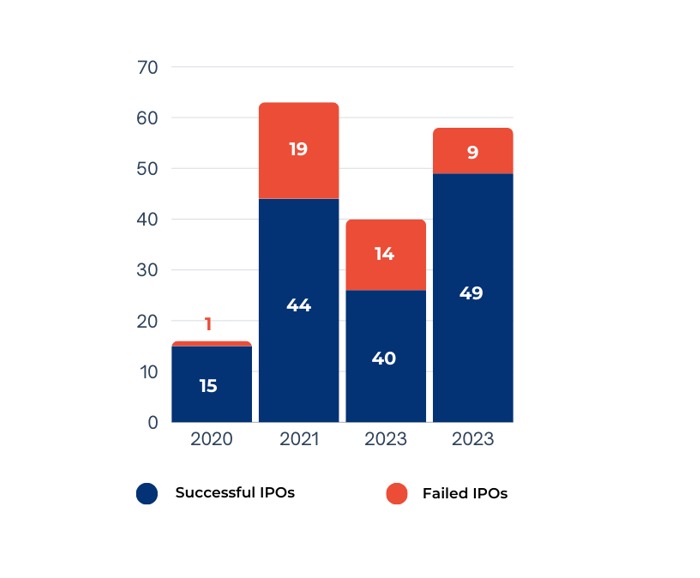
A Comparison of Successful and Flopped IPOs
Cons of Investing in IPOs:
Volatility and Uncertainty
IPOs can be highly volatile in the short term. The lack of historical market data can make it challenging to accurately value the company, leading to price fluctuations that may not align with the company’s fundamentals.
Risk of Overvaluation
Companies going public often attract a lot of attention and hype, which can lead to overvaluation. Investors jumping in on the buzz may find themselves holding shares priced well above their actual value, which can lead to losses as the market corrects.
Lock-Up Periods
It’s common for IPOs to have lock-up periods, where early investors and insiders are prohibited from selling their shares for a certain timeframe. This can limit liquidity and potentially lead to a drop in share price once the lock-up period expires and selling begins.
Navigating the IPO Landscape with Navia Markets!
At Navia Markets, we understand the allure and the apprehensions surrounding IPO investments. Our approach is rooted in thorough research, strategic planning, and a deep understanding of market dynamics. We empower our clients with the knowledge and tools they need to make informed decisions, whether they’re looking to explore the opportunities IPOs offer or diversify their investment portfolio further.
Investing through IPOs can be a lucrative venture, but it’s essential to approach it with a balanced perspective, acknowledging both its potential rewards and inherent risks. As you consider adding IPOs to your investment strategy, remember the importance of due diligence, strategic timing, and a well-rounded portfolio to navigate the complexities of the market successfully.
Key Takeaways
- An IPO lets investors buy in at the ground floor, which for a company with strong fundamentals can translate into returns as it matures.
- Some IPOs jump significantly on the first day of trading, an effect the article calls the IPO pop, which appeals to short-term traders.
- Adding a newly public company can diversify a portfolio by giving exposure to emerging sectors and technologies.
- IPOs can be highly volatile in the short term because the lack of historical market data makes the company hard to value accurately.
- Hype around a listing can drive overvaluation, and lock-up periods can limit liquidity and push the price down when they expire.
Did you find this article helpful?
Your feedback helps us write better content.

Frequently Asked Questions
What are the main advantages of investing in an IPO?
The article gives three: the opportunity for early investment at the ground floor, the potential for quick gains from a first-day price jump, and diversification through exposure to emerging sectors and technologies.
What is an IPO pop?
Some IPOs experience a significant price jump on the first day of trading. The article calls this the IPO pop and notes it can be particularly attractive to short-term traders looking to capitalise on market sentiment.
Why are IPOs volatile?
IPOs can be highly volatile in the short term because the lack of historical market data makes it challenging to value the company accurately, leading to price fluctuations that may not align with fundamentals.
What is a lock-up period in an IPO?
A lock-up period is a timeframe during which early investors and insiders are prohibited from selling their shares. It can limit liquidity and potentially lead to a drop in share price once the period expires and selling begins.
Can an IPO be overvalued?
Yes. Companies going public often attract a lot of attention and hype, which can lead to overvaluation. Investors who buy on the buzz may end up holding shares priced well above their actual value.
DISCLAIMER: Investments in the securities market are subject to market risks, read all the related documents carefully before investing. The securities quoted are exemplary and are not recommendatory. Brokerage will not exceed the SEBI prescribed limit. Full disclaimer: https://bit.ly/naviadisclaimer