

Exploring IPOs in India: A Beginner’s Guide to Investment
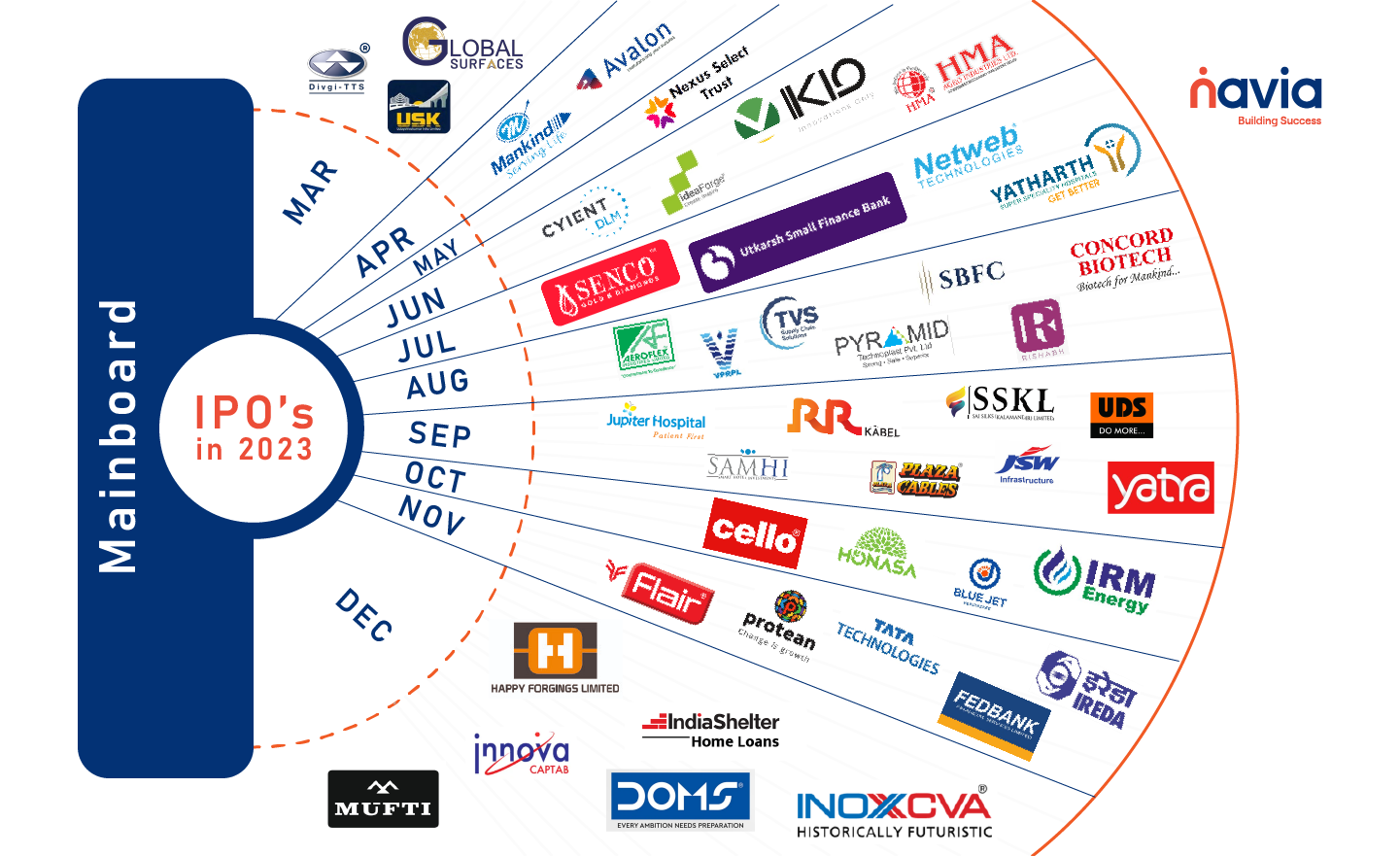
Welcome to the exciting universe of investments, where there’s room for growth and the chance for financial success. If you’re new to this adventure, you’ve probably heard of the term “IPOs” – Initial Public Offerings. In this article, we’ll help you understand what they are, why they’re important, and we’ll also explore their advantages and drawbacks in a way that’s easy to grasp.
💡 Quick Answer
An Initial Public Offering is when a private company offers shares to the public to raise capital for growth, debt repayment or rewarding early investors. Beginners can apply through the Navia app in eight steps, from the Tools section to the IPO mandate payment that reserves your funds and submits the application.
What Are IPOs?
An IPO, or Initial Public Offering, is like a company’s exciting entrance onto the stock market stage. It’s when a private company decides to share its ownership with the public by offering shares to regular people like you and me. You might wonder why a company would do this. Just like when you want to expand your lemonade stand to make it bigger and better, companies need funds for their plans. That’s where IPOs come in. By selling shares to the public, they can raise the capital they need to grow, pay off debts, or reward early investors who believed in them.
Why Should You Invest in IPOs?
Here are the reasons why you, should think about investing in IPO shares:
- Getting in Early – Imagine you’re the first one to see a fantastic magic show. That’s what it’s like to invest in an IPO. You can buy shares when a company is just starting out, and if it grows, you could make a nice profit. It’s like being the first to buy a ticket to an amusement park before it becomes famous.
- Spreading the Risk – Investing in different things, like stocks from various companies, is a smart way to reduce your risk. Instead of just having one ice cream flavor, you have a whole variety. If one doesn’t taste good, there are plenty of others to enjoy.
- Potential for Big Gains – Some IPOs are like winning a lottery, but with better chances. If the company becomes very popular, the value of your shares could go way up. It’s like finding a special coin that turns into more money over time.
- Easy to Sell- IPO shares are usually easy to sell when you need to. It’s like having a hotcake stand, and people want your hotcakes. If you suddenly need the money, you can quickly sell your IPOs on the stock market.
- Thinking About the Future – Investing in the stock market is like planting seeds for your financial garden. With time and care, those seeds can grow into something valuable. Imagine planting a small tree in your backyard that becomes a big, beautiful tree over the years.
- Good Deals – IPOs in India are often priced lower than their actual value. It’s like finding a sale at your favorite store. You’re getting something valuable for less.
- Creating More Awareness – When you invest in an IPO, you’re helping more people learn about a company and its products. This can make more people want to buy their products, which can help the company succeed and, hopefully, raise its stock price.
- Tax Benefits- If you hold onto your IPO shares for a while, you might pay less tax when you make money from them. It’s like getting a discount on your tax bill.
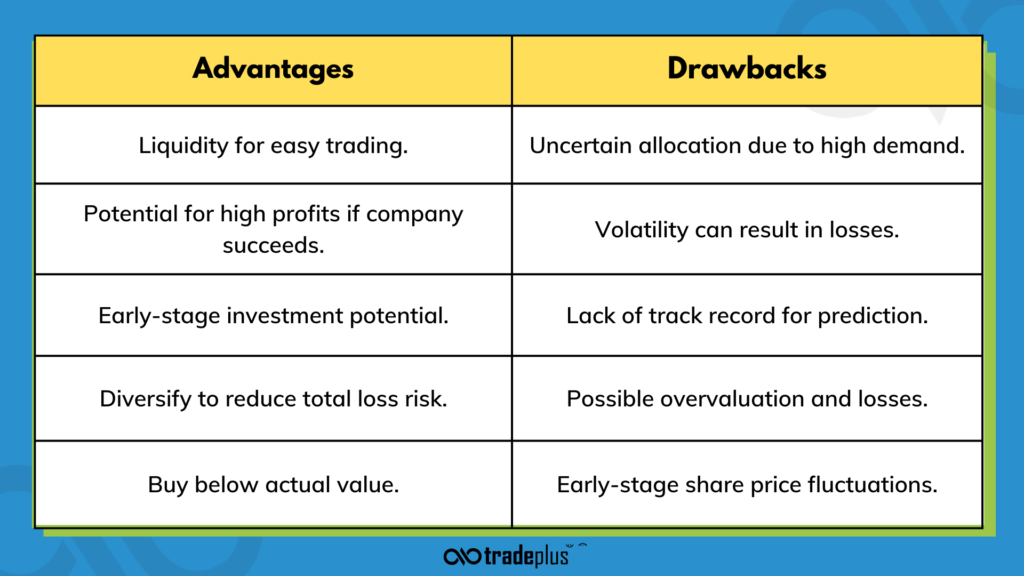
Advantages and Drawbacks of investing in IPOs
Let’s take a closer look at the good and not-so-good sides of investing in IPOs:
How to Apply for IPO’s through Navia?
- Step 1: If you’re new to Navia, head over to the Play Store and download the Rocket app.
- Step 2: Open the Navia app and log in using your account information.
- Step 3: On the app’s homepage, scroll down to find the “Tools” section and select the “IPO” option from there.
- Step 4: You’ll see a list of both currently available IPOs and IPOs that are coming soon.
- Step 5: In the “Current IPOs” section, choose the IPO you’re interested in applying for.
- Step 6: After selecting the IPO, provide the necessary information and credentials as required.
- Step 7: Once you’ve completed your application, you will receive the IPO mandate for making the payment.
- Step 8: After making the payment, your funds will be reserved, and your IPO application will be submitted.
Conclusion
In conclusion, investing in Initial Public Offerings (IPOs) can be an exciting opportunity for those looking to grow their financial future. IPOs allow you to get in early with a chance for big gains, diversify your investments, and sometimes grab good deals. It’s like being among the first to enter an amusement park before it becomes famous, having a variety of ice cream flavors, and finding a sale at your favorite store.
However, there are drawbacks to consider. IPO shares might not be guaranteed, and prices can be volatile, leading to potential losses. New companies lack a track record, making it challenging to predict their performance, and some IPO shares may be overpriced.
If you decide to invest in IPOs, make sure to do your research, diversify your investments, and be prepared for price fluctuations. Just like planting seeds in your financial garden, with time and care, your investments can grow into something valuable. So, be a smart investor and make informed decisions on your IPO journey.
Key Takeaways
- An IPO is when a private company offers shares to the public, raising capital to grow, pay off debts or reward early investors.
- The article’s reasons to consider an IPO include getting in early, spreading risk across holdings, and the relative ease of selling listed IPO shares when you need the money.
- Applying through the Navia app runs from the Tools section to the Current IPOs list, then the application details and the IPO mandate payment.
- Once the mandate payment is made, your funds are reserved and the application is submitted.
- IPO shares are not guaranteed, prices can be volatile, new companies lack a track record, and some IPO shares may be overpriced.
Did you find this article helpful?
Your feedback helps us write better content.

Frequently Asked Questions
What is an IPO?
An Initial Public Offering is when a private company decides to share its ownership with the public by offering shares. By selling shares to the public it can raise the capital it needs to grow, pay off debts, or reward early investors.
Why do companies launch an IPO?
Companies need funds for their plans. Through an IPO they can raise the capital required to grow, pay off debts, or reward the early investors who believed in them.
How do I apply for an IPO through the Navia app?
Log in to the Navia app, scroll to the Tools section on the homepage and select IPO, choose an offering from the Current IPOs list, provide the required information and credentials, then complete the IPO mandate payment. Your funds are reserved and the application is submitted.
What happens after I pay the IPO mandate?
After making the payment your funds will be reserved and your IPO application will be submitted.
Are IPO shares guaranteed?
No. The article is explicit that IPO shares might not be guaranteed and prices can be volatile, leading to potential losses.
What are the drawbacks of investing in IPOs?
New companies lack a track record, which makes their performance hard to predict, some IPO shares may be overpriced, and prices can be volatile.
DISCLAIMER: Investments in the securities market are subject to market risks, read all the related documents carefully before investing. The securities quoted are exemplary and are not recommendatory. Brokerage will not exceed the SEBI prescribed limit. Full disclaimer: https://bit.ly/naviadisclaimer