

Investing in International ETFs: A Smart Strategy, But Beware of Overpaying
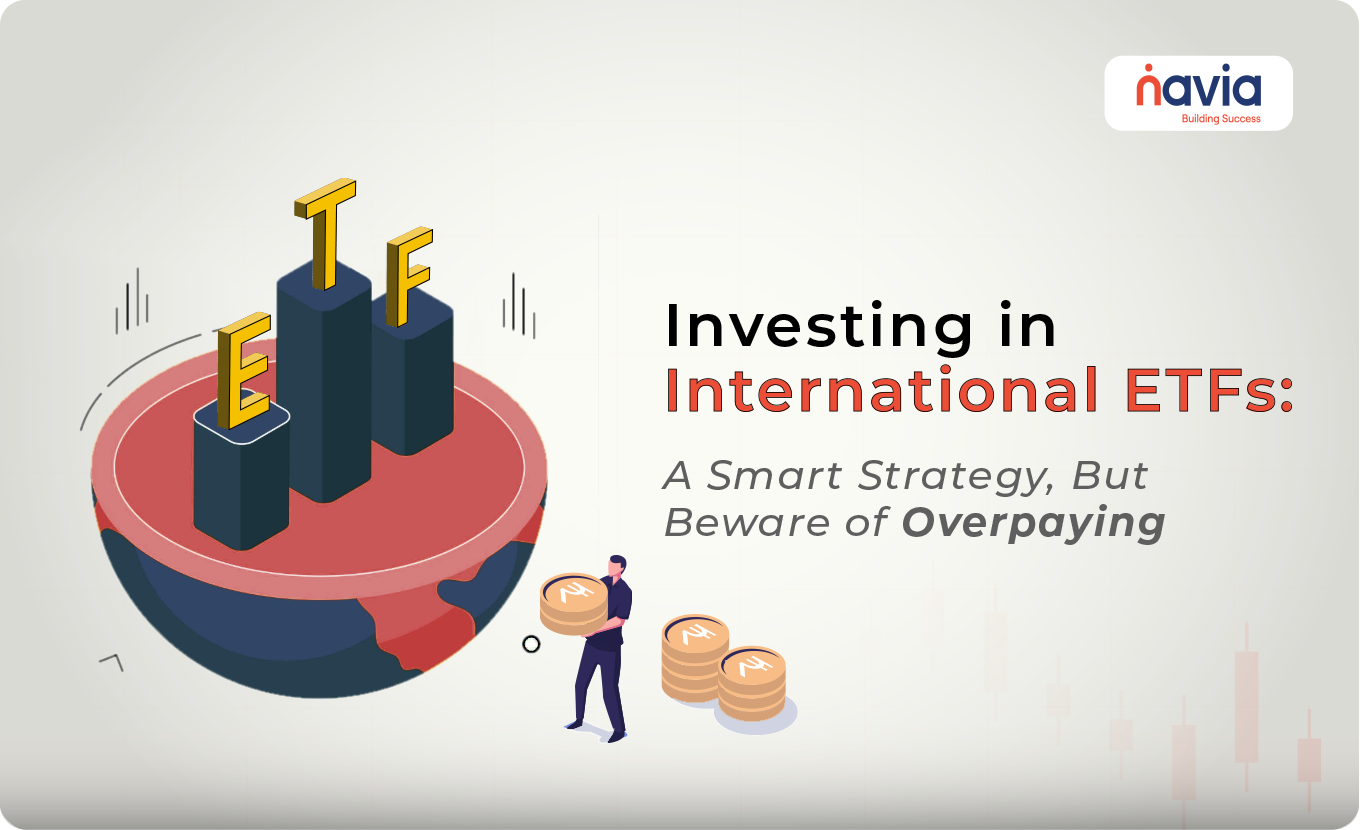
International ETFs offer an easy and efficient way for investors to gain exposure to global markets, diversify their portfolios, and participate in the growth of leading international companies. However, while investing internationally is a great way to hedge against domestic risks and access high-growth sectors, one must be cautious about not overpaying for these ETFs.
Currently, many international ETFs are trading at a premium to their Net Asset Value (NAV), meaning investors are paying more than the actual worth of the underlying assets. This could lead to potential losses if the premium shrinks over time.
💡 Quick Answer
International ETFs give Indian investors global exposure, but many trade at a premium to their Net Asset Value, meaning you pay more than the underlying assets are worth. On the article’s snapshot dated 1 February 2025, all six major international ETFs listed were at a premium, several above 10%.
Understanding ETF Premiums and Why They Matter
An Exchange-Traded Fund’s (ETF) NAV (Net Asset Value) represents the true value of the underlying assets per unit of the ETF. If you are new to the instrument, start with what an ETF is in the share market and the growth of ETFs in India. However, in the market, ETFs can trade at a premium (higher than NAV) or a discount (lower than NAV) based on demand and supply dynamics.
- A high premium means investors are paying more than the ETF’s intrinsic value, which can be risky.
- A discount suggests the ETF is trading below its NAV, which could be an opportunity if the gap corrects over time.
Currently, all six major international ETFs in India are trading at a premium, making them expensive compared to their intrinsic value.
International ETFs Trading at a Premium (As of Feb 1, 2025)
| ETF Name | NAV (₹) | Market Price (₹) | Premium (%) |
|---|---|---|---|
| Mirae Asset NYSE FANG+ ETF | 115.79 | 132.70 | 12.7% |
| Mirae Asset S&P 500 Top 50 ETF | 49.43 | 54.70 | 9.6% |
| Motilal Oswal Nasdaq Q50 ETF | 75.45 | 87.32 | 13.6% |
| Motilal Oswal NASDAQ 100 ETF | 181.69 | 199.75 | 9.0% |
| Mirae Asset Hang Seng Tech ETF | 17.49 | 19.80 | 11.7% |
| Nippon India ETF Hang Seng BeES | 321.61 | 353.38 | 9.0% |
As seen above, some ETFs are trading at a premium of more than 10%, meaning investors are paying significantly more than the ETF’s intrinsic value.
What Should Investors Do?
Three checks before buying: look up the iNAV to see the fund’s fair value in real time, avoid buying while the premium is high, and weigh the broader long-term market trend rather than assuming a premium will persist.
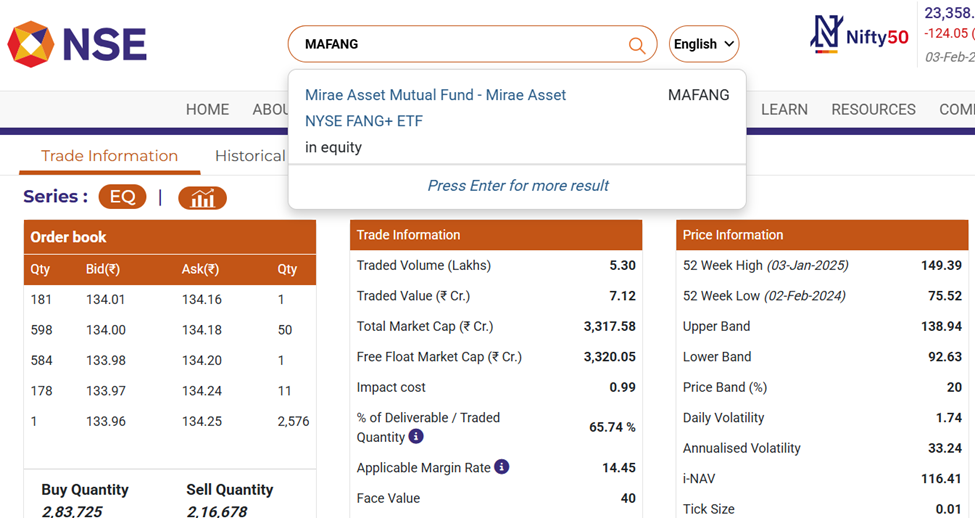
- Check the iNAV Before Investing
The iNAV (Indicative Net Asset Value) provides real-time updates on an ETF’s fair value during market hours. Investors should check this on stock exchange websites or the fund house’s website before making a purchase. See image below. - Avoid Buying at High Premiums
Since the premium may reduce over time, it is advisable to invest only when the premium is on the lower side to minimize the risk of overpaying. - Consider Long-Term Market Trends
If an ETF consistently trades at a premium, it could indicate strong demand, but that does not always mean it will continue to do so. Investors should evaluate the broader market trends before making investment decisions.
Final Thoughts
International ETFs are an excellent way to diversify and gain global exposure. However, buying them at a high premium could result in paying more than the actual worth of the assets, leading to potential losses if the premium declines. Investors should be mindful of the price they pay and use tools like iNAV to ensure they are making informed decisions.
By staying patient and buying at the right time, investors can enjoy the benefits of international investing without the risk of overpaying. 🚀 For one worked example of a single international ETF, see the MON100 ETF explainer.
Key Takeaways
- An ETF’s NAV is the true value of the underlying assets per unit; the market price can sit above it (a premium) or below it (a discount) depending on demand and supply.
- A high premium means you are paying more than the ETF’s intrinsic value, which can be risky if the premium later shrinks.
- On the snapshot dated 1 February 2025, all six major international ETFs listed in the article were trading at a premium, with premiums ranging from 9.0% to 13.6%.
- Check the iNAV (Indicative Net Asset Value) on the stock exchange or fund house website during market hours before buying — it shows the ETF’s fair value in real time.
- The article’s guidance is to invest only when the premium is on the lower side, and to weigh broader market trends rather than assuming a persistent premium will hold.
Frequently Asked Questions
What does it mean when an ETF trades at a premium?
An ETF’s NAV (Net Asset Value) represents the true value of the underlying assets per unit. When the market price is higher than NAV the ETF trades at a premium, meaning investors are paying more than the actual worth of the underlying assets. When it is lower than NAV it trades at a discount.
Why is buying an international ETF at a high premium risky?
Because the premium may shrink over time. If you buy at a high premium and the gap narrows, you can lose money even if the underlying index is flat. The article’s advice is to invest only when the premium is on the lower side, to minimise the risk of overpaying.
Which international ETFs were trading at a premium in the article?
As on 1 February 2025, the article lists six: Mirae Asset NYSE FANG+ ETF at a 12.7% premium, Mirae Asset S&P 500 Top 50 ETF at 9.6%, Motilal Oswal Nasdaq Q50 ETF at 13.6%, Motilal Oswal NASDAQ 100 ETF at 9.0%, Mirae Asset Hang Seng Tech ETF at 11.7% and Nippon India ETF Hang Seng BeES at 9.0%. These figures are a snapshot as on that date and will have changed since.
What is iNAV and where can I check it?
iNAV stands for Indicative Net Asset Value. It provides real-time updates on an ETF’s fair value during market hours. Investors should check it on stock exchange websites or the fund house’s website before making a purchase.
Should I still invest in international ETFs?
The article’s position is that international ETFs are an excellent way to diversify and gain global exposure, but that buying at a high premium could mean paying more than the assets are worth. It advises checking the iNAV, avoiding high premiums and considering long-term market trends before deciding. Verify current premiums, pricing and availability before you invest.
Did you find this article helpful?
Your feedback helps us write better content.

DISCLAIMER: Investments in the securities market are subject to market risks, read all the related documents carefully before investing. The securities quoted are exemplary and are not recommendatory. Brokerage will not exceed the SEBI prescribed limit. Full disclaimer: https://bit.ly/naviadisclaimer