

What is Positional Trading? Meaning, Time Frame, and Market Approach
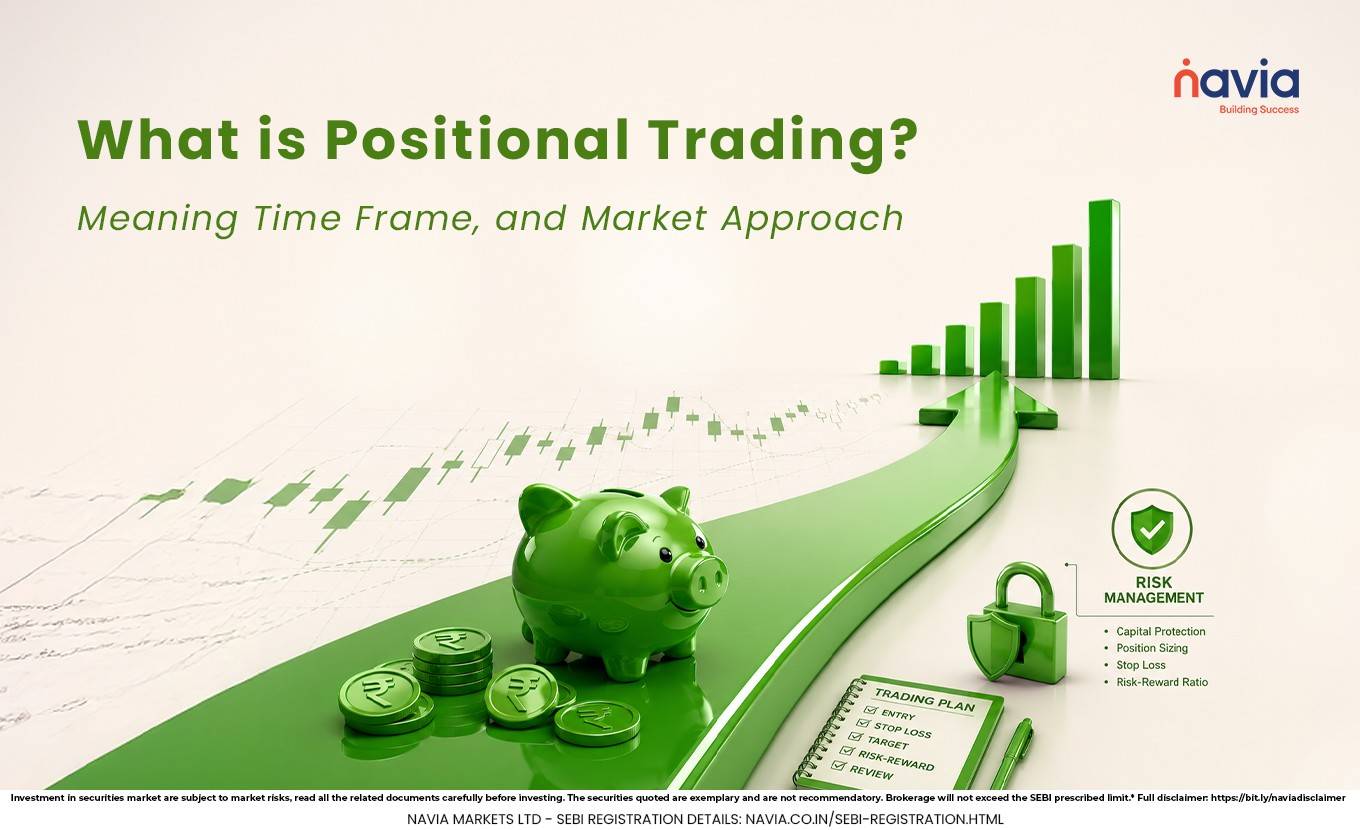
Positional trading is a strategy where traders hold stocks for a longer period to benefit from a broader market move instead of chasing small daily fluctuations. If you are asking what is positional trading, the simplest answer is that it is a medium to long-term trading style built around trend capture.
This approach often appeals to traders who do not want to watch the market every minute. It also suits people who prefer a structured plan and a calmer pace than intraday trading.
💡 Quick Answer
Positional trading is a medium to long-term style where a trader holds a stock through a broader market trend instead of reacting to small daily price moves. It suits people who prefer a planned, patient approach over constant intraday monitoring, drawing on a blend of technical and fundamental signals to decide when to enter and exit.
What is Positional Trading?
The positional trading means holding a stock for weeks or months, and sometimes longer, to profit from a major trend. Unlike day trading, which focuses on short price movements, positional trading aims to capture the larger direction of the market.
In what is positional trading in stock market terms, it usually means buying stocks that show strong potential and giving the position enough time to play out. Traders may use both technical and fundamental analysis to review potential setups.
Positional Trading Time Frame
The positional trading time frame is generally longer than swing trading and shorter than pure long-term investing. Many sources describe it as a holding period of a few weeks to several months, depending on the trend and the trader’s objective.
A practical way to think about it is:
- Short positional trades: A few days to a few weeks
- Medium positional trades: A few weeks to a few months
- Long positional trades: Several months, and in some cases longer
This makes positional trading useful for traders who want time to let a trend develop without constant screen monitoring.
How To Do Positional Trading?
If you want to know how to do positional trading, traders often study stocks with an established trend, business fundamentals, and acceptable risk. Many traders begin with a mix of technical and fundamental checks before market participation.
A simple process can look like this:
- Some traders monitor stocks with a clear upward or downward trend
- Check company fundamentals and sector strength
- Use support, resistance, and moving averages for entry timing
- Some traders define risk-management parameters before entering
- Review the trade only at planned intervals, not every few minutes
This keeps the method disciplined and reduces emotional decision-making.
Positional Trading Vs Swing Trading
| Aspect | Swing Trading | Positional Trading |
|---|---|---|
| Holding period | Few days to a couple of weeks | Weeks to months or longer |
| Objective | Capture short‑term price swings | Track broader market trends |
| Primary Analysis | Mainly technical (indicators, charts) | Technical + fundamentals (earnings, cash flow, sector) |
| Risk Level | Moderate to relatively higher due to shorter‑term volatility | Moderate, but stops are usually wider; risk per trade can be higher |
| Ideal Trader | Active traders, comfortable with frequent entries/exits | Long‑term‑oriented, patient traders or part‑time professionals |
| Profit Style | Shorter-term market movement | Longer-duration market participation |
Why do Traders Use it?
Positional trading is popular because it reduces the pressure of active intraday monitoring. It allows traders to follow a trend while still using a structured plan.
It can also help traders avoid overtrading and impulsive decisions. For many market participants, that balance between patience and market participation is what explains its popularity.
Conclusion
Positional trading is a strategy built around holding stocks long enough to participate during price trends. If you are searching what is positional trading or positional trading in stock market, the core idea is patience, planning, and trend-based decision-making.
With the selected holding period, a disciplined process, and stock analysis, the method can be different from fast-paced trading styles. It is best understood as a structured approach, not a guaranteed approach.
Key Takeaways
- Positional trading focuses on capturing a broader market trend rather than chasing small daily price moves.
- The typical holding period sits between swing trading and pure long-term investing.
- Traders usually combine technical and fundamental analysis to select stocks and time their entries.
- The style rewards patience and a structured plan, easing the pressure of constant screen monitoring.
- It is best treated as a disciplined approach, not a guaranteed one.
Do You Find This Interesting?
We’d Love to Hear from you-

Frequently Asked Questions
What is positional trading?
It is a strategy where traders hold stocks for weeks or months to follow larger market trends.
What is positional trading in stock market?
It is a style of trading focused on medium to long-term trend capture using technical and fundamental analysis.
What is the positional trading time frame?
It usually ranges from a few weeks to several months, depending on the trend and strategy.
How to do positional trading?
Choose a trending stock, check fundamentals, use chart levels for entry, and set risk rules before entering.
What is the difference between positional and swing trading??
Swing trading is shorter term, while positional trading aims to hold longer trend moves.
DISCLAIMER: Investment in securities market are subject to market risks, read all the related documents carefully before investing. The securities quoted are exemplary and are not recommendatory. Full disclaimer: https://bit.ly/naviadisclaimer.