

What is BTST Trading in the Share Market?
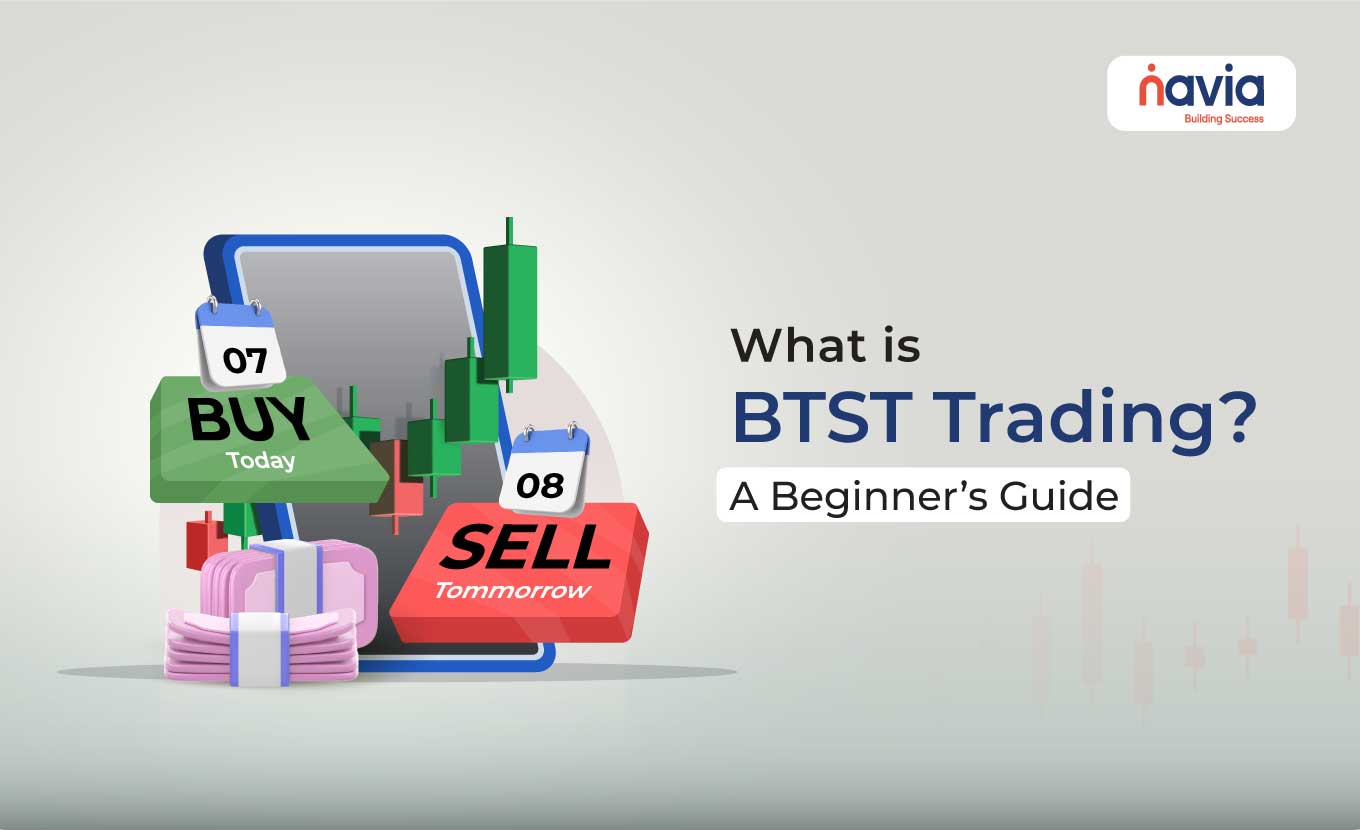
In the world of stock trading, various strategies have emerged to help investors and traders capitalize on short-term price movements. One that has gained popularity among active traders is BTST trading. Buy Today, Sell Tomorrow (BTST) allows investors to sell shares before they are credited to their demat account, so they can act on short-term price movements without waiting for the trade to settle.
If you want to know how to take advantage of these short-term opportunities, this beginner’s guide will walk you through everything you need to know.
💡 Quick Answer
Buy Today, Sell Tomorrow (BTST) means selling shares the day after you buy them, before they are credited to your demat account under the T+1 settlement cycle. It suits volatile markets and overnight news, but it carries gap risk, the possibility of a short delivery and auction penalty, and higher transaction costs — and unlike intraday, it does not come with margin.
What is BTST Trading?
BTST trading, or Buy Today, Sell Tomorrow, is a short-term strategy where traders buy shares on one day and sell them the next, before the shares are credited to their demat account. In the Indian stock market the settlement cycle is T+1 (Trade Day plus one), which means stocks take one working day to settle and reflect in your account. If that mechanism is new to you, read how trade settlement works in the stock market.
BTST lets you sell within that window. The strategy is mainly useful in a volatile market, where prices can move sharply in a short span. BTST traders aim to book profits quickly on positive news or a market trend.

How Does BTST Trading Work?
Suppose you buy 100 shares of a company on Monday. Those shares will be added to your demat account by Tuesday evening. That is the normal procedure, but with BTST trading you can sell them on Tuesday morning, before they reach your account.
Is that really possible? Yes, because the shares you sell on the second day are adjusted by your broker in the background. However, this type of trading requires a reliable broker and an awareness of the associated risks.
Here is an example of the strategy in use:
- Day 1 (Monday): you buy 100 shares of ABC Ltd. at ₹200.
- Day 2 (Tuesday): the price rises to ₹210, and you sell the 100 shares.
Profit: ₹10 x 100 = ₹1000 (excluding taxes and charges).
The order type you use matters here as much as the timing. Our guide to the types of stock market orders covers the choices, and if you want to place the trade outside market hours, see what an After Market Order (AMO) is.
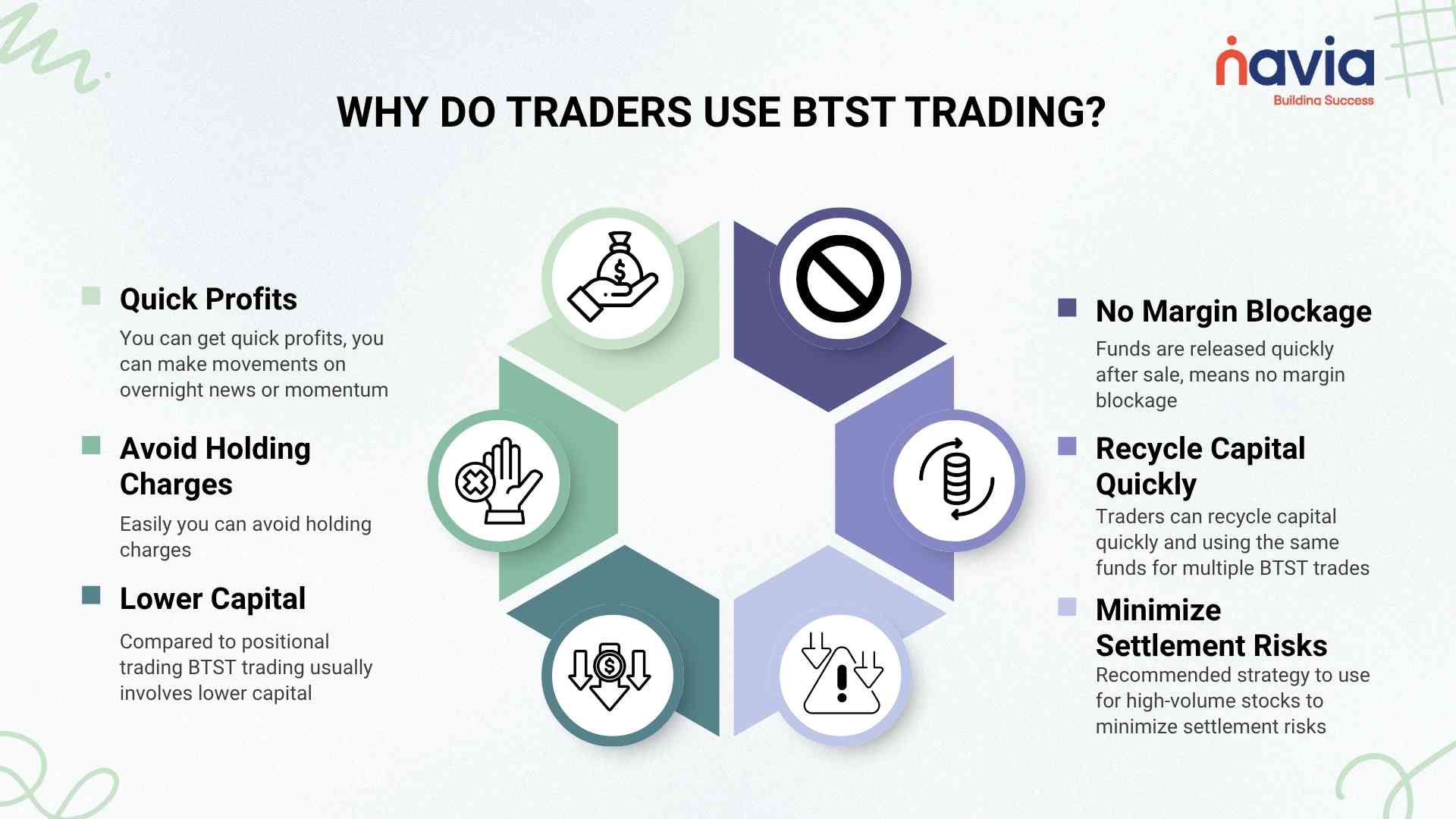
Why Do Traders Use BTST Trading?
There are several reasons why traders prefer BTST trading. Some of them are given below.
Risks of BTST Trading
Like every strategy, BTST trading has its own set of risks. Let’s see what they are.
- Overnight price movements can produce sudden and unexpected gaps.
- If the shares are not delivered on time, your trade may go into auction, leading to penalties.
- Not all stocks have enough buyers and sellers the next day, which creates liquidity risk.
- You must depend on a broker who offers BTST facilities.
- Frequent BTST trading means paying higher brokerage and transaction costs.
- The limited time for decision making can sometimes work against you.
- Unlike intraday trading, BTST does not offer margin facilities.
The auction risk is the one most beginners underestimate. Our explainer on what happens when shares aren’t delivered sets out exactly how a short delivery and the resulting auction work.
Important Things to Know Before BTST Trading
- Choose liquid stocks: always trade in stocks with high trading volume.
- Monitor news such as corporate announcements, quarterly results and economic indicators that can move prices overnight.
- Some brokers charge higher fees for BTST trades, so understand the brokerage charges before diving in.
- Use stop-loss orders to limit your loss if the trade doesn’t go your way.
Conclusion
BTST trading is a quick and efficient way to pursue profit from short-term price movements in the stock market. It offers the flexibility to act on overnight news without committing to a long-term position. But success in BTST trading requires proper knowledge, discipline and risk management. Investors interested in BTST should evaluate risks, trading costs, and broker facilities before starting.
Key Takeaways
- BTST means selling shares the day after purchase, before they are credited to your demat account.
- It works within the T+1 settlement cycle used by the Indian market.
- Overnight gaps are the core risk, since the position is exposed while the market is closed.
- If the shares are not delivered, the trade can go to auction and attract a penalty.
- BTST does not carry margin, unlike intraday trading, and can cost more in brokerage.
- Liquid stocks, tracked news and a stop-loss are the basic safeguards.
Did you find this article helpful?
Your feedback helps us write better content.

Frequently Asked Questions (FAQs)
Is BTST trading suitable for beginners?
BTST trading can be suitable for beginners, but only if they understand market trends and risks, otherwise it will lead to losses.
What is the BTST technique?
BTST (Buy Today, Sell Tomorrow) is a short-term trading strategy where you buy shares on one day and sell them the next day before they are credited to your demat account.
Is BTST better than intraday?
BTST offers more flexibility than intraday trading since you don’t need to square off positions the same day. It allows for overnight gains if the stock moves in your favor.
What are common BTST mistakes?
Common BTST mistakes include:
- Trading without checking news
- Ignoring delivery constraints of low-volume stocks
- Not setting a stop loss
- Over-leveraging
- Misjudging technical signals
Is BTST profitable?
BTST may provide opportunities in volatile markets, but profitability depends on timing, stock selection, and risk management.
How to identify BTST?
To identify BTST opportunities, look for:
- Stocks with strong price breakouts or volume spikes
- Positive news like earnings or upgrades
- Stocks closing near the day’s high with strong momentum
- Technical indicators like bullish candlestick pattern
- Use watchlists and screeners to track such stocks
DISCLAIMER: Investments in securities market are subject to market risks, read all the related documents carefully before investing. The securities quoted are exemplary and are not recommendatory. Full disclaimer: https://bit.ly/naviadisclaimer.