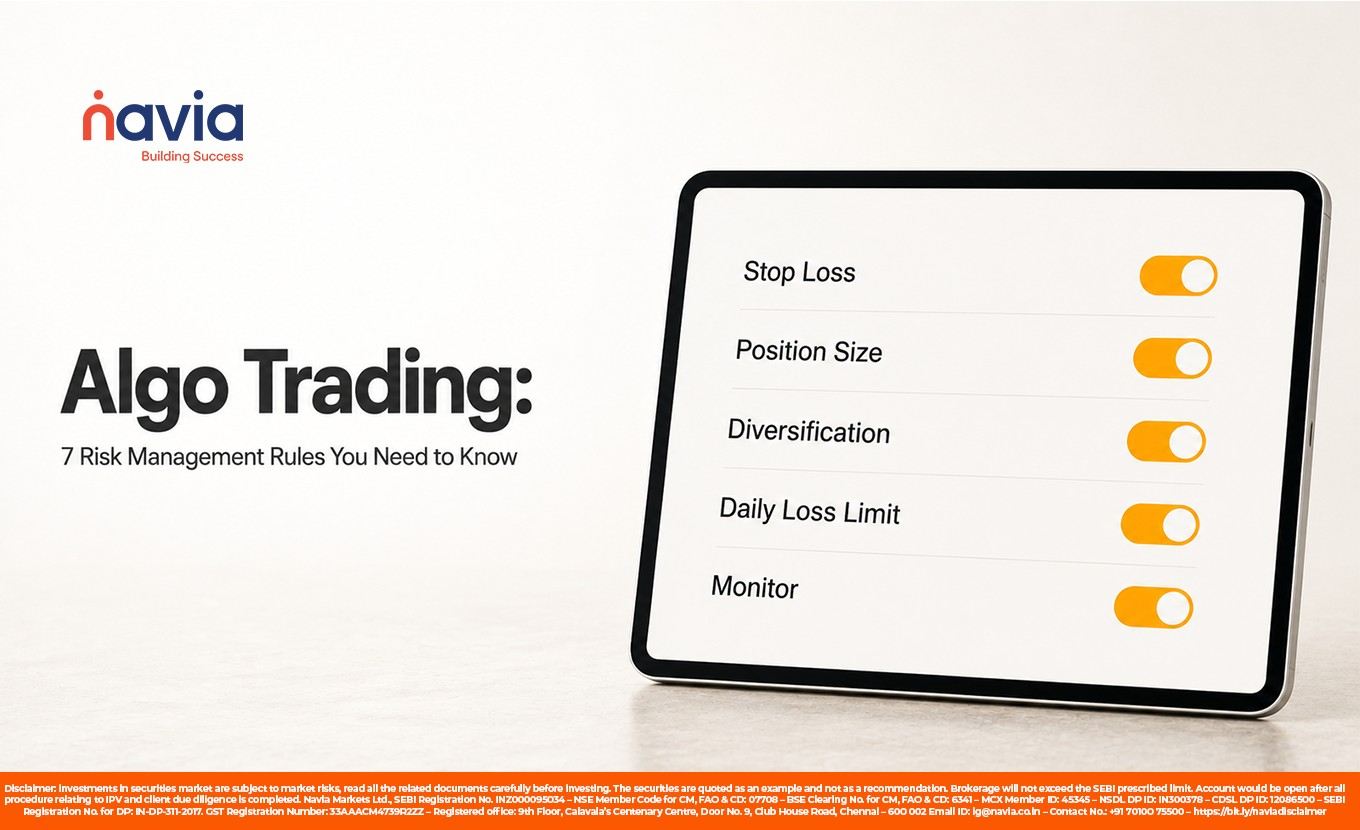


Why Algo Trading Is Suddenly Everywhere in India?

Algo trading is gaining attention among traders across India. Earlier, access to algorithmic trading was generally associated with institutional participants and specialized systems. Today, technology and evolving market frameworks have made algo trading in India more accessible to a wider range of market participants.
So, what is driving this growing interest? This blog explores the role of technology, regulatory developments, and changing trader participation in simple terms.
💡 Quick Answer
Algo trading uses computer programs to place trades from predefined rules, so the trader sets the conditions and the system acts when they are met. Wider access to technology, broker API services and no-code tools, together with a clearer SEBI framework, explains the growing interest. It cannot guarantee profits.
What does the trader set and what does the system do?
Algo trading uses computer programs to execute trades based on predefined instructions. The trader sets the conditions, such as entry, exit, or other strategy rules.
When those conditions are met, the system can place orders according to the predefined logic. This can reduce the need for manual intervention during execution.
Algorithmic trading can also process and respond to predefined conditions quickly. However, speed and automation do not eliminate market or execution risks.
As technology becomes more accessible, algo trading in India is attracting interest from a wider range of retail investors.
How did SEBI open the door for retail traders?
Regulatory developments have provided a clearer framework for retail algo trading in India.
SEBI issued a circular on the framework for retail algo trading in February 2025. The framework outlines requirements for brokers, algo providers, and market participants. Implementation is scheduled in phases.
This article describes the SEBI framework for retail algo trading and was published on 24 August 2026. The framework and its phased implementation timelines may have changed since. Please check the current framework on sebi.gov.in before trading.
The evolving SEBI algo trading rules have also increased awareness of regulated approaches to algorithmic trading. However, market participants must follow the applicable requirements, and access remains subject to the relevant regulatory and platform conditions.

What do the new SEBI algo trading rules say?
The algo trading framework sets out responsibilities for different participants in the algorithmic trading ecosystem.
Brokers play an important role in providing and monitoring access to approved algo trading solutions. The framework also includes requirements relating to strategy identification, order tagging, and oversight.
Under the framework, algo providers and other participants may need to meet applicable registration or approval requirements. These measures aim to improve transparency, accountability, and market oversight.
The exact requirements can vary based on the type of algorithm, participant, and applicable exchange or regulatory conditions.

Why do brokers now use a kill switch?
Risk controls form an important part of automated trading systems. One such control is a kill switch, which can help stop or disable an algo under specified conditions.
The regulatory framework also includes requirements related to authentication, access controls, and system oversight. These measures aim to support greater control and accountability in algo trading.
A kill switch can help limit the continuation of automated activity when intervention becomes necessary. However, such controls cannot eliminate all market, technology, or execution risks.
Are retail traders really making the most of it?
The picture is more nuanced. Algo trading is used across different types of market participants, including institutional and proprietary trading firms.
A SEBI study on individual traders in the equity F&O segment highlighted significant differences in trading outcomes across participant categories. However, access to algorithmic trading alone does not determine trading results.
For retail investors, factors such as strategy design, testing, costs, market conditions, and risk management can all affect outcomes.
Algo trading can automate predefined trading rules, but it cannot guarantee profits or eliminate trading risks.
What should beginners keep in mind?
Algo trading can automate predefined trading rules, but it does not eliminate market risk. A strategy that performs poorly in testing may also produce unfavorable results in live market conditions.
Traders can study an idea using historical data before considering live deployment. They should also understand how their broker handles order execution and applicable risk controls.
Risk management remains an important part of any trading approach. Traders should avoid relying on promises of assured or guaranteed returns.
A careful approach can help traders better understand algorithmic trading and its limitations.
You can learn about markets, explore tools, and track your trades on the Navia All in One App.
Conclusion
So, why is algo trading gaining attention in India? Wider access to technology, coding tools, and growing participation from retail investors have contributed to this trend. Regulatory developments and the evolving SEBI algo trading rules have also provided a clearer framework for algo trading in India.
However, algorithmic trading is not a shortcut to profits. Traders should understand their strategies, test them appropriately, and consider risk management before participating in live markets. Automation can follow predefined rules, but it cannot eliminate market or execution risks.
Key Takeaways
- Algo trading uses computer programs to execute trades based on predefined instructions, with the trader setting the conditions such as entry, exit or other strategy rules. This can reduce the need for manual intervention during execution.
- SEBI issued a circular on the framework for retail algo trading in February 2025, outlining requirements for brokers, algo providers and market participants. Implementation is scheduled in phases.
- The framework includes requirements relating to strategy identification, order tagging, oversight, authentication and access controls, and algo providers may need to meet applicable registration or approval requirements.
- A kill switch can help stop or disable an algo under specified conditions, but such controls cannot eliminate all market, technology or execution risks.
- Algo trading is used across different types of market participants, including institutional and proprietary trading firms. For retail investors, strategy design, testing, costs, market conditions and risk management can all affect outcomes, and automation cannot guarantee profits.
Did you find this article helpful?
Your feedback helps us write better content.

Frequently Asked Questions
Is algo trading legal in India?
Yes. Algo trading in India is permitted within the applicable regulatory and exchange framework. Retail investors can access eligible algorithmic trading solutions through registered brokers, subject to applicable requirements and platform conditions.
Why is algo trading becoming more popular?
Wider access to technology, broker API services, no-code tools, and growing awareness have contributed to interest in algo trading. Regulatory developments have also provided a clearer framework for retail algo trading.
Do I need to register my algo directly with SEBI?
Registration and approval requirements depend on the type of algo trading setup and the applicable regulatory framework. Brokers and algo providers may handle certain compliance and approval processes.
Is algo trading suitable for beginners?
Algo trading involves market, technology, and execution risks. Beginners should understand the trading strategy, applicable controls, and risk management considerations before using automated trading tools.
Does algo trading guarantee profit?
No. Algo trading automates predefined instructions, but it cannot guarantee profits or future performance. Market conditions, strategy design, costs, and execution can affect results.
Can I do algo trading without coding?
Some platforms offer no-code or ready-made automated trading tools. Users should still understand the underlying trading strategy, its assumptions, and associated risks before using it.
DISCLAIMER: Investment in securities market are subject to market risks, read all the related documents carefully before investing. The securities quoted are exemplary and are not recommendatory. Full disclaimer: https://bit.ly/naviadisclaimer.