

What is Risk-Reward Ratio: And Why it Matters in Stock Investing
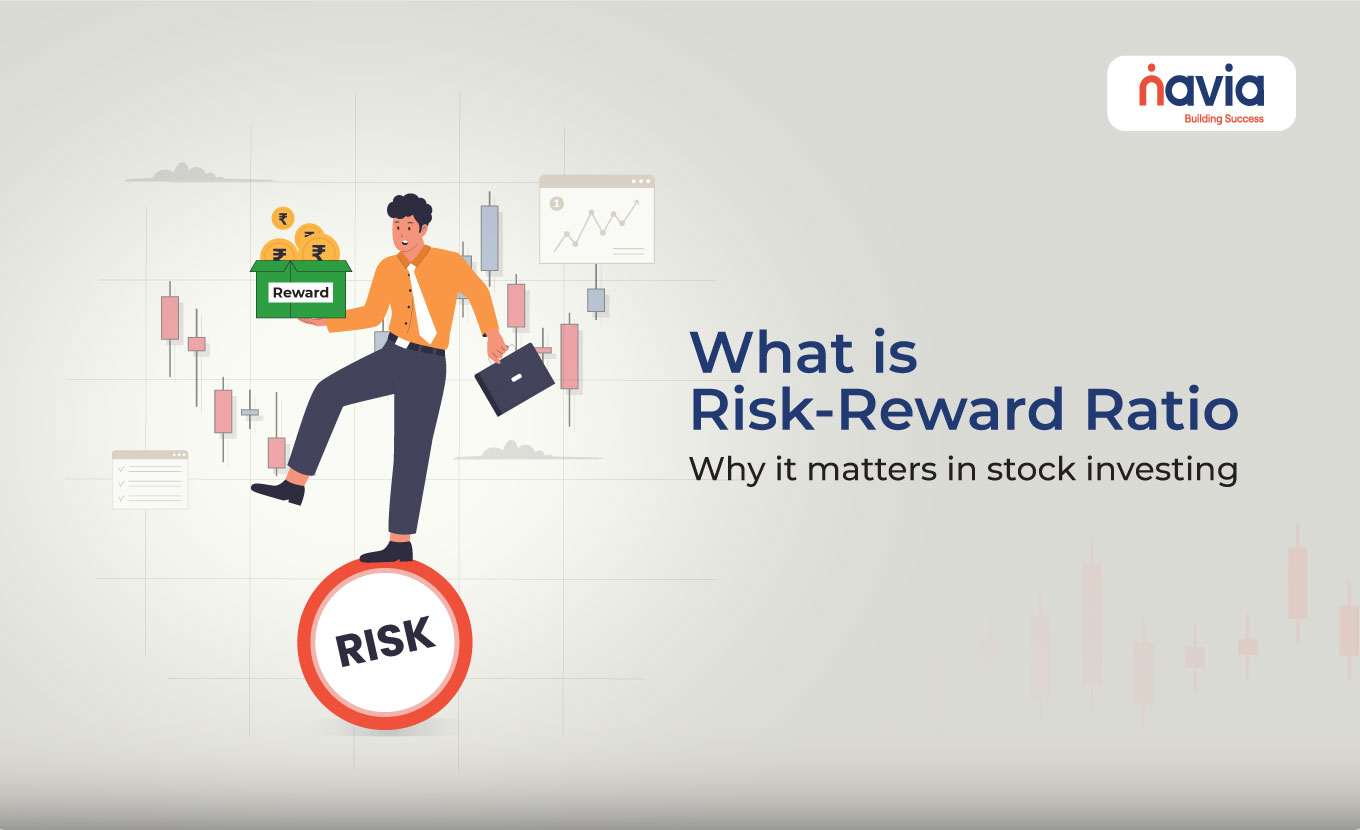
Investing in the stock market offers you growth and wealth creation, but it’s a journey that is fought with uncertainties. Every investment decision carries risk, so the savvy investors will manage this risk rather than avoid it. The risk-reward ratio is the most crucial tool for investors to make informed decisions.
The metric will provide a clear and objective way to evaluate potential investments that helps you determine your potential gain is worth the potential pain. If an investor doesn’t understand the ratio, they will make impulsive choices driven by emotion rather than logic. So, let’s see what is Risk-Reward Ratio and how it helps investors.
💡 Quick Answer
The risk-reward ratio compares the potential loss on a trade against the potential profit, using the formula Risk-Reward Ratio = Potential Reward / Potential Risk. In the example below, buying at ₹500 with a stop-loss at ₹480 and a target of ₹600 means risking ₹20 to make ₹100 — a ratio of 1:5. Fixing both numbers before you enter forces you to size the downside as deliberately as the upside.
What is Risk-Reward Ratio?
Risk-reward ratio, sometimes referred to as the risk-to-reward ratio, is considered a powerful financial metric that compares your potential loss on an investment to the potential profit you gain. It is expressed as a ratio, and it’s an important component of effective risk management. The ratio ensures that every rupee you put at stake, and what you could potentially earn in return.
What is Risk in Trading?
In trading and investing “risk” is the potential for an investment’s actual return to be different from what was expected. It is also the downside exposure you will face during the trade or investment journey, because they don’t go as planned. There are so many factors that are cause risk they are;
- Market Volatility
- Company-Specific News
- Economic Downturns
- Industry Shifts
- Unforeseen Events
Calculating the risk-reward ratio in trading will help to understand your maximum acceptable loss per trade or investment. Borrowed money magnifies both sides of the equation, so it is worth understanding leverage in the stock market before you size a position.
What is Reward in Trading?
The “Reward” in trading means the potential profit you are earning from an investment. If we compare it to risk, it is the potential upside of a trade. The reward in trade is the difference between your entry price and your target price. You can analyze your target price through technical (identifying resistance levels) and fundamental analysis (assessing a company’s growth prospects).
How does the Risk Reward Ratio Work?
The risk-reward ratio is used to measure the viability of an investment opportunity, and it helps to determine if the potential rewards justify the amount of risk you’re taking. So, if you predetermine your potential loss (risk) and your potential gain (reward) before starting the trade, you will give clear parameters for your investments.
You must consider two hypothetical scenarios;
- Scenario A: You risk ₹100 to potentially gain ₹100; your risk-reward ratio is 1:1.
- Scenario B: You risk ₹100 to potentially gain ₹300; your risk-reward ratio is 1:3.
Scenario B is attractive because for the same amount of risk, you stand to gain three times more. This doesn’t guarantee win, but ensures even if you don’t win every trade, your winning trades can significantly offset your losing ones, helps traders improve their chances of offsetting losses, though actual results depend on market conditions.

How to Calculate Risk-Reward Ratio?
The calculation of risk-reward ratio is simple after you identify your potential risk and reward. The formula is given below;
Risk-Reward Ratio = Potential Reward / Potential Risk
Let’s break down the components:
- Potential Reward: It is the potential profit that you expect to make from the trade, for example, if you buy a stock at ₹1000 and set a target price of ₹1100, so your potential reward is ₹100 per share.
- Potential Risk: The maximum amount of money you could lose on a trade, for example, if you buy a stock at ₹1000 and set a stop-loss at ₹950, so your risk is ₹50 per share.
How you place that stop matters in practice — our guides to the types of stock market orders and the stop-limit order explain how each behaves when the market moves quickly.
Example of Risk-Reward Ratio
Suppose you are buying shares in ABC company. The current market price: ₹500 per share, and you believe the stock could go up to target price ₹600 per share. So, you decide to place a stop-loss price of ₹480 per share.
Now we can calculate the components;
- Potential Loss (risk) per share: Entry price – Stop-loss price — ₹500 – ₹480 = ₹20
- Potential Gain (reward) per share: Target price – Entry price — ₹600 – ₹500 = ₹100
Then apply the reward risk ratio formula:
Risk-Reward Ratio = Potential Reward / Potential Risk
100/20 = 5
So, the risk-reward ratio for this trade is 1:5 means, for every ₹1 you risk you stand to gain ₹5. It is a highly favorable ratio, suggesting a good balance where the potential profit significantly outweighs the potential loss.
Conclusion
Risk-reward ratio isn’t just a number; it’s a fundamental principle of financial management in stock investing. It will force investors to think about both the upside and downside of every investment. If you apply this ratio in your investing journey, you can manage your exposure to loss and improve the chances of long-term profitability.
Mastering the risk and reward ratio is an important step that can help investors take more informed and disciplined decisions. It matters even more on borrowed capital — see our beginner’s guide to MTF and the common mistakes to avoid with margin trading. So, are you ready to apply the Risk-Reward Ratio to your trades? Navia’s platform provides tools to help you apply risk-reward analysis more effectively.
Key Takeaways
- The risk-reward ratio compares your potential loss on a trade against the potential profit, and is a core component of risk management.
- Risk is the downside exposure, driven by market volatility, company-specific news, economic downturns, industry shifts and unforeseen events.
- Reward is the potential profit — the difference between your entry price and your target price.
- The formula is Risk-Reward Ratio = Potential Reward / Potential Risk.
- In the worked example, an entry at ₹500 with a ₹480 stop-loss and a ₹600 target gives a risk of ₹20, a reward of ₹100 and a ratio of 1:5.
- Defining your risk tolerance, setting clear stop-loss and target prices, aiming for favourable ratios and diversifying all help balance risk and reward.
Did you find this article helpful?
Your feedback helps us write better content.

Frequently Asked Questions
What is the use of risk-reward ratio?
It is used to evaluate the attractiveness of an investment or trade, and it helps investors to determine if the potential profit (reward) justifies the potential loss (risk) they might incur.
What is a good risk-reward ratio in trading?
A “good” risk-reward ratio typically means that your potential reward is greater than your potential risk, but most professional traders aim for a ratio of 1:2 or higher.
Why is it important to understand the risk reward ratio?
Understanding the risk-reward ratio is crucial because it promotes disciplined decision-making, helps manage risk exposure, and improves long-term profitability.
What is the relationship of risk and reward in Investing?
In investing, risk and reward are both linked. Generally, a higher potential reward often comes with a higher level of risk, and conversely, lower risk typically implies lower potential returns.
How can you balance risk and reward when investing?
There are several strategies available, like;
- Define your risk tolerance
- Set clear stop-loss and target prices
- Aim for favorable risk-reward ratios
- Diversify your portfolio
- Continuous learning and adaptation
DISCLAIMER: Investments in securities market are subject to market risks, read all the related documents carefully before investing. The securities quoted are exemplary and are not recommendatory. Full disclaimer: https://bit.ly/naviadisclaimer.