

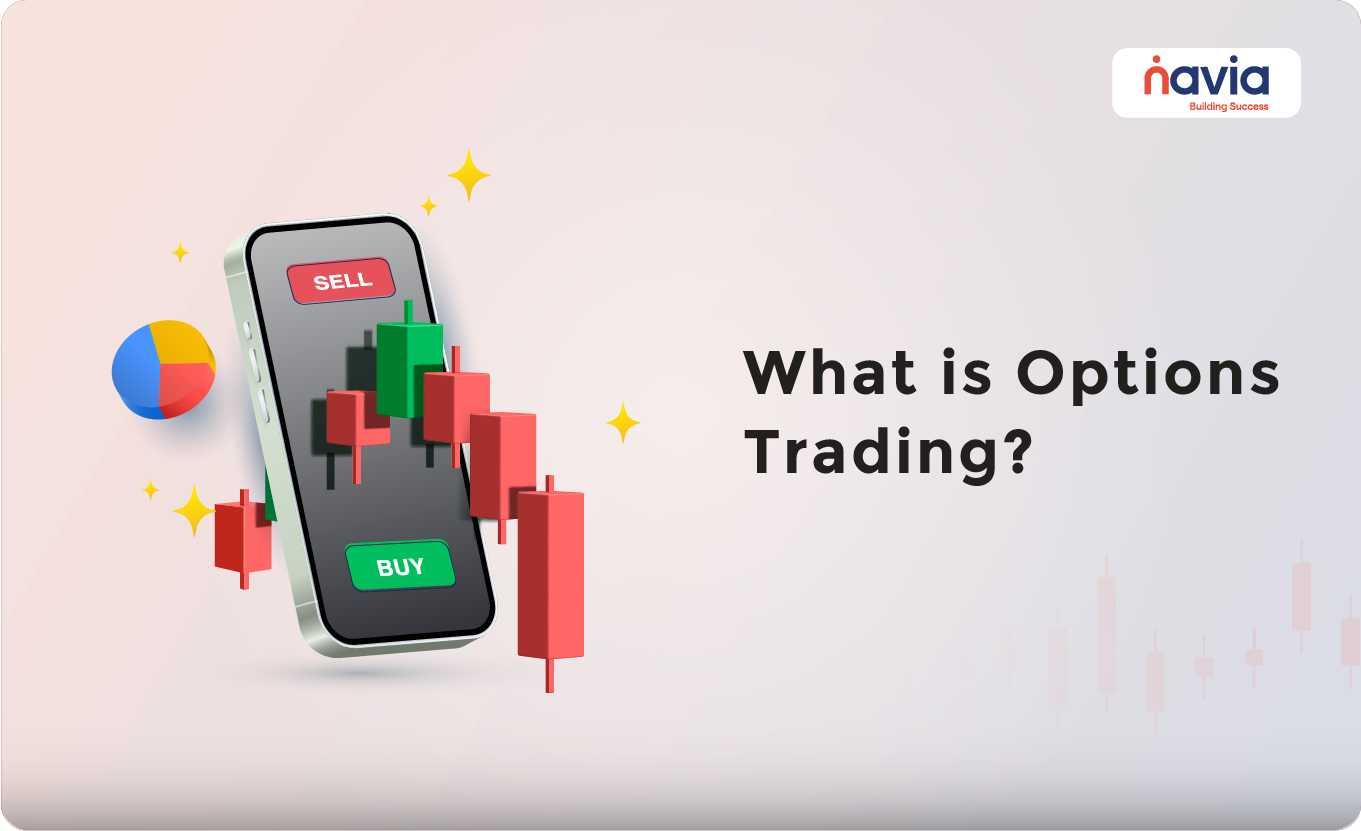
What is Options Trading?
If you want to succeed in the world of financial markets, it is necessary to understand options trading. It is a popular, yet complex strategy and it promotes an investor’s ability to speculate, hedge or generate income. By reading this blog you can get a clear knowledge about the concept of options trading with examples to make your trading success.
💡 Quick Answer
Options trading is the buying and selling of contracts that give the right, but not the obligation, to buy or sell an underlying asset at a set strike price before a fixed expiry date. Calls carry the right to buy and puts the right to sell, letting traders speculate, hedge or earn income.
What is Options Trading?
There are so many investment portfolio asset categories like, mutual funds, stocks, ETFs (exchange-traded funds), etc. Option is also a unique asset class; it’s also buying or selling an underlying asset at a predetermined price within a specific time frame. Stocks, commodities or other stocks can be the underlying asset. But the strategies that are offered by the options offer the traders flexibility to make a profit in all market conditions.
For example, a stock is trading at Rs.2,600 and the trader can buy a put option with Rs.2,500 strike price. The expiry date will be at the end of the month at a premium of Rs.30. If the stock’s price drops to Rs.2,500 and buy back it at Rs.2,400, then the trader’s earning profit is Rs.70 per share.
What are the Types of Options Trading?
The option trading has two major types, they are Call Options and Put Options, that are detailed below;
Call Options:
It gives the right to buy the underlying asset at a specific strike price before its expiration date. Some of the investors and traders buy call options in stock in the stage where they feel that the price of the underlying share will increase before the expiration date. Call options have two types;
- Long call options: In this option the buyer has the right to purchase the asset at a predetermined price on the future date.
- Short call option: In the short call option the seller promises the buyer to sell the underlying asset at a predetermined price on the future date.
Put Options:
The holder gets the right to sell the underlying asset at a specific price before the expiry date is known as Put options. Mostly the investors and traders select the put options because in the time of falling the price of the underlying asset the strategy will help them.
Advantages of Options Trading
- Options have the power to enhance your investment portfolio through protective strategies, additional income and leverage.
- It is aflexible tool, so the traders can employ different types of strategies before the contract expires.
- Compared to stocks, buying options need a lower initial investment, so the traders can approach it without second thoughts.
- By choosing options for the investors can lock a strike price for the underlying asset, it also provides price security until the option expires.
- The possibility of profit in both rise and fall prices is the primary advantage of option trading.
Strategies of Options Trading
1. Long call options trading strategy
2. Short call options trading strategy
3. Long put options trading strategy
4. Short put options trading strategy
5. Long straddle options trading strategy
6. Short straddle options trading strategy

How Does it Work?
We know that options trading is a contract that will help all the traders to purchase or sell an underlying asset at a predetermined price by a specific date. Simply we can say that buying or selling an option doesn’t mean that the trader has to use it when it expires. This is the reason for saying that options are a type of derivative security.
Now you have a doubt about what derivatives are, it’s a financial instrument that will derive the value from an underlying asset. The call option is a derivative contract that will provide the right to the buyer to purchase underlying assets at a predetermined price before the contract’s expiry. On the other hand, the put option will provide the right to sell underlying assets at a predetermined price till the contract’s maturity.
So, the traders can purchase or sell options at any time, although before the expiry date. Merely buying/selling an option does not require an individual to exercise at the expiration time. That’s why options are regarded as derivative security.
Conclusion
Options trading is a powerful tool for both investors and traders, because it offers so many benefits to all. Ensure that you understand the risk factors of it, here we give you a basic idea about what is options trading, its types, benefits and strategies. But think that a wrong movement of yours will lead to losses. If you want to trade in options, the first step is to educate yourself thoroughly about it, understand everything and practice with a demo before making a final decision.
Take a demat account at Navia and make changes in your trading journey!
Did you find this article helpful?
Your feedback helps us write better content.

Key Takeaways
- An option is a derivative contract: its value is derived from an underlying asset such as a stock, an index or a commodity.
- There are two types — a call option gives the right to buy at the strike price, and a put option gives the right to sell.
- Buying an option does not oblige you to exercise it; you can also sell the option itself at any time before expiry.
- Options need a lower initial outlay than buying the underlying stock, and they can be used to profit in both rising and falling markets.
- The post lists six core strategies: long call, short call, long put, short put, long straddle and short straddle — compared side by side in call options vs put options.
- Options carry real risk of loss, so understand the contract and the charges you still pay on an F&O trade before you begin.
Frequently Asked Questions
What is options trading in simple terms?
Options trading means buying or selling contracts that give the right, but not the obligation, to buy or sell an underlying asset at a predetermined price within a specific time frame. The underlying can be a stock, a commodity or an index. Because the value is derived from that underlying asset, options are classed as derivative securities.
What is the difference between a call option and a put option?
A call option gives the holder the right to buy the underlying asset at a specific strike price before the expiration date. A put option gives the holder the right to sell the underlying asset at a specific price before expiry. Traders buy calls when they expect the price to rise and puts when they expect it to fall.
Do you have to exercise an option before it expires?
No. Merely buying or selling an option does not require you to exercise it at expiration. Traders can purchase or sell options at any time before the expiry date, and many close the position by trading the option itself rather than exercising it.
What are the main advantages of options trading?
Options can enhance a portfolio through protective strategies, additional income and leverage. They are flexible, so different strategies can be used before the contract expires. They need a lower initial investment than buying stock outright, they let you lock in a strike price, and they allow profit in both rising and falling markets.
What are the main options trading strategies?
This post lists six: the long call, short call, long put, short put, long straddle and short straddle options trading strategies.
Is options trading risky for beginners?
Yes. The post is explicit that a wrong move will lead to losses. Its advice is to educate yourself thoroughly about options first, understand how the contracts work, and practise with a demo before making a final decision.
DISCLAIMER: Investments in the securities market are subject to market risks, read all the related documents carefully before investing. The securities quoted are exemplary and are not recommendatory. Brokerage will not exceed the SEBI prescribed limit. Full disclaimer: https://bit.ly/naviadisclaimer.