

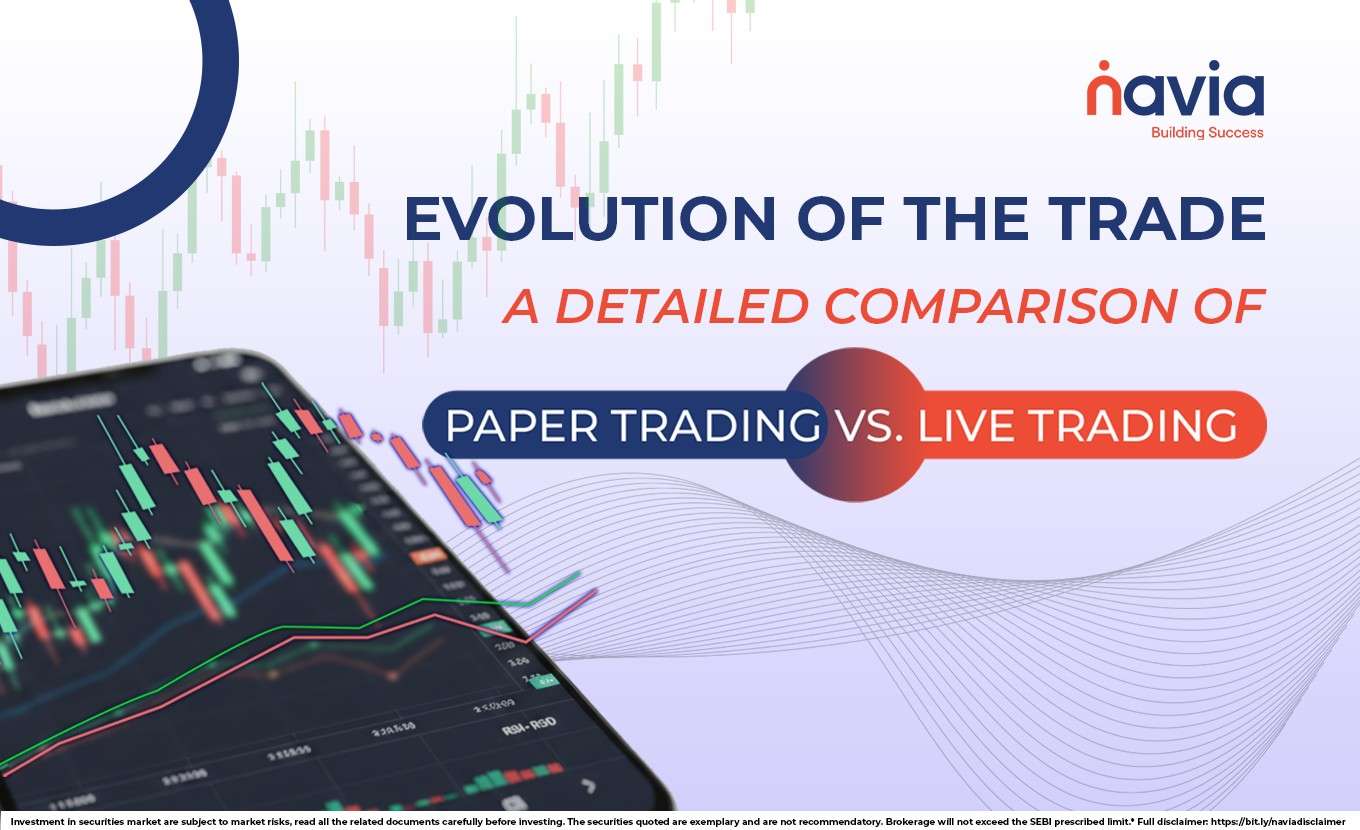
Evolution of the Trade: A Detailed Comparison of Paper Trading vs. Live Trading
Technology, algorithmic systems, and data-driven tools have become increasingly important in today’s financial markets. For anyone entering this space, the first hurdle is deciding how to practice and when to commit real capital. This brings us to a foundational debate: paper trading vs live trading, and the modern twist of integrating AI into that journey.
If you are a retail investor, understanding the transition from a simulated environment to a real-market scenario is crucial for long-term survival.
💡 Quick Answer
Paper trading lets you buy and sell with virtual money to test strategies at zero financial risk, while live trading commits real capital where slippage, latency and emotions all come into play. Beginners should start on paper, prove consistency over several months, then move to live trading with a small “micro” position. Simulation builds skill, but it cannot replicate the psychology of real money on the line.
What is Paper Trading in Stock Market?
Before risking a single rupee, many traders and investors use simulated trading environments before participating in live markets. But what is paper trading in the stock market exactly? At its core, paper trading is a simulated market environment where you can buy and sell securities without using real money.
In the past, this was done with actual paper and a pencil. Today, platforms like Alpaca and Cryptohopper offer sophisticated “paper accounts” that mirror real-time market data. These simulators allow you to test strategies, learn about the mechanics of an exchange, and understand how different asset classes react to news-all with zero financial risk. Every gain increases your account balance, and every loss is a real deduction from your net worth.
What is Live Trading?
Live trading is the transition from the sandbox to the real world. In live trading, you use your own capital to execute orders. Every gain increases your account balance, and every loss is a real deduction from your net worth.
The primary difference when looking at what is paper trading vs live trading is the presence of “skin in the game.” While the charts may look identical, the psychological and technical executions differ significantly. In live trade, emotions influence trading outcomes alongside market conditions and risk management.
Paper Trading vs Live Trading: Key Differences
To truly understand paper trading live trading dynamics, we must look at the technical and psychological gaps — from slippage to the emotions of real money. Here is a breakdown of how they compare:
| Feature | Paper Trading | Live Trading |
|---|---|---|
| Financial Risk | Zero | High |
| Emotional Impact | Low (No fear or greed) | High (Stress affects decisions) |
| Order Execution | Instant (Theoretical) | Subject to Slippage & Latency |
| Market Impact | Your trades don’t move the market | Large orders can affect prices |
| Purpose | Strategy testing & learning | Wealth creation & risk management |

Rise of AI Trading: Moving Beyond the “Paper” Phase
In 2026, the transition from paper trading vs live trading has been revolutionized by Artificial Intelligence. Traditional paper trading helps a human learn, but AI trading uses simulation to “train” models — a shift explored further in our deep dive into algorithmic strategies.
AI in Paper Trading
AI bots use paper trading environments to perform “backtesting” and “forward testing.” AI models may perform thousands of simulated trades during testing depending on the platform and configuration. This approach may help reduce certain decision-making biases and improve strategy evaluation.
AI in Live Trading
One characteristic of automated systems is that they execute predefined rules consistently without emotional decision-making. While a human might panic and sell during a market dip, an AI adheres strictly to the programmed logic. However, as documentation notes, live trading bots must account for “Exchange Latency” — the tiny delay between a signal being generated and the order being filled — which does not exist in most paper trading setups.
When Should You Move from Paper to Live Trading?
Remember that you shouldn’t switch just because you had one lucky week. Instead, look for these markers:
- Consistency: Have you been profitable for at least 3-6 months in simulation?
- System Mastery: Do you know how to set Stop-Loss and Take-Profit orders without thinking?
- Algorithm Validation: If using AI, has the bot survived multiple market cycles (Bull, Bear, and Sideways) in the paper phase?
Tips for Successful Trading
Relying on luck or intuition is no longer sufficient; instead, you must bridge the gap between theoretical success and practical execution by systematically hardening your strategy against market friction and emotional pressure. The following practices are commonly discussed as part of trading education:
- Start with Paper Trading: Use it to understand the platform and the asset volatility.
- Integrate AI Tools: Use bots to remove emotional bias, but ensure they are tested in “live-simulated” environments that account for fees and slippage.
- Start Small in Live Trading: When you finally make the jump, start with a “Micro Account.” The goal is to get used to the feeling of real money at stake.
- Audit the Gap: Periodically compare your paper results with your live results to see where the “leakage” is occurring.
Conclusion
The journey from learning what is paper trading in stock market to executing a high-frequency AI strategy is a marathon, not a sprint. Paper trading remains an essential, risk-free laboratory for innovation, while live trading is the ultimate test of a strategy’s viability. Technology and simulation tools can support learning and strategy evaluation, but they do not eliminate market risk or guarantee trading success.
Did you find this article helpful?
Your feedback helps us write better content.

Key Takeaways
- Paper trading is a risk-free simulator for learning platforms and testing strategies; live trading commits real capital.
- The big gaps are psychological (fear and greed) and technical (slippage, latency, market impact) — none of which show up on paper.
- In 2026, AI bots use paper environments to backtest and forward-test before trading live.
- Move to live trading only after consistent simulated results, full system mastery and, for bots, validation across bull, bear and sideways cycles.
- Start live with a micro account and audit the gap between paper and live results to find the leakage.
Frequently Asked Questions
What is the disadvantage of paper trading?
The main disadvantage of it is that it is not real. An investor cannot keep the profits made from demo trading. And such paper returns might instill an illusory sense of confidence and security in the investor.
How can I start paper trading?
To master the market, start with paper trading but limit this phase to just a few weeks to avoid developing a false sense of security. Once you have grasped the core mechanics, transition to your broker’s live platform and trade with a single share. This “minimum quantity” approach allows you to experience real market dynamics while keeping financial risk negligible, effectively helping you build psychological resilience against the dual pressures of fear and greed.
Is paper trading a good option for beginners?
Simulated stock trading is a foundational tool for beginners, offering a risk-free environment to stress-test strategies against real-time market data. The primary advantage is the total absence of financial exposure; since these virtual transactions do not impact the actual market, traders can explore complex maneuvers and high-stakes decisions without the fear of capital loss or the consequences of poor judgment.
Why did my live trade fail when my paper trade worked?
Paper trading is a frictionless sandbox where everything works perfectly on paper. In contrast, live trading is a real-world battlefield where technical hurdles like slippage and emotional triggers like fear and greed directly impact your results.
DISCLAIMER: Investments in the securities market are subject to market risks, read all the related documents carefully before investing. The securities quoted are exemplary and are not recommendatory. Brokerage will not exceed the SEBI prescribed limit.