

The Endowment Effect: Why We Overvalue What We Own
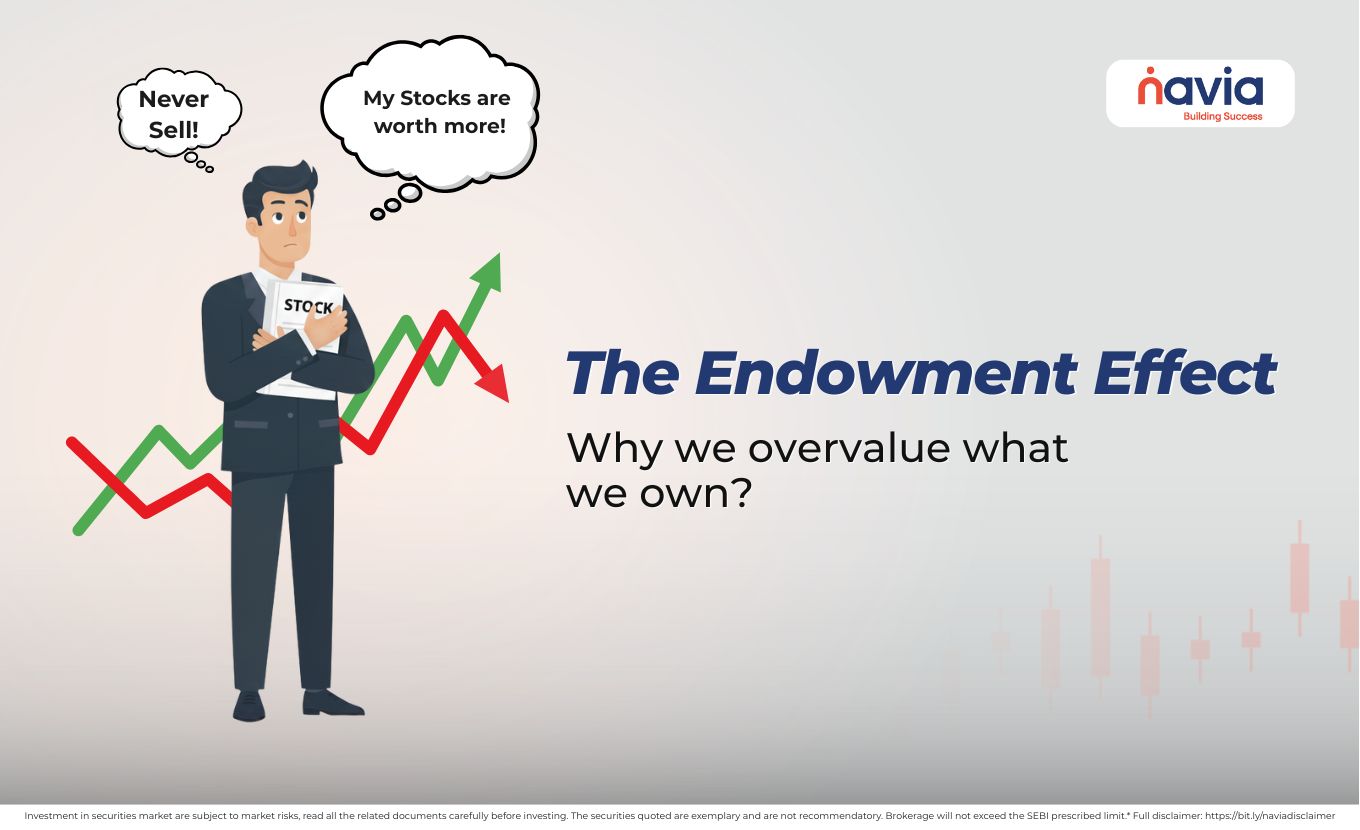
Have you ever noticed how selling something you own feels harder than buying it in the first place? Or how you might price your own house far higher than what buyers are willing to pay? This psychological bias is called the Endowment Effect—and it shows up in investing more often than we realize.
💡 Quick Answer
The endowment effect is our tendency to value something more highly simply because we own it. Kahneman and Thaler showed people demand more to give up an item than they would pay to acquire the same item. For investors it means holding weakening stocks, hesitating to rebalance, overpricing a private business, and avoiding the realisation of losses. The practical test is the outsider’s question: if I did not already own this today, would I still buy it at this price? If the answer is no, ownership — not analysis — is doing the talking.
What is the Endowment Effect?
The Endowment Effect is our tendency to assign more value to things simply because we own them. Psychologists Daniel Kahneman and Richard Thaler famously demonstrated that people demand more money to give up an item they own than they’d be willing to pay to acquire it.
In simple terms: once we own something, it feels more valuable to us—even if nothing about it has changed.
Everyday Examples
- ➣ Asking too high a price when selling your car, because it’s your car.
- ➣ Holding onto clothes you never wear, because you bought them once.
- ➣ Refusing to sell collectibles, gadgets, or furniture at market value because they feel “worth more” to you.
How the Endowment Effect Impacts Investing?
For investors, this bias can be costly. Common scenarios include:
Overvaluing Owned Stocks
Investors hold onto shares long after fundamentals weaken, because they feel “special” or “worth more” just because they’re already in the portfolio.
Hesitating to Rebalance
Selling existing holdings feels harder than buying new ones—even when switching could improve long-term returns.
Overpricing Private Assets
Entrepreneurs often overvalue their businesses compared to external buyers, making exits difficult.
Avoiding Loss Realization
We hang on to poor investments because giving them up feels like a personal loss, not just a financial one. That reluctance is the same mechanism behind the disposition effect, where losers are held far longer than winners.
Why We Fall for it?
- ⦿ Emotional ownership: What’s “mine” feels more valuable.
- ⦿ Fear of regret: Selling means admitting we might have been wrong.
- ⦿ Loss aversion: Letting go feels like losing, even if it’s the rational move.
Fear of regret in particular is what turns a valuation question into an identity question — the trap described in when ego manages your portfolio.
How to Overcome the Endowment Effect?
- 🔸 Ask the outsider’s question: If I didn’t own this stock today, would I still buy it?
- 🔸 Use objective benchmarks: Compare holdings against indices and peers regularly.
- 🔸 Automate reviews: Tools like SIPs, rebalancing, and AI-driven alerts help reduce emotional decision-making.
- 🔸 Accept small mistakes: Recognizing a poor investment early often saves more than clinging to it later.
Automation works because it does not negotiate with you in the moment — the point made in knowledge does not beat emotions. Objective sentiment gauges such as the Market Mood Index and the Fear and Greed Index serve the same purpose for the market as a whole.
Why it Matters for Navia Clients?
At Navia, we understand that investing is not just about numbers—it’s about behavior. The Endowment Effect reminds us that the hardest decisions are often emotional, not logical. Our technology and behavioral insights are designed to help investors recognize and minimize biases while focusing on disciplined, long-term investing.
Key takeaway
Don’t let ownership blind you. Value your investments for what they are today, not for what they once meant to you.
- The endowment effect makes you price what you own above what the market will pay, purely because you own it.
- Kahneman and Thaler showed the gap directly: people demand more to sell an item than they would pay to buy the identical item.
- In portfolios it shows up as overvalued holdings, avoided rebalancing, overpriced private businesses, and unrealised losses left to fester.
- Emotional ownership, fear of regret, and loss aversion are the three drivers underneath it.
- The outsider’s question is the fastest diagnostic: would you buy this today at this price if you did not already hold it?
- Related reading: the disposition effect, when ego manages your portfolio, the behavioural side of investing, and black swan events.
Did you find this article helpful?
Your feedback helps us write better content.
DISCLAIMER: Investment in securities market are subject to market risks, read all the related documents carefully before investing. The securities quoted are exemplary and are not recommendatory. Full disclaimer: https://bit.ly/naviadisclaimer.