

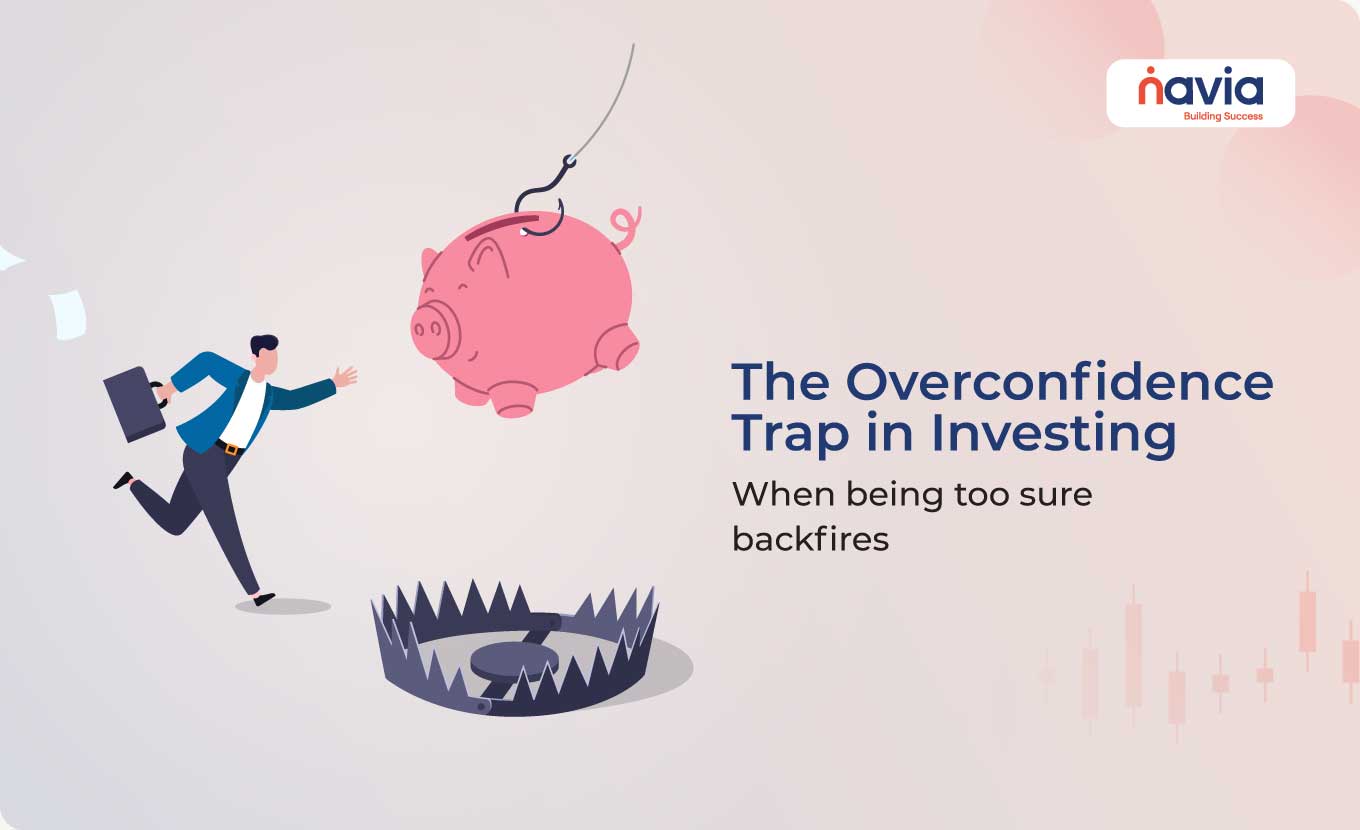
The Overconfidence Trap in Investing – When Being Too Sure Backfires
Meet Ravi and Suresh, two colleagues who started investing at the same time.
Both made some good money in the last bull market. Ravi especially picked a few multi-baggers and now felt he had a “knack” for the markets.
💡 Quick Answer
The overconfidence trap is what happens when a run of good results convinces an investor that skill, not conditions, produced them. It shows up as trading too often, concentrating too much in a few convictions, and dismissing research that disagrees. A bull market hides the cost; volatility reveals it. Diversification, position limits, pre-set exit rules and a written reason for every decision are what keep confidence useful instead of expensive.
Ravi – “I know the market”
Flush with confidence, Ravi began to:
- Trade aggressively, convinced he could time every move.
- Put most of his money into just two stocks he believed would double quickly.
- Ignore research reports and advice that didn’t match his views.
In his words: “Why do I need to listen to anyone? I’ve cracked the formula.”
But the market turned volatile. One of his favorite stocks fell 40% due to weak earnings. Since Ravi was overexposed, his portfolio suffered a big setback. Filtering out the reports that disagreed with him is a textbook case of the shortcuts described in mental shortcuts in investing.
Suresh – Staying Disciplined
Suresh too enjoyed profits in the bull run, but he reminded himself: “The market rewards discipline, not overconfidence.”
He:
- Diversified across sectors and asset classes.
- Limited his exposure to a single stock.
- Used stop-losses to control risk.
- Focused on long-term fundamentals rather than short-term “gut calls.”
When volatility hit, Suresh’s portfolio took a small dip — but he was protected. He had the flexibility to reallocate into better opportunities.

The Lesson – Beware of the Overconfidence Trap
Ravi’s mistake was falling into the overconfidence trap — overestimating his knowledge and skills, underestimating risks, and trading as if success was guaranteed.
Suresh avoided this trap by staying humble, data-driven, and disciplined. Where overconfidence really bites is when the position becomes a statement about you rather than about the company — the situation described in when ego manages your portfolio. It also makes selling harder, because booking a loss means admitting the call was wrong — see the disposition effect and why we fear losses more than we enjoy gains.
How to Avoid Ravi’s Mistake?
- Don’t let a few wins make you think you can’t lose.
- Always diversify — never bet too big on a single idea.
- Back decisions with research, not gut feeling.
- Accept that even the best investors are wrong sometimes.
Three related habits make the trap worse: judging odds by the most memorable recent win, as in the availability heuristic; clinging to your entry price, as in anchoring bias; and rating your own holdings above identical ones you do not own, as in the endowment effect.
Takeaway
Confidence helps you invest. But overconfidence blinds you to risks.
The smartest investors are not those who think they know it all, but those who stay humble, keep learning, and let data guide their decisions.
Investors can avoid the overconfidence trap by focusing on discipline, diversification, and long-term fundamentals. When a whole market makes Ravi’s mistake at once, you get the cycle traced in how emotions drive market bubbles, and how the same numbers get sold as opportunity or risk depending on wording is covered in the framing effect.
Key Takeaways
- Overconfidence is mistaking a favourable market for personal skill — bull runs make almost everyone look right.
- It typically shows up as over-trading, over-concentration, and ignoring information that contradicts your view.
- Concentration is what converts a single bad quarter into a portfolio-level setback.
- Position limits and stop-losses cap the damage from any one conviction being wrong.
- Writing down your reasoning before you buy makes it much harder to rewrite the story afterwards.
- Being wrong sometimes is a normal cost of investing, not evidence that you lack skill.
Did you find this article helpful?
Your feedback helps us write better content.

DISCLAIMER: Investment in securities market are subject to market risks, read all the related documents carefully before investing. The securities quoted are exemplary and are not recommendatory. Full disclaimer: https://bit.ly/naviadisclaimer.