

Knowledge Does Not Beat Emotions!
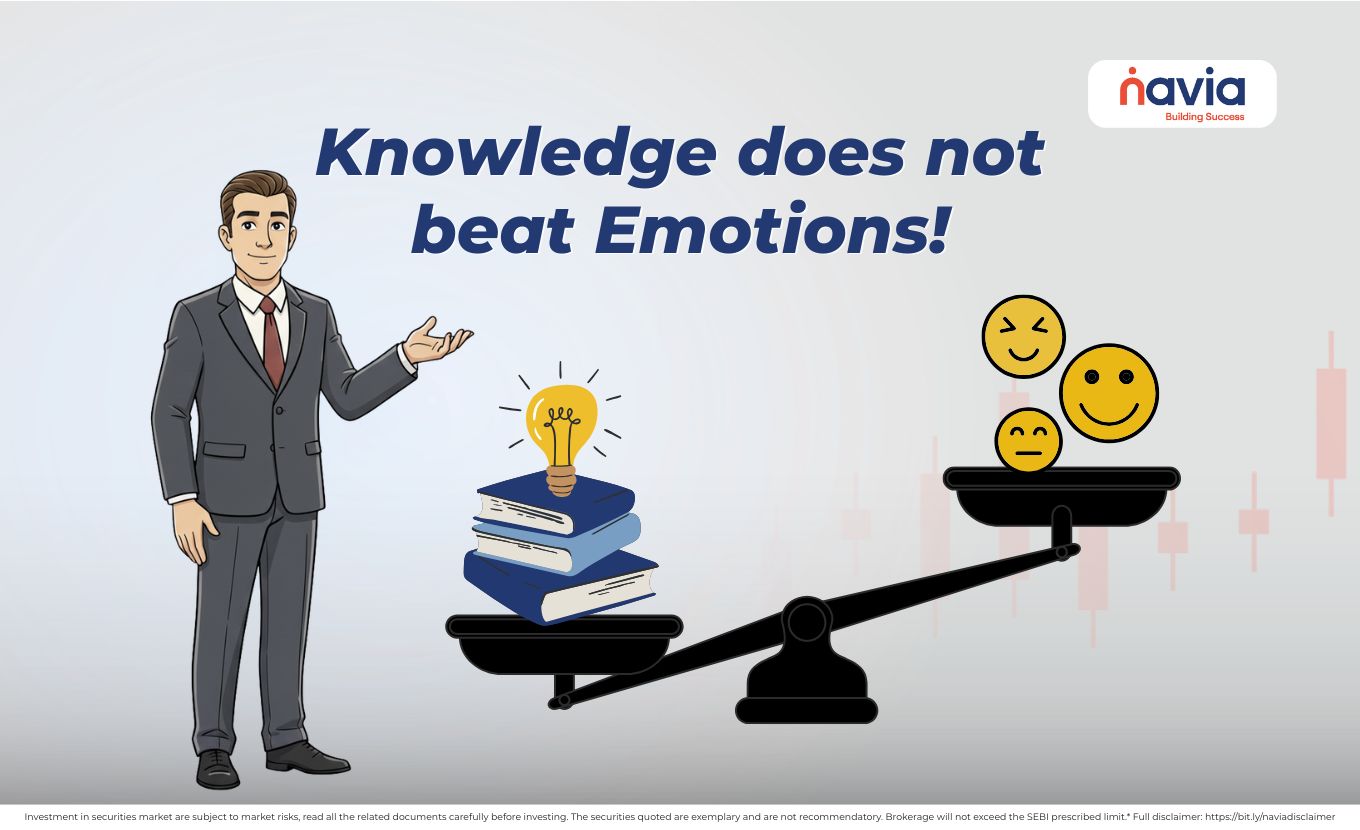
Many investors believe that if they understand behavioral biases—like loss aversion, Fear of Missing Out (FOMO), or confirmation bias—they can avoid mistakes in the stock market. On paper, this seems logical. In reality, knowledge alone isn’t enough.
💡 Quick Answer
Knowing your biases does not stop you acting on them. In a calm market it is easy to promise you will not panic; in a real crash, survival instinct overrides theory and fear and greed win. Awareness is only half the journey. The reliable defence is a structured, largely automated process — Systematic Investment Plans (SIPs), predetermined asset allocation, fixed-date rebalancing, and exit rules decided in advance rather than in panic. Replace promises with process, because knowledge won’t beat emotions, but process will.
Calm Mind vs. Crisis Mind
In calm markets, it’s easy to promise yourself:
- 🔸 “I won’t panic when markets fall.”
- 🔸 “I won’t chase hot stocks.”
- 🔸 “I know my biases.”
But when a real crash happens, your brain gets hijacked. Fear and greed overpower logic. Suddenly, all those rational lessons disappear. This is why even experienced, well-read investors sell low, hold on to losers, or overtrade during rallies. Holding losers in particular has a name and a well-documented cost — see the disposition effect.
Why Knowledge Alone Fails?
- ➣ Emotions > Logic – In stressful moments, survival instincts drive decisions, not theories.
- ➣ Recency Bias – A sharp fall feels like it will last forever, even if history shows recovery.
- ➣ Overconfidence – Believing “I know better” can blind you to real risks.
Awareness is valuable—but it’s only half the journey. The same gap between knowing and doing runs through what schools and colleges don’t teach about investing, and it is amplified when the ego takes over, as described in when ego manages your portfolio.

The Real Shield: Process Over Emotion
The real protection lies in having a structured, automated investment process that reduces the scope for emotional decision-making. For example:
- ➱ Systematic Investment Plans (SIPs) – Automate equity investing to keep discipline through market cycles.
- ➱ Asset Allocation Rules – Predetermine how much to invest in equity, debt, and gold.
- ➱ Rebalancing – Use fixed rules (say, annually) to reset your portfolio, instead of reacting to noise.
- ➱ Stop-Loss or Exit Frameworks – Decide in advance, not in panic.
A process also gives you something objective to lean on when sentiment runs to an extreme. Gauges like the Market Mood Index and the Fear and Greed Index turn a vague feeling into a number you can act on — and a written plan is what keeps you steady through the rare shocks covered in black swan events in the stock market.
The Takeaway
Awareness of biases is necessary—but not sufficient. Markets will always test your emotions. The only way to protect yourself is to replace promises with process. Because in the heat of a market crash, knowledge won’t beat emotions, but process will.
Key Takeaways
- Understanding a bias and resisting it in real time are two different skills — only the second one protects your capital.
- Promises made in a calm market are made by a different brain than the one that shows up during a crash.
- Recency bias makes a sharp fall feel permanent; overconfidence makes real risks invisible. Both hit experienced investors too.
- Automation is the practical answer: Systematic Investment Plans (SIPs), fixed asset-allocation rules, calendar-based rebalancing, and pre-agreed exit frameworks.
- Decide the rule before the stress arrives. A decision made in panic is not a decision, it is a reaction.
- Related reading: the disposition effect, the endowment effect, when ego manages your portfolio, and the Fear and Greed Index.
Did you find this article helpful?
Your feedback helps us write better content.

DISCLAIMER: Investment in securities market are subject to market risks, read all the related documents carefully before investing. The securities quoted are exemplary and are not recommendatory. Full disclaimer: https://bit.ly/naviadisclaimer.