

Is It Better to Switch to the Best-Performing Index Every Year in a SIP?
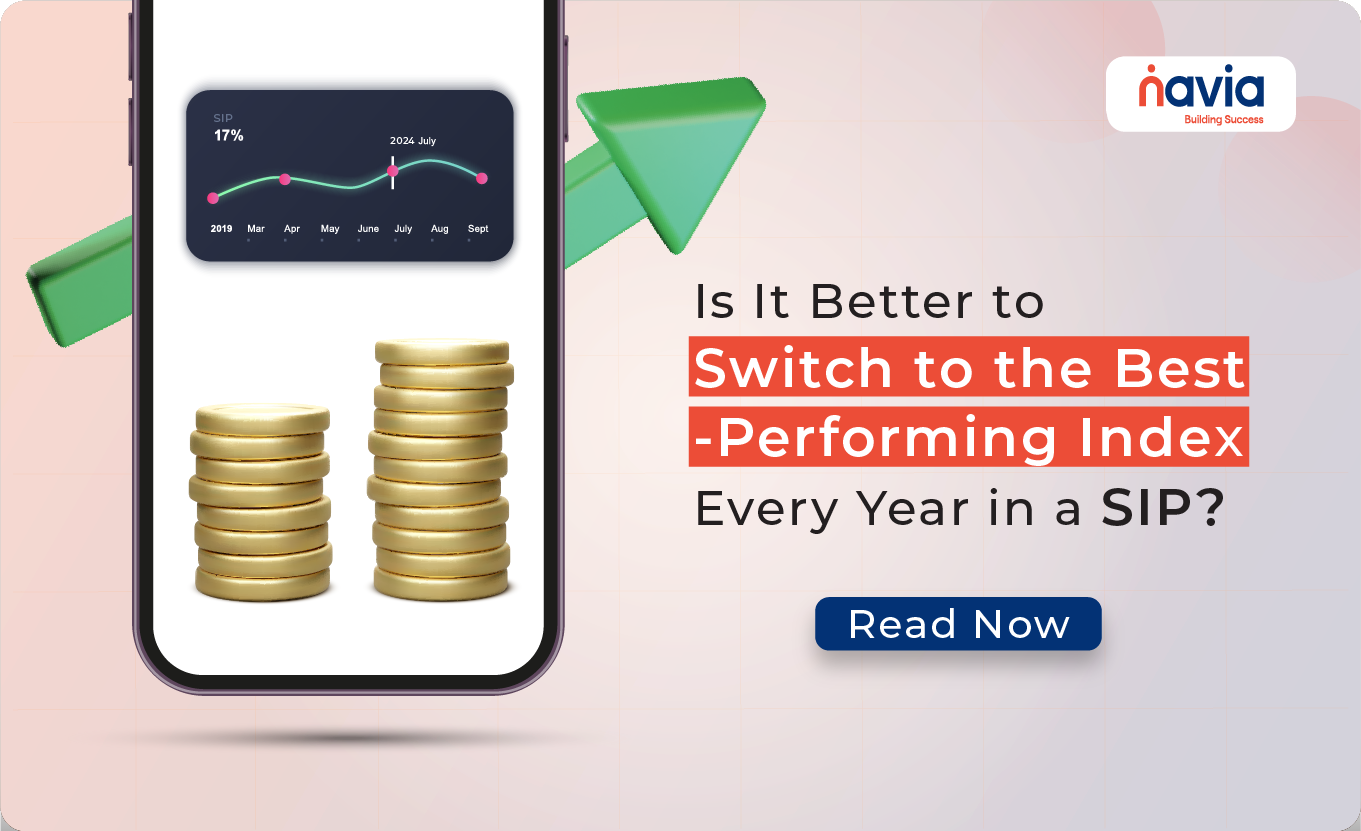
Investors often wonder whether switching their Systematic Investment Plan (SIP) to the best-performing index each year could yield better returns. Let’s explore this with reference to the detailed SIP study conducted by WhiteOak Capital Mutual Fund. The same study also asks whether the monthly SIP date matters, and a related question is whether a SIP top-up makes sense.
💡 Quick Answer
No. In the WhiteOak study, an investor who switched every year to the previous year’s best index earned less than one who stayed put: 14.7% versus 16.7% average XIRR on 10-year rolling returns in the Mid Cap case, and 14.0% versus 14.1% in the Small Cap case. Staying invested was also more consistent.
Successful SIP: The Smart Investor’s Choice!
A successful SIP is more about “Starting Early”, maintaining the discipline of “Investing Regularly”, investing for the “Long Term” to achieve our “Financial Goals” and less about “Which Date”, “Which Frequency”, “At what stage of the Market Cycle” etc.

Case Studies: Switching vs. Staying Invested
The study examined two hypothetical investors:
Investor A: Started a SIP in the Mid Cap Index but switched annually to the previous year’s best-performing index.
Investor B: Continued investing only in the Mid Cap Index without switching.
Results from the Study:
Mid Cap Index Case Study (10-Year Rolling Returns)
| Metric | Switched Index (Investor A) | Continued Mid Cap Index (Investor B) |
|---|---|---|
| Average Return (% XIRR) | 14.7% | 16.7% |
| Maximum Return (% XIRR) | 20.7% | 21.5% |
| Minimum Return (% XIRR) | 3.9% | 5.8% |
Small Cap Index Case Study (10-Year Rolling Returns)
| Metric | Switched Index (Investor A) | Continued Small Cap Index (Investor B) |
|---|---|---|
| Average Return (% XIRR) | 14.0% | 14.1% |
| Maximum Return (% XIRR) | 20.1% | 20.4% |
| Minimum Return (% XIRR) | 2.8% | 0.0% |

Conclusion:
The data clearly suggests that frequent switching does not guarantee superior returns. Instead, it can cause more harm due to potential delays, market timing errors, and reduced compounding. Investors should focus on a long-term SIP strategy aligned with their financial goals rather than chasing the best-performing index annually.
The Best Strategy: Stay invested with discipline, trust the power of compounding, and avoid timing the market!
Key Takeaways
- 1. Higher Consistency in Staying Invested: Investors who stayed invested in one index experienced more consistent returns than those switching indices frequently.
- 2. Cost of Frequent Switching: Annual switching can lead to missed opportunities due to timing mismatches and delayed compounding benefits.
- 3. Psychological Stress of Switching: Frequent switching can cause unnecessary stress and over-trading, which might reduce long-term returns.
- 4. Data Insight: In both case studies, sticking to a single index provided better or comparable returns with less hassle.
Frequently Asked Questions
Is it better to switch to the best-performing index every year in a SIP?
No. In the WhiteOak Capital Mutual Fund study, the investor who switched annually to the previous year’s best-performing index earned a lower average return than the one who stayed put. On 10-year rolling returns the Mid Cap case shows 14.7% average XIRR for switching versus 16.7% for staying invested, and the Small Cap case shows 14.0% versus 14.1%.
What did the switching study actually compare?
Two hypothetical investors. Investor A started a SIP in the Mid Cap Index but switched annually to the previous year’s best-performing index. Investor B continued investing only in the Mid Cap Index without switching. The same comparison was then run for the Small Cap Index.
What were the Mid Cap and Small Cap results?
Mid Cap Index, 10-year rolling returns: switching gave 14.7% average, 20.7% maximum and 3.9% minimum XIRR, while continuing gave 16.7% average, 21.5% maximum and 5.8% minimum. Small Cap Index: switching gave 14.0% average, 20.1% maximum and 2.8% minimum, while continuing gave 14.1% average, 20.4% maximum and 0.0% minimum.
Why does chasing last year’s best index not work?
Annual switching can lead to missed opportunities from timing mismatches and delayed compounding benefits. It also causes unnecessary stress and over-trading, which might reduce long-term returns. In both case studies, sticking to a single index provided better or comparable returns with less hassle.
What should a SIP investor do instead?
Focus on a long-term SIP strategy aligned with your financial goals rather than chasing the best-performing index annually. As the article puts it, stay invested with discipline, trust the power of compounding, and avoid timing the market.
Did you find this article helpful?
Your feedback helps us write better content.

DISCLAIMER: Investments in the securities market are subject to market risks, read all the related documents carefully before investing. The securities quoted are exemplary and are not recommendatory. Brokerage will not exceed the SEBI prescribed limit. Full disclaimer: https://bit.ly/naviadisclaimer