


The Escape Room Code: A Story About Symmetrical Triangle Compression

A symmetrical triangle is a chart pattern that shows compression before a possible breakout. In this short story, an escape room becomes a simple way to understand how lower highs, higher lows, and shrinking price range can build pressure before a move.
The Team That Had 20 Minutes Left
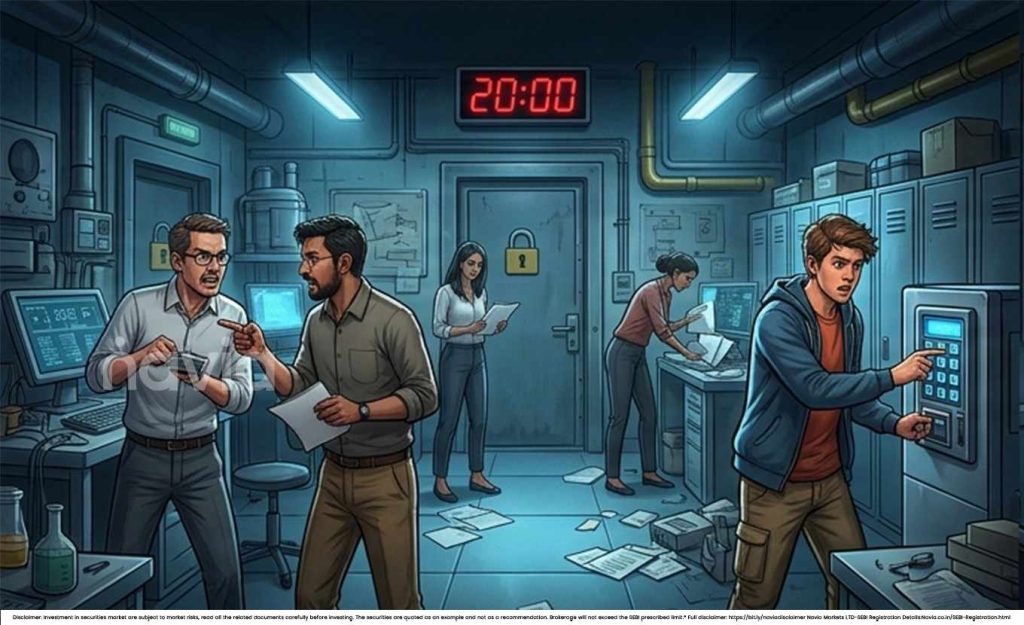
Inside a famous escape room challenge in Bengaluru, six strangers were locked in a dim chamber designed like an abandoned research lab. A giant digital timer on the wall flashed 20:00, and the team had already spent forty minutes solving puzzles, opening lockers, and chasing clues.
A software engineer blamed the room’s design. A college student wanted to try every combination. A retired army officer insisted there had to be a pattern. Meanwhile, a quiet woman named Meera, a quantitative analyst, kept staring at a series of numbers on a monitor.
Everyone was arguing. Nobody was observing.
Then Meera spoke. “Stop. Look at the clues.”
The software engineer frowned. “We’ve been looking for twenty minutes.”
“No. You’ve been looking at the answers, not the buildup.”

The Compression Nobody Noticed
The clues on the screen showed a strange sequence. Every new clue appeared closer to the previous one. The gaps were shrinking.
The army officer noticed it first. “The distance between them is getting smaller.”
Meera smiled. “Exactly. That reminds me of a pattern traders watch when price compresses.”
The student asked, “Which pattern?”
“The symmetrical triangle,” she said.
She drew two lines moving toward each other.
In market terms, a symmetrical triangle forms when price makes lower highs and higher lows. The range narrows, volatility often contracts, and neither buyers nor sellers fully take control. The market is still active, but it is building pressure rather than expanding.
The software engineer laughed. “Like this room.”
“Exactly,” Meera replied.
The Formula Behind the Pressure
The timer showed 12:47, but nobody seemed to care anymore. The puzzle and the pattern had become the same story.
Meera explained further. “A symmetrical triangle is not about direction. It is about compression.”
She wrote:
Upper trendline = series of lower highs
Lower trendline = series of higher lows
“The space between them shrinks. Volume often fades during formation. Then the real move usually comes after a breakout.”
The army officer asked, “How do traders estimate the move?”
“Many use the pattern height.”
Target = breakout price + triangle height
For downside breakouts: Target = breakout price − triangle height
She added three simple rules.
- Wait for a candle close outside the triangle.
- Look for expanding volume during the breakout.
- Avoid guessing direction before confirmation.
The student asked, “Why not predict early?”
Meera smiled. “Because prediction is often expensive. Confirmation is usually more disciplined.”

The Door Opened
The timer showed 04:19.
Suddenly the student noticed something. “The shrinking gaps between clues form a triangle.”
The army officer rushed to the control panel. The software engineer entered the sequence. A sharp click echoed through the room. The final door opened.
The team had escaped.
But Meera was smiling for a different reason. The pattern had revealed itself not through a chart, but through a real-life puzzle. As they walked out, the software engineer shook his head.
“I came here to solve an escape room and left learning a trading setup.”
Meera laughed. “That’s the point. Keep charts simple. Focus on structure, volume, and confirmation. Platforms like the Navia All In One App make it easier to analyze setups.”
The timer stopped. The game was over.
But everyone walked away with the same lesson: big moves often begin with compression. In markets, as in escape rooms, the clue is not always the action. Sometimes it is the tightening before the release.
Educational takeaway: A symmetrical triangle is best understood as a period of narrowing price movement before breakout. It is a learning concept, not a trading instruction.
Do You Find This Interesting?
We’d Love to Hear from you

DISCLAIMER: This story is a fictional illustration created for educational purposes. Investment in securities market are subject to market risks, read all the related documents carefully before investing. The securities quoted are exemplary and are not recommendatory. Brokerage will not exceed the SEBI prescribed limit. Full disclaimer: https://bit.ly/naviadisclaimer