

How to Combine Indicators for Improved Trading Analysis?
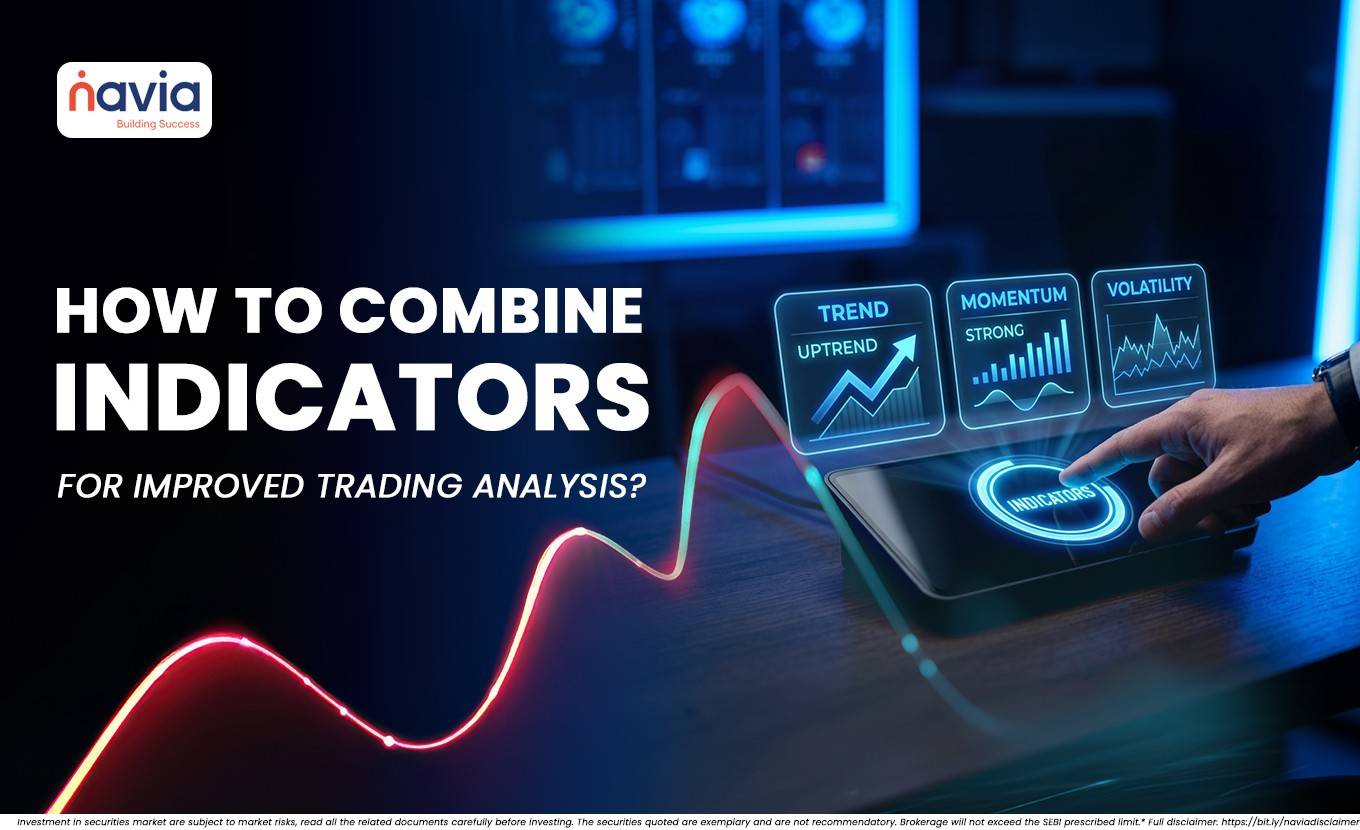
Using just one indicator often gives an incomplete picture. That is why many traders look for the commonly used indicator combinations for intraday trading or the popular indicator combinations for day trading to assist in timing analysis, reduce false signals, and support decision-making.
The key is not to overload your chart. A smarter approach is to combine indicators that do different jobs, such as trend, momentum, volume, and volatility confirmation. This makes the method structured and easier to interpret.
💡 Quick Answer
Combining indicators means pairing tools that do different jobs — one for trend (like a moving average), one for momentum (like RSI or MACD), and one for volatility or volume (like ATR or Bollinger Bands) — so they confirm each other. The goal is not more indicators but the right mix that reduces false signals without cluttering the chart.
What Indicator Combination Means?
Understanding how to combine trading indicators starts with knowing that each indicator has a role. Some indicators show trend direction, some show momentum, and others measure volatility or volume.
When used together, they can be used to assess trade setups. For example, a trend indicator can tell you direction, while a momentum indicator can help you evaluate momentum conditions.
Why Do Traders Combine Indicators?
Traders combine indicators to reduce reliance on single-indicator signals. In fast markets, a single indicator can give a false entry, but two or three indicators working together may offer additional confirmation.
This is also why people search for how to combine indicators for better trading. The goal is not to predict the market perfectly, but to support more structured trade decisions with a more balanced view of price action.
Best Indicator Types to Combine
A good combination usually includes one indicator from each major category. That means one trend indicator, one momentum indicator, and one confirmation tool such as volume or volatility.
For example:
- Trend: EMA or SMA.
- Momentum: RSI or MACD.
- Volatility or risk: ATR or Bollinger Bands.
This structure helps traders understand how to combine trading indicators in a structured manner without crowding the chart or creating conflicting signals.
Practical Combinations for Traders
One of the best combination of indicators for intraday trading is EMA + RSI + ATR. EMA helps identify trend direction, RSI helps spot momentum and overbought or oversold conditions, and ATR helps manage stop-loss based on volatility.
Another effective setup is MACD + Moving Average + Volume. This combination can work well when you want trend confirmation along with a check on whether the move is supported by participation. For many traders, this is also among the best combination of indicators for day trading because it keeps the chart simple and focused.
How To Use Them in a Trade?
A clean way to use indicators is to assign each one a job. First, use the trend indicator to decide whether you should look for buy or sell opportunities. Second, use momentum to confirm the timing. Third, use volume or volatility for extra confirmation and risk control.
This approach answers how to combine trading indicators in a disciplined way. It also helps avoid one common mistake: using too many tools and then ignoring all of them because the chart becomes confusing.
Common Mistakes to Avoid
- Do not use indicators that say the same thing in different ways. For example, using three momentum indicators often adds little value because they may all lag or react similarly.
- Do not treat indicators as guarantees. They are decision-support tools, not prediction machines.
Conclusion
Learning how to combine indicators for better trading is about building a simple system with different tools for doing different jobs. A trend indicator, a momentum indicator, and a risk or volume tool can work together to improve trade quality.
For traders searching for how to combine trading indicators like a pro, the best answer is usually not more indicators, but the right combination. Keep the setup clean, use it consistently, and always remember that indicators support judgment—they do not replace it. To go deeper, study price channels in technical analysis, the 7 must-know stock market ratios, and DuPont analysis.
Key Takeaways
- Combine indicators from different categories — trend, momentum and volatility/volume — rather than repeating one type.
- A common structure is one trend tool + one momentum tool + one confirmation tool (volume or volatility).
- Popular pairings include EMA + RSI + ATR and MACD + Moving Average + Volume.
- Assign each indicator a job: trend sets direction, momentum times entries, volume/volatility confirms and manages risk.
- Indicators support decisions but do not guarantee outcomes — keep the setup simple and use risk management.
Did you find this article helpful?
Your feedback helps us write better content.

Frequently Asked Questions
What is the best combination of indicators for day trading?
A simple combination like Moving Average, MACD, and Volume is often used for day trading confirmation.
Why should traders combine indicators?
Combining indicators can reduce false signals and improve decision-making by confirming the same market idea from different angles.
Can indicators guarantee profits?
No. Indicators only help analyze market conditions and should be used with risk management and discipline.
How to combine indicators for better trading?
Choose indicators that complement each other instead of repeating the same signal and use them with a clear trading plan.
DISCLAIMER: Investment in securities market are subject to market risks, read all the related documents carefully before investing. The securities quoted are exemplary and are not recommendatory. Full disclaimer: https://bit.ly/naviadisclaimer.