

Are You a Trader or an Investor? The Key Difference Explained
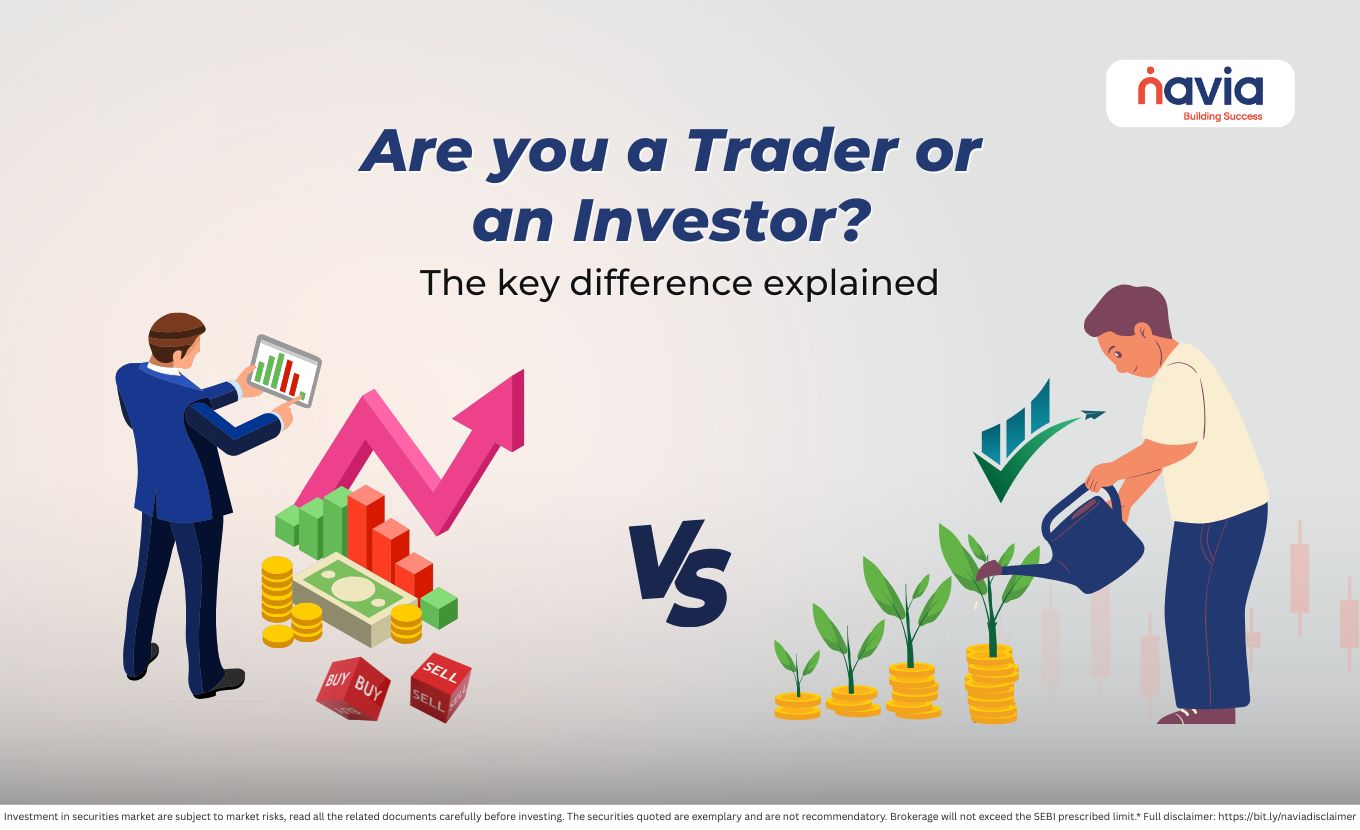
The financial market will offer two primary ways to build wealth to the people; they are trading and investing. Both ways include buying and selling assets, and different types of goals and approaches. If you are planning to make your own financial strategy, you must understand the difference between traders and investors.
The differences aren’t minor, they can shape your day-to-day activities, risk exposure, knowledge, and mainly your potential for long-term financial success. So, let’s understand the major factors from this blog and that will help to make good financial decisions.
💡 Quick Answer
Five things separate a trader from an investor. Time horizon is the clearest: investors hold for years or decades, traders for minutes to weeks. Method follows from it — investors use fundamental analysis of a company’s financial health and ratios, traders use technical analysis of price, volume, and chart patterns. Risk and emotional load are higher in trading because of the compressed time frame. Commitment differs too: investing needs little ongoing time and can start small, while trading needs constant monitoring during market hours and more capital to make short-term moves meaningful. Finally, taxation differs — investor profits are treated as capital gains, trader profits as business income.
Time Horizon: The Ultimate Delineator
The major difference between investing and trading is the time horizon of their financial activities.
What does the investor’s time horizon look like?
Investing: Like a marathon runner, because they are aiming for the goal of long-term wealth, capital appreciation and building a consistent income like dividends or interest. So, the time horizon may be years or often decades.
The approach is like the investor views the assets they buy and hold them, riding out short-term market volatility with the conviction that the underlying company’s value will grow over time. What that patience has historically been worth is set out in what returns to expect from the stock market in the long term.
The major focus of the investor is long-term gains because they choose this for their retirement, child’s education or marriage etc.
What does the trader’s time horizon look like?
Trading: Like a sprinter; traders focus on generating quick profits by capitalizing on short-term price fluctuations.
The time horizon of trading can be minutes, hours or weeks; rarely does it exceed a few months. Most traders see an asset for a short-term trade, and they frequently buy and sell assets, because they aim to get profit from small price movements. If you want the mechanics from the ground up, stock trading explained covers the key concepts for beginners.
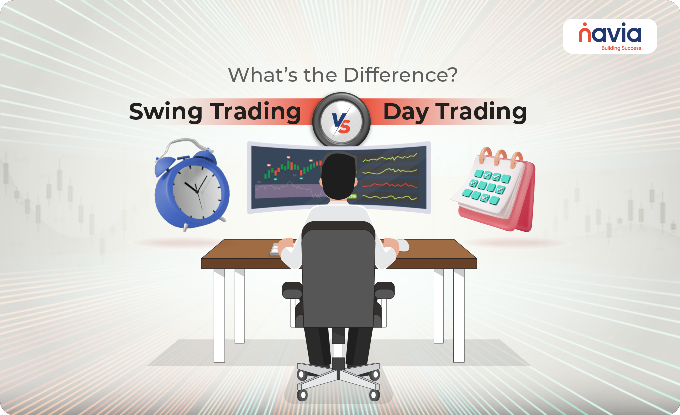
There are two types of trading, day trading (buying and selling assets within a day) and swing trading (holding assets for a few days or weeks). Longer holds that still fall short of investing have their own label, described in what is positional trading.
Analysis Method: Fundamental vs. Technical
The tools that are used to make decisions are one of the major differences between investors and traders.
Investing: Investors are relying on fundamental analysis; their research focuses on the value of the company. Fundamental analysis includes the evaluation of a company’s financial health, management, industry position, and key ratios like Price-to-Earnings (P/E) ratio.
Trading: But they rely on technical analysis; mainly research into the price movement and patterns on charts. Technical analysis includes analyzing historical market data like price, volume, and other indicators (like the Relative Strength Index (RSI), Moving Average, etc.) to predict future price movements. How those indicators combine into an actual method is covered in the ultimate guide to trading strategies.
Risk Profile and Emotional Involvement
The difference between the time horizon and analysis leads to different levels of risk and emotional stress. It’s considered a critical factor in both the financial activities, let’s see a little bit descriptive.
Investing: Generally lower risk compared to trading, because the losses they face are mostly short-term ones they can ride out. They will accept market fluctuations as part of the process, then they focus on diversified approaches to mitigate risk over time.
Trading: It carries higher risk due to the short time frame and quick movements of the market. The frequent buying and selling process will expose traders to high profits and losses.

Capital and Time Commitment
Your capital and time commitment will dictate whether the trading or investing path is better for you.
Investing: An investor should spend minimal time commitment to the process quarterly or annually. And they can start with small amounts because they are focused on compounding.
Trading: A trader requires constant monitoring during market hours, then only they can make the best financial decisions. And trading requires more significant capital for meaningful short-term returns.
Taxation: A Crucial Distinction
In many jurisdictions including India, the tax treatments are very different and that are a major point of differentiation.
Investing: In investor income, the investors’ profits are taxed as capital gains. The classification of the tax depends on the holding period of the asset there are two ways;
- ➣ Long-Term Capital Gains (LTCG) applies to the assets that are held for more than 12 months.
- ➣ Short-Term Capital Gains (STCG) applied to assets that are held for 12 months or less.
Trading: Traders’ profits are treated as business income. Income from frequent trading (especially intraday) is classified as speculative business income; it will directly add to the trader’s total income.
Conclusion: Which One Are You?
The choice between being a trader or an investor is a deeply personal one, that depends on your financial goals, time and risk tolerance.
- 🔸 If your goal is slow and seeking steady wealth accumulation over the long term, you can prefer investing methods, because it has a less stressful approach.
- 🔸 If you seek rapid and short-term returns and you have the time to dedicate to the market with high risk tolerance, you can find trading a more exciting and rewarding path.
Many successful individuals succeed in their career after a deep understanding of these two paths. Then they maintain a core investment portfolio to achieve their long-term goal while dedicating a smaller portion of their capital to trading for short-term gains. Choosing the right path means you are on the right path to your financial freedom, so make decisions carefully.
Key Takeaways
- Time horizon is the root difference. Everything else — method, risk, workload, tax treatment — follows from how long you intend to hold.
- Investors read the business through fundamental analysis; traders read the price through technical analysis. Neither tool works well on the other’s time frame.
- Trading concentrates risk and emotional load into a short window, which is why discipline matters more there, not less.
- Investing can start small and needs review only quarterly or annually; trading needs live attention during market hours and more capital to be worthwhile.
- The tax treatment genuinely differs — capital gains for investors, business income for traders — so factor it in before you choose, not after.
- Related reading: stock trading explained, what is positional trading, trading strategies, and what returns to expect in the long term.
Did you find this article helpful?
Your feedback helps us write better content.

Frequently Asked Questions
What is the difference between a trader and an investor?
The main difference lies in their time horizon and goal:
An Investor buys and holds assets (like stocks) for a long period. Their goal is long-term wealth accumulation through capital appreciation, dividends, and compounding.
A Trader buys and sells assets frequently (daily, weekly, or monthly). Their goal is to make short-term profits by capitalizing on price volatility and market inefficiencies.
Is it better to be an investor or a trader?
It is completely based on your goals and risk appetite. But investing is less time-consuming compared to trading with less stress, and benefits from the power of compounding over many years. But keep in mind that trading needs more time, discipline, and is emotionally challenging too.
Who is richer, a trader, or an investor?
It depends entirely on individual results and skill, but for the average person, the long-term investor is statistically more likely to build substantial, sustainable wealth.
Do traders or investors have more risks?
It depends on many factors like;
Market Volatility: For traders it is high risk. Short-term price swings can wipe out capital quickly. But for investors it can be lower risk. Market dips are temporary, and time allows for recovery.
Capital Loss: For traders, it is high. Decisions based on short-term timing are prone to error. But for investors it can be lower. Diversification and a long horizon smooth out bad investments.
Transaction Costs: For traders, they’re high. Frequent buying/selling incurs high brokerage fees and taxes. For investors it’s become low. Minimal fees due to infrequent transactions.
Is trading like gambling?
Trading becomes like gambling when an individual:
➜ Trades purely on emotion, gut feelings, or unsubstantiated tips.
➜ Does not have a clear strategy, analysis, or risk management plan.
➜ Wagers capital they cannot afford to lose.
DISCLAIMER: Investment in securities market are subject to market risks, read all the related documents carefully before investing. The securities quoted are exemplary and are not recommendatory. Full disclaimer: https://bit.ly/naviadisclaimer.