

Portfolio Diversification Strategies for 2025: Understanding Risks and Balances
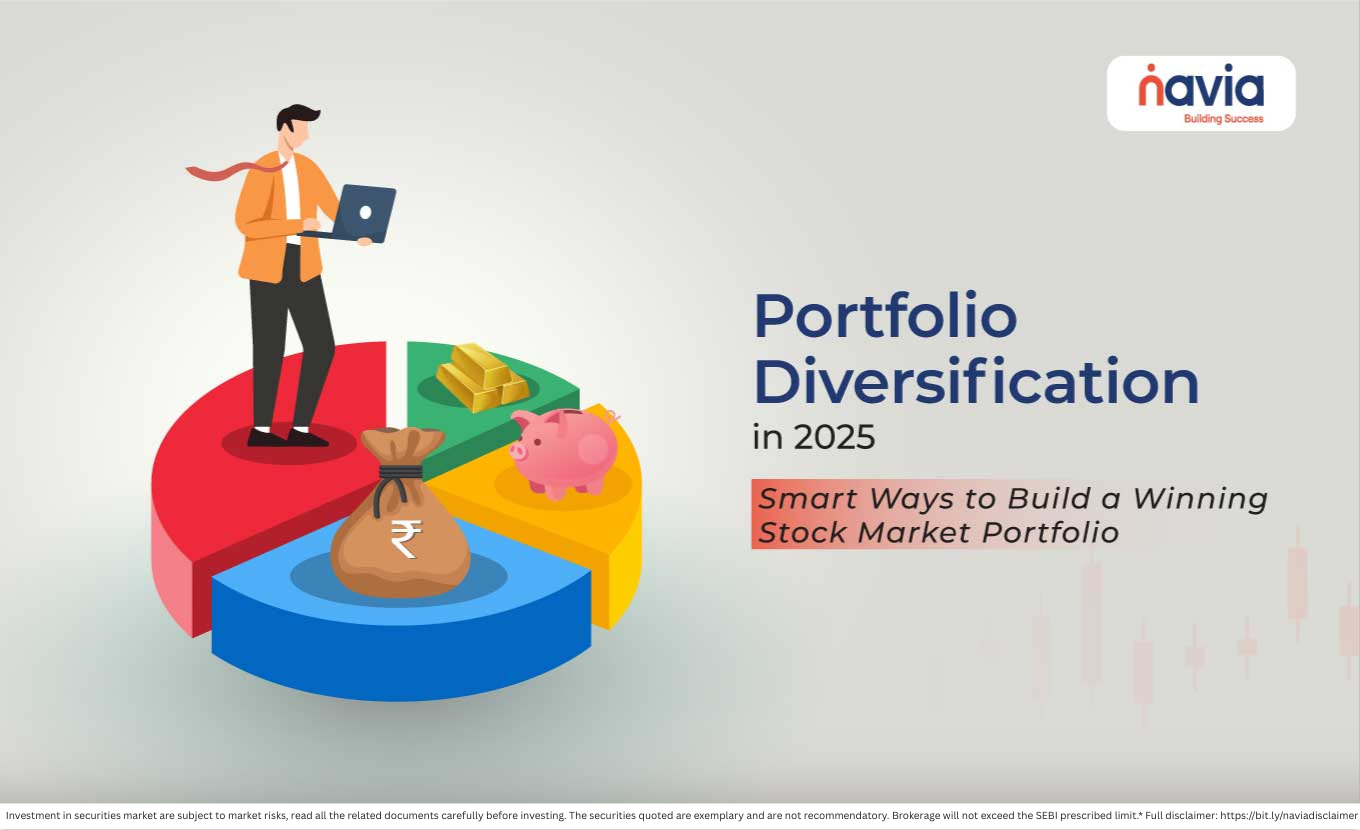
To keep pace with today’s financial world, it is necessary to hold a well-balanced stock portfolio. Global events, technological shifts and changing economic cycles make markets unpredictable, so portfolio diversification is the main tool for reducing risk while still pursuing returns.
Whether you are a seasoned investor or just starting your journey in the portfolio share market, this guide will help you understand how to build a diversified portfolio in 2025.
💡 Quick Answer
Portfolio diversification means spreading money across asset classes, sectors, geographies and maturities so that weakness in one area is offset by strength in another. The practical levers are asset-class mix, geographic spread, bond maturity ladders, alternatives such as REITs, and a balance of tangible and intangible assets. The usual mistakes are over-diversifying, ignoring risk levels and never rebalancing.
What is Stock Portfolio?
A stock portfolio is a simple concept: it is a collection of investments across different companies, sectors and industries. Looking at your stock market portfolio shows you your overall market exposure, your investment goals and your risk appetite in one place.
In simple words, a stock portfolio is like your investment basket — the more variety it has, the better protected it is from market shocks.
Why Portfolio Diversification Matters?
Portfolio diversification is the strategy of spreading your investments across multiple asset classes, sectors and geographies. Its goal is to reduce the impact of poor performance in one area by balancing it with stronger performance in another. It also sets a realistic frame for what returns to expect from the stock market in the long term.
Here are the key benefits of investment diversification:
- Risk Reduction: If one sector falls, gains elsewhere in the portfolio help absorb the blow.
- Steadier Returns: A balanced portfolio tends to perform more consistently over time.
- Long-Term Growth: Exposure to different markets, such as stocks and bonds, supports long-run wealth creation.
- Flexibility in Adjusting Strategies: You can rebalance your portfolio easily as market conditions change.
- Exposure to Multiple Opportunities: You benefit from growth in several industries and markets at the same time.
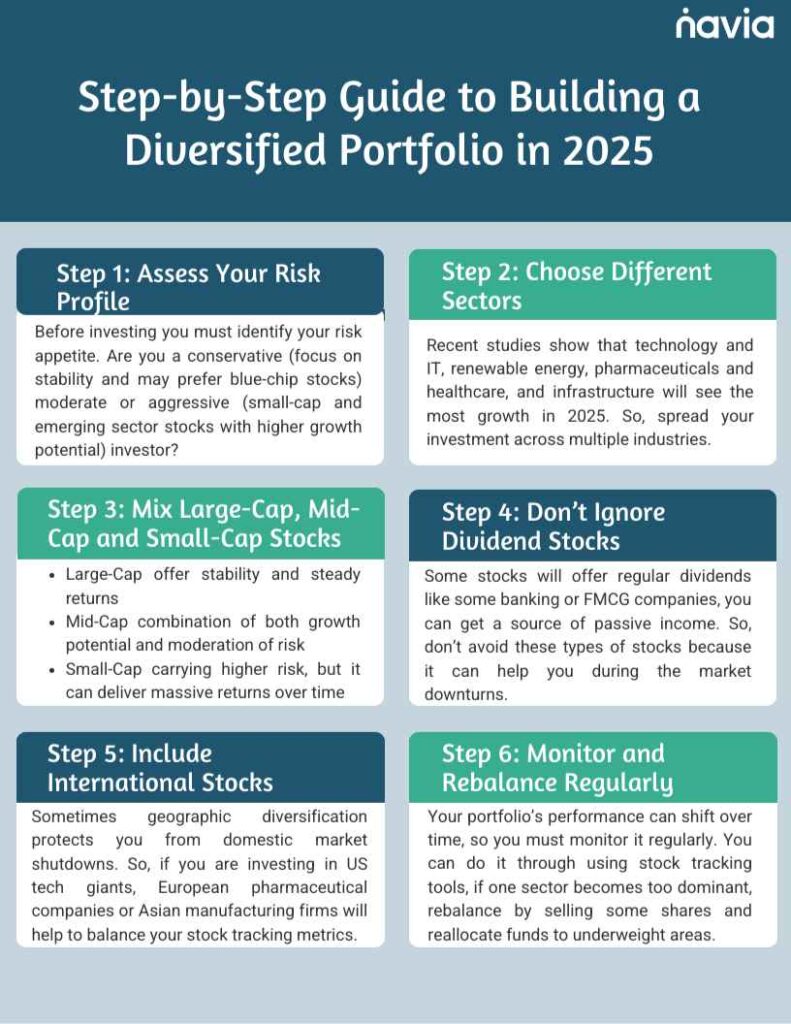
Step-by-Step Guide to Building a Diversified Portfolio in 2025
Here is a simple guide to building a diversified portfolio in 2025. Let’s look at the steps involved.
Portfolio and Diversification Strategies for 2025
Diversifying a portfolio is an important step, but every portfolio is different, so how do you manage yours? There are several portfolio and diversification strategies available today. Choose the one that fits, then apply it to balance risk and improve stability.
Across Asset Classes
Spreading investments across different asset classes is the most effective way to diversify. Combine stocks, bonds, commodities and real estate, because these respond differently to the same market conditions. Within equities, mixing market caps matters too — see our comparison of large, mid and small cap funds.
Geographic Diversification
Economic conditions vary across countries, so holding a mix of domestic and international assets can reduce risk. Developed markets tend to offer stability while emerging markets offer growth, so weigh both when choosing where to invest.
Maturity Length in Fixed-Income Investments
Bonds with different maturity lengths help diversify a portfolio. Short-term bonds are less sensitive to interest rate changes but usually deliver lower returns. Long-term bonds are more volatile and can offer higher yields. Combining both helps you manage the risk across different economic conditions.
Alternative Investments
This category includes Real Estate Investment Trusts (REITs) and hedge funds, which can diversify a portfolio beyond traditional markets. Because they have a low correlation with stocks and bonds, they can improve overall portfolio stability. Exchange-traded funds serve a similar purpose for many investors; see the growth of ETFs in India.
Tangible and Intangible Assets
Including both tangible and intangible investments changes the character of your portfolio. Tangible assets such as gold, agricultural land and real estate offer intrinsic value and stability, while intangible assets such as equities and digital securities offer liquidity and scalability. If you are building the fund side of this mix, our beginner’s guide to choosing mutual funds is a useful next read.

Common Mistakes to Avoid
- Over-diversification: holding too many stocks can dilute your returns and make the portfolio harder to track.
- Emotional decision-making: impulsive choices when the market swings will usually hurt your portfolio.
- Overconfidence: winning in the past doesn’t guarantee winning now, so stay humble and stick to your process.
- Not reviewing regularly: markets move constantly, so a portfolio left unchecked drifts away from its target mix.
- Ignoring risk management: each asset class carries its own level of risk, and skipping that assessment leaves the portfolio exposed.
Conclusion
Building a diversified portfolio in 2025 is the best way to manage your investing journey, but without a clear strategy it can still work against you. Choosing a strategy, monitoring it regularly and adapting to market trends are all essential. Whether you pursue investment diversification through sectors, asset allocation or global exposure, the goal is the same: maximizing returns while minimizing risk. A well-balanced stock market portfolio remains the best defence against volatility.
Investors should evaluate suitable strategies, monitor regularly, and adapt to changing market conditions. Investors should use the right tools to plan, monitor, and adapt their portfolios for long-term growth.
Key Takeaways
- Diversification spreads investments across asset classes, sectors, geographies and maturities to cut single-point risk.
- Mixing asset classes that respond differently to the same conditions is the most effective single lever.
- Combining short and long maturity bonds balances interest-rate sensitivity against yield.
- Alternatives such as REITs have low correlation with stocks and bonds, which adds stability.
- Over-diversifying dilutes returns and complicates tracking, so more holdings is not automatically better.
- A portfolio that is never reviewed or rebalanced drifts away from the risk profile it was built for.
Did you find this article helpful?
Your feedback helps us write better content.

Frequently Asked Questions
What is portfolio diversification?
Portfolio diversification is the strategy of investing in a mix of assets—such as stocks from different sectors, bonds, commodities, or global markets—to reduce risk.
What is the biggest benefit of portfolio diversification?
The biggest benefit is risk reduction. Diversification spreads your investments across various assets, lowering the impact of a single stock or sector’s poor performance on your overall returns.
What are the three disadvantages of diversification?
- Lower potential returns – Since gains from high-performing stocks are balanced by lower performers.
- Complex management – Tracking and rebalancing a large number of investments can be time-consuming.
- Higher transaction costs – Buying and selling multiple assets can increase brokerage and management fees.
How to diversify your portfolio in India?
- Invest in different sectors (banking, FMCG, IT, energy, etc.).
- Include various market caps (large-cap, mid-cap, small-cap).
- Add different asset classes like bonds, gold ETFs, and international equities.
How many stocks make a diversified portfolio?
For most retail investors, 25-30 well-chosen stocks across sectors and market caps are considered sufficient for effective diversification.
DISCLAIMER: Investments in securities market are subject to market risks, read all the related documents carefully before investing. The securities quoted are exemplary and are not recommendatory. Full disclaimer: https://bit.ly/naviadisclaimer.