

Treasury Stocks Explained: Buybacks and Accounting Basics
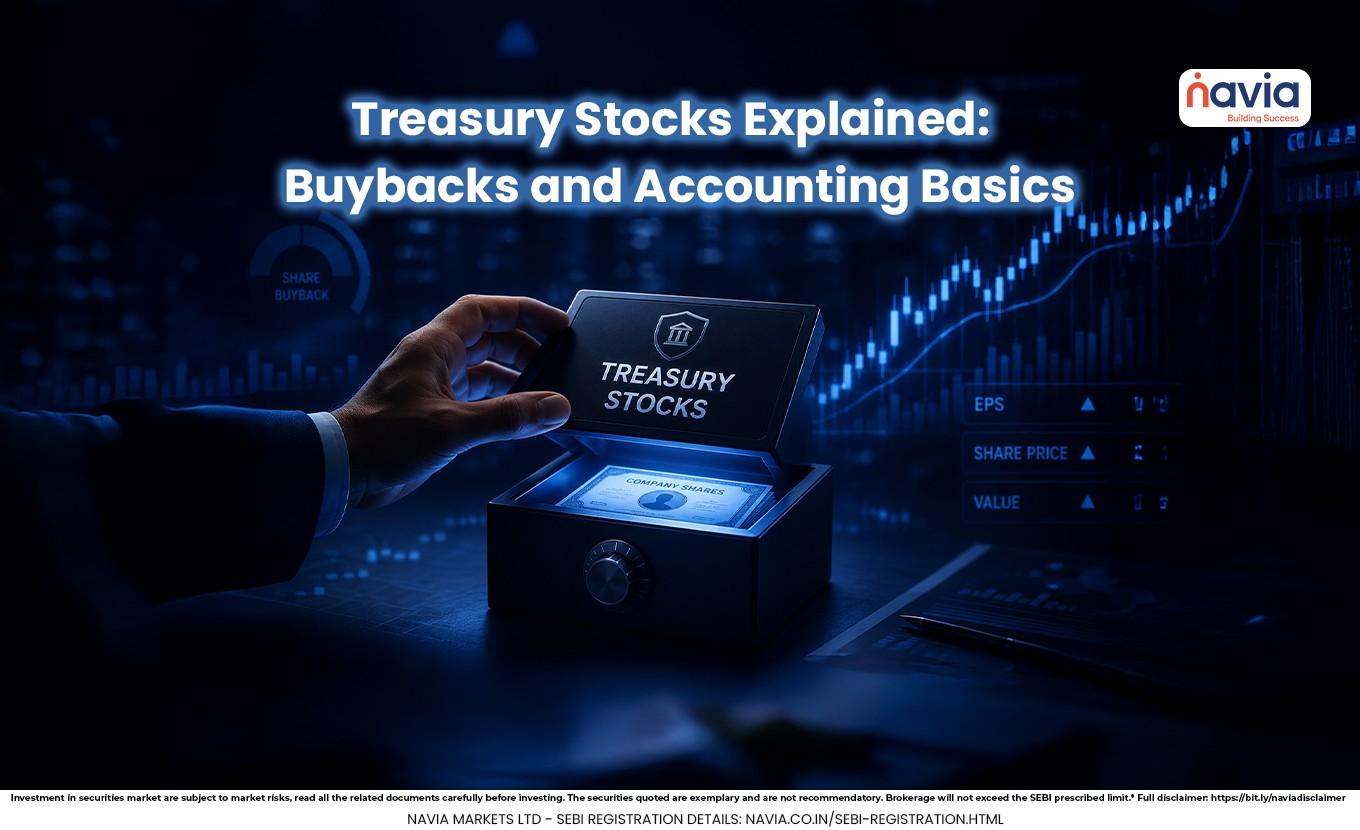
Treasury stocks are shares that a company has already issued and later repurchased from the market or from shareholders. For anyone searching what are treasury stocks, the simplest answer is that these are company-owned shares that are no longer counted as outstanding while they are held by the company.
Understanding the treasury stock meaning is useful because buybacks can affect capital structure, earnings per share, and how investors interpret company actions. This makes the topic relevant for both beginners and readers who want a clear understanding of it.
💡 Quick Answer
Treasury stocks are shares a company issued earlier and then bought back, so it now holds them itself instead of leaving them with public investors. While these shares sit in the company’s treasury they are not counted as outstanding and usually carry no dividend or voting rights, which is why buybacks shape how a company’s equity and per-share picture are understood.
What are Treasury Stocks?
The term treasury stock refers to shares that were once part of the company’s outstanding equity but were later bought back and kept in the company’s treasury. These shares are usually not entitled to dividends or voting rights while they remain as treasury of stock.
In simple words, the company is effectively holding its own shares rather than leaving them in public circulation. That is why treasury stock is often discussed in the context of buybacks, equity control, and share capital management.
Why Companies Buy Back Shares?
A treasury stock purchase usually happens when a company buys back its own shares from the market. Companies may do this to manage capital structure, affect per-share calculations, or keep shares available for future use, such as employee compensation plans.
Another reason is flexibility. If a company later wants to reissue these shares, treasury stock can be used without creating entirely new shares. This is one reason for treasury stocks are often treated as a corporate financial management tool rather than just a balance-sheet item. Like other corporate actions such as stock mergers and stock demergers, buybacks are one way companies reshape their equity base.
How Treasury Stocks Appear?
When a company buys back shares, those shares are recorded as treasury stock and reduce shareholders’ equity. This treatment reflects the fact that the company has used cash to reacquire its own equity.
Treasury stocks are not usually counted as outstanding shares, which means they do not typically receive dividends or voting rights while held by the company. For investors, this is important because buybacks can change the number of shares in circulation and influence per-share calculations. The same logic applies to other corporate actions that change the share count, such as bonus issues that traders study through bonus scalping in Indian stocks.

What is the Treasury Stock Method?
The treasury stock method is an accounting approach used to estimate the dilution effect of stock options, warrants, and similar instruments on earnings per share. If you are searching what is treasury stock method, the idea is that the company is assumed to use the proceeds from option exercises to repurchase shares at the average market price.
This method helps calculate diluted Earnings Per Share (EPS) using a standardized accounting approach. It shows how many additional shares may enter the share count if in-the-money options are exercised, and the company repurchases shares with the received cash.
Example of Treasury Stock Method
Here is a simple way to understand the treasury stock method. Suppose a company has employee stock options that are in the money. If those options are exercised, the company receives cash from the employees.
The method assumes that cash is then used to repurchase shares from the market at the average trading price. The difference between shares issued and shares repurchased becomes the incremental dilution added to diluted EPS. This is why the method is widely used in financial reporting.
Conclusion
Treasury stocks are shares a company buys back and holds in its own treasury, and the treasury stock meaning is closely tied to ownership control, capital structure, and per-share calculations. If you were searching what are treasury stocks or what is treasury stock method, the key takeaway is that both concepts help explain how companies manage equity and how dilution is measured.
For readers and investors, understanding treasury stock purchase, and the treasury stock method, can make financial statements easier to read, and corporate actions easier to interpret.
Did you find this article helpful?
Your feedback helps us write better content.

Key Takeaways
- Treasury stocks are previously issued shares that a company has bought back and now holds in its own treasury.
- While held by the company, they are not counted as outstanding and usually carry no dividend or voting rights.
- Buybacks let companies manage capital structure and keep shares ready for future use, such as employee compensation.
- The treasury stock method estimates how in-the-money options and warrants could dilute earnings per share.
- Understanding treasury stock makes buybacks and related corporate actions easier to read on financial statements.
Frequently Asked Questions
What are treasury stocks?
Treasury stocks are shares that a company has repurchased from the market and is holding itself.
What is the treasury stock method?
The treasury stock method is used to calculate the dilution impact of stock options and warrants on diluted EPS.
Why do companies make a treasury stock purchase?
Companies buy back shares to manage capital, manage per-share calculations, or keep shares available for future use.
Are treasury stocks the same as treasury bills?
No. Treasury stocks are repurchasing company shares, while treasury bills are short-term government securities.
Can treasury stocks be reissued?
Yes. Companies may reissue them later for compensation plans or other corporate needs.
DISCLAIMER: Investment in securities market are subject to market risks, read all the related documents carefully before investing. The securities quoted are exemplary and are not recommendatory. Full disclaimer: https://bit.ly/naviadisclaimer.