

Types of Commodity Market: Spot, Futures and More Explained
- What is a Commodity Market?
- 1. Spot Commodity Market (Physical Market)
- Key Features of the Spot Market
- 2. Derivatives Commodity Market (Futures and Options Market)
- Types of Derivatives Markets
- 3. Spot Market vs. Futures Market – A Quick Comparison
- 4. Domestic vs. International Commodity Markets
- a) Domestic Commodity Market
- b) International Commodity Market
- 5. Commodity Markets Based on Commodity Type
- Agricultural Commodity Market
- Metal Commodity Market
- Energy Commodity Market
- Livestock and Meat Commodity Market
- Why Understanding the Types of Commodity Markets is Important?
- Conclusion and Next Steps
- Frequently Asked Questions
Have you ever wondered why gold prices fluctuate daily? Or why crude oil prices impact global economies? Whether you’re a beginner in commodity trading or looking to expand your knowledge, understanding the different types of commodity markets is essential for making informed trading decisions.
Commodity markets provide a platform for buying, selling, and speculating on the price of raw materials and primary goods like oil, gold, wheat, and more.
But what are the different types of commodity markets, and how do they work?
💡 Quick Answer
A commodity market is where raw materials such as gold, oil and wheat are bought and sold. There are two main types: the spot market, for immediate delivery, and the derivatives market, where futures and options are traded for future delivery. In India, SEBI regulates these markets, mainly on MCX and NCDEX.
What is a Commodity Market?
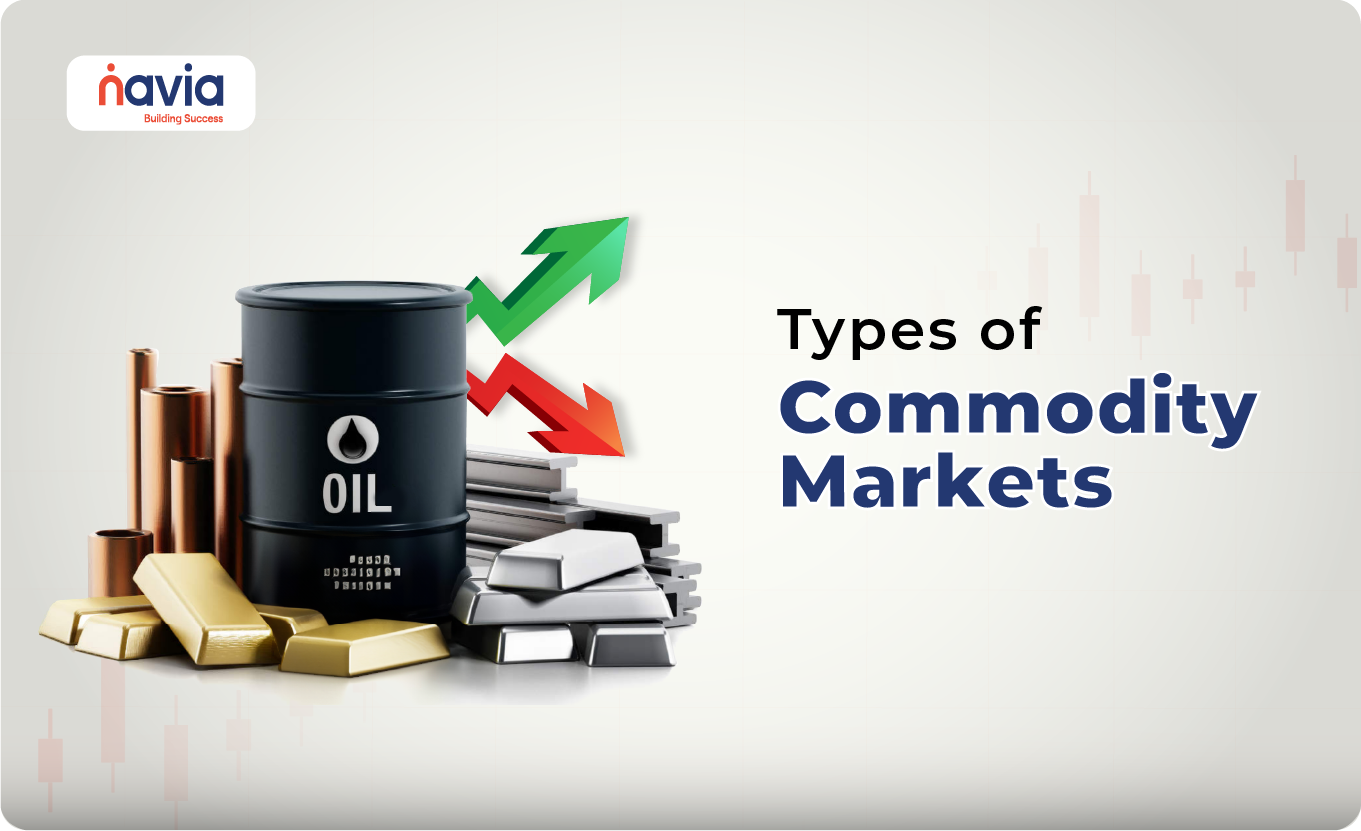
A commodity market is a financial marketplace where commodities (raw materials or primary goods) are bought and sold. These markets help in price discovery, risk management, and hedging against inflation.
There are two main types of commodity markets:
1. Spot Market (Physical Market) – Where commodities are traded for immediate delivery.
2. Derivatives Market (Futures & Options Market) – Where commodities are traded via contracts for future delivery.
Let’s explore this in detail.
1. Spot Commodity Market (Physical Market)
The Spot Market, also known as the Cash Market or Physical Market, is where commodities are bought and sold for immediate settlement. Transactions happen on the spot, and delivery occurs immediately or within a short period.
Key Features of the Spot Market
- Immediate delivery of goods.
- Prices fluctuate based on real-time supply and demand.
- No contracts for future delivery.
- Used for agricultural products, metals, and energy commodities.
Examples of Spot Market Transactions
- A gold dealer purchasing gold bars at the current market price.
- A farmer selling wheat directly to a food processing company.
- A company buying crude oil for immediate use in manufacturing.
💡 Fun Fact: The price of gold and crude oil you see in the news is often based on the spot market!
2. Derivatives Commodity Market (Futures & Options Market)
Unlike the spot market, the Derivatives Market deals with contracts where commodities are traded for future delivery.
These contracts help traders and investors hedge against price fluctuations or speculate on price movements without owning the physical commodity.
Types of Derivatives Markets
a) Futures Market
A Futures Contract is a standardized agreement where a buyer and seller agree to exchange a commodity at a predetermined price on a future date.
Key Features of the Futures Market:
- Regulated by major exchanges (e.g., Multi Commodity Exchange – MCX).
- Used by traders for hedging and speculation.
- Requires margin deposits to maintain positions.
- Contracts are standardized (fixed quantity, quality, and delivery date).
Example
A crude oil producer may sell oil futures contracts to lock in a selling price and avoid potential losses due to price fluctuations.
b) Options Market
An Options Contract gives the trader the right (but not the obligation) to buy or sell a commodity at a fixed price before a specific date.
Key Features of the Options Market:
- Provides flexibility – traders are not obligated to execute the contract.
- Helps manage risk exposure.
- Requires a premium payment to enter the contract.
Example
A wheat trader purchasing an options contract to buy wheat at a fixed price in case the market price rises.
3. Spot Market vs. Futures Market – A Quick Comparison
To make it easier to understand, here’s a side-by-side comparison:
| Feature | Spot Market | Futures Market |
|---|---|---|
| Delivery | Immediate | Future Date |
| Contract Type | No Contract | Standardized Contracts |
| Purpose | Buying/Selling in real-time | Hedging & Speculation |
| Example | Farmer selling wheat today | Crude oil futures contract |
📌 Takeaway
The spot market is ideal for those needing immediate access to commodities, while the futures market helps in risk management and speculation.
4. Domestic vs. International Commodity Markets
Commodity markets can be categorized based on their operational scale:
a) Domestic Commodity Market
- Operates within a single country.
- Prices are influenced by local demand, supply, and regulations.
- Example: India’s Multi Commodity Exchange (MCX) — see how to start trading on MCX.
b) International Commodity Market
- Facilitates global trade of commodities.
- Prices are impacted by international trade policies, currency fluctuations, and geopolitical factors.
- Example: London Metal Exchange (LME), Chicago Mercantile Exchange (CME).
5. Commodity Markets Based on Commodity Type
India has a well-developed commodity market regulated by the Securities and Exchange Board of India (SEBI). Here’s how different commodity markets operate in India:
Agricultural Commodity Market
- Includes wheat, rice, pulses, cotton, spices, sugar, coffee, tea, oilseeds.
- Major Exchange: NCDEX (National Commodity and Derivatives Exchange).
- Popular Commodities: Turmeric, Jeera (Cumin), Soybean, Cardamom.
Metal Commodity Market
- Includes gold, silver, copper, aluminum, zinc, nickel, lead, steel.
- Major Exchange: MCX (Multi Commodity Exchange), IBJA (India Bullion and Jewellers Association).
- Popular Commodities: Gold, Silver, Copper, Zinc, Aluminum.
Energy Commodity Market
- Includes crude oil, natural gas, coal, electricity.
- Major Exchange: MCX (Multi Commodity Exchange).
- Popular Commodities: Crude Oil, Natural Gas, Coal.
Livestock and Meat Commodity Market
- India does not actively trade in livestock on commodity exchanges.
- Meat exports (buffalo, poultry, seafood) are significant.
- Regulated by: APEDA (Agricultural and Processed Food Products Export Development Authority).
- Popular Exports: Buffalo Meat, Poultry, Dairy, Seafood.
Why Understanding the Types of Commodity Markets is Important?
Knowing which market you are in tells you what you are actually buying: new traders can choose the right market for their goal, investors can read the risks and opportunities, businesses can hedge against price volatility and speculators can profit from price fluctuations.
| For New Traders | Helps choose the right market for investment. |
| For Investors | Provides insights into market risks and opportunities. |
| For Businesses | Assists in hedging against price volatility. |
| For Speculators | Enables them to profit from price fluctuations. |
Conclusion and Next Steps
Now that you understand the different types of commodity market, you’re better equipped to start your trading journey with Navia.
Key Takeaways
- Two Main Categories: Commodity markets are divided into Spot Markets (instant buying/selling) and Derivatives Markets (Futures & Options for future trading).
- Why It Matters: Spot markets are used for immediate needs, while derivatives markets help businesses and investors manage risks and profit from price changes.
- Global Influence: Commodity trading operates on both domestic (MCX, NCDEX) and international (CME, LME) levels, driven by supply-demand, economic trends, and geopolitical factors.
Are you ready to explore commodity trading? Share your thoughts in our Feedback below! 👇
Frequently Asked Questions
What are the different types of commodity markets?
Commodity markets are divided into two main categories. The spot market, also called the cash or physical market, is where commodities are bought and sold for immediate settlement. The derivatives market deals with futures and options contracts, where commodities are traded for future delivery. Markets are also grouped by scale (domestic versus international) and by commodity type (agricultural, metal, energy, and livestock and meat).
What is the difference between the spot market and the futures market?
In the spot market delivery is immediate, there is no contract, and it is used for buying and selling in real time — for example a farmer selling wheat today. In the futures market delivery is on a future date under standardised contracts, and it is used for hedging and speculation — for example a crude oil futures contract.
Which exchanges regulate commodity trading in India?
India has a well-developed commodity market regulated by the Securities and Exchange Board of India (SEBI). Agricultural commodities trade mainly on NCDEX (National Commodity and Derivatives Exchange), while metals and energy commodities trade mainly on MCX (Multi Commodity Exchange). IBJA (India Bullion and Jewellers Association) is also named for bullion.
What is traded in the agricultural commodity market?
The agricultural commodity market covers wheat, rice, pulses, cotton, spices, sugar, coffee, tea and oilseeds. The major exchange is NCDEX, and the popular contracts named are turmeric, jeera (cumin), soybean and cardamom.
Why should a trader understand the types of commodity markets?
Because each market answers a different need. New traders use it to choose the right market for their investment, investors get insight into market risks and opportunities, businesses use it to hedge against price volatility, and speculators use it to profit from price fluctuations.
Did you find this article helpful?
Your feedback helps us write better content.

DISCLAIMER: Investments in the securities market are subject to market risks, read all the related documents carefully before investing. The securities quoted are exemplary and are not recommendatory. Brokerage will not exceed the SEBI prescribed limit. Full disclaimer: https://bit.ly/naviadisclaimer