


NSE Electronic Gold Receipts: Structure and Key Features
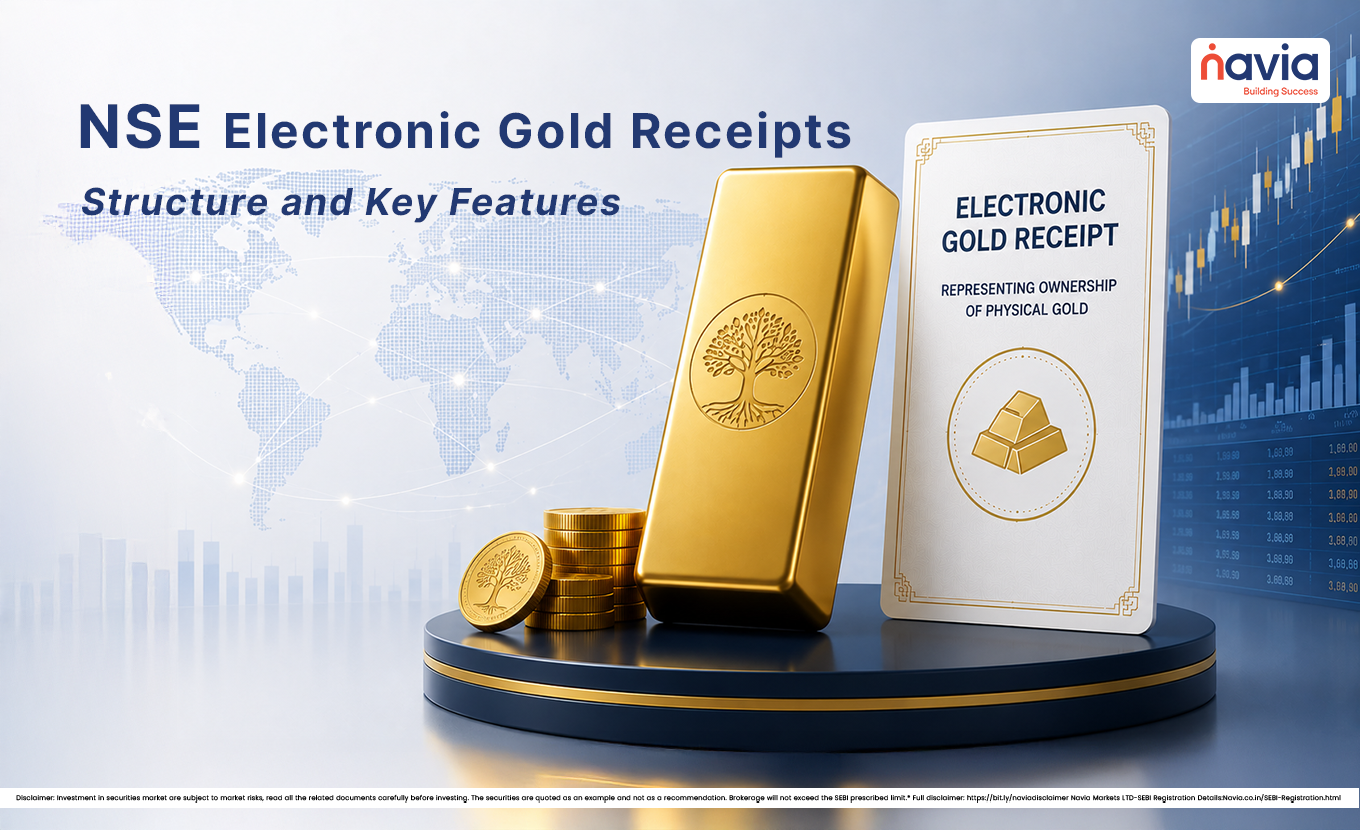
Electronic Gold Receipts (EGRs) are a new exchange-traded way to hold gold in digital form, backed by physical gold stored in regulated vaults. If you are searching what are electronic gold receipts, the simple answer is that they are securities that represent ownership of standardized gold units and can be traded like listed instruments.
This matters because some investors prefer electronic access and standardized market infrastructure without handling physical metal. With the NSE introducing EGRs, the discussion includes purity options, and the key question: how much gold can you buy through this route.
💡 Quick Answer
Electronic Gold Receipts (EGRs) are exchange-traded securities that represent ownership of physical gold stored in regulated vaults. On the NSE they are available in 999 and 995 purity and in denominations from 100 mg up to 1 kg, so you can buy gold in demat form, trade it like a listed instrument, and convert it to physical gold when needed.
What is EGR?
Electronic Gold Receipts, or EGRs, are designed to make gold investing more structured and exchange based. Each unit is backed by physical gold stored in SEBI-regulated or SEBI-approved vaults, which supports standardized storage and recordkeeping.
The idea is simple: instead of buying jewelry or coins, investors can buy gold in demat form through the exchange. The value of EGRs is linked to prevailing gold prices through electronic holding rather than direct physical ownership in the same way as physical gold.
How Much Gold Can You Buy?
The most important question is how much gold can you buy through EGRs. According to the available product structure, EGRs can be bought in very small denominations, starting from 100 mg, and in larger units such as 1 g, 10 g, 100 g, and 1 kg depending on the listed product.
These denominations are accessible to both retail and institutional market participants. For a beginner, the ability to start with a small quantity can allow smaller denomination of participation and through smaller denominations.
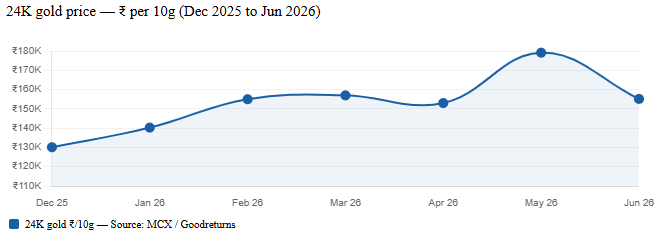
Last update on: 9 June 2026
Denominations and Purity
NSE has introduced EGRs in two purity categories: 999 purity and 995 purity. This means investors can choose between standardized gold products based on the listed specification.
The available units include 100 mg, 1 g, 10 g, 100 g, and 1 kg variants in the respective purity buckets. That structure makes electronic gold receipts offer multiple denomination options than a single fixed-size product.

EGR Structure and Characteristics
EGRs combine electronic holding with physical gold backing the electronic holding with the backing of physical gold. They can be bought and sold on the exchange, held in demat form, and converted into physical gold through the prescribed process.
They also support price discovery on an exchange platform, they facilitate exchange-based price discovery through a regulated trading platform. For investors who prefer market-based access, EGRs represent an exchange-traded gold format to traditional gold ownership.
EGR vs Other Gold Options
Here is how EGRs compare with other popular ways to own gold. For a closer look, see our detailed EGR vs gold ETF vs gold petal comparison.
| Option | Entry cost | Physical delivery | LTCG rule | GST | Liquidity |
|---|---|---|---|---|---|
| EGR ❦ NSE/BSE | No making charge. Vault: ₹15/kg/day (SEBI circular) | Yes — from 1g | 12 months → 12.5% flat | Zero on trade; 3% on delivery | Building |
| Gold jewellery | 5–25% making + wastage + 3%+5% GST | You hold it | 24 months → 12.5% flat | 3% gold + 5% making | Jeweller spread |
| Gold ETF | 0.35–0.80% expense ratio p.a. | No | 12 months → 12.5% flat | None on units | High |
| Sovereign Gold Bond | None; +2.5% p.a. interest | No | Tax-free at 8yr maturity | None | Paused Feb 2024 |
Tax-free maturity only for original subscribers holding to 8 years. SGB secondary-market gains are taxable. Gold ETF AUM: ₹1,71,468 crore as of March 2026, ↑191% year-on-year (ICRA Analytics, Apr 2026).
Note: Tax treatment is subject to prevailing laws and may change.
How Much Does ₹10,000 Actually Buy You?
Gold in India carries hidden costs that quietly erode your investment before you even walk out of the shop. The chart below makes this impossible to ignore.
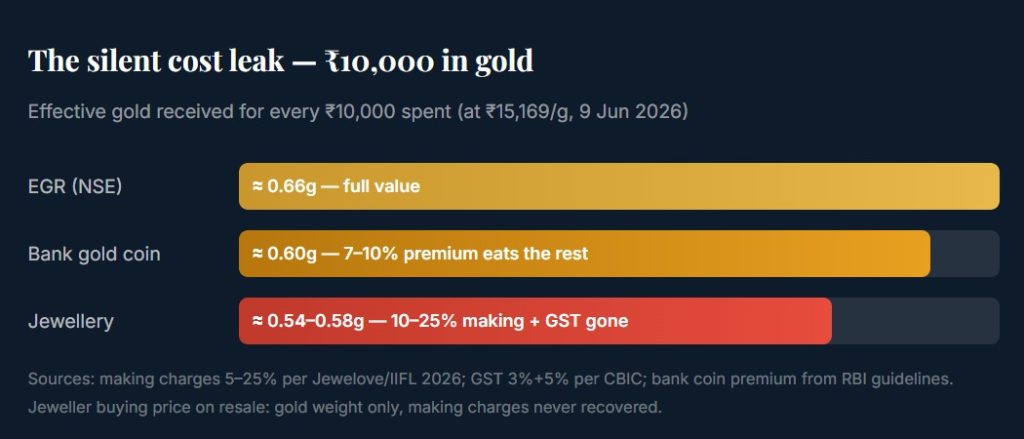
With an EGR, there are no making charges and no wastage. The only ongoing cost is vault storage: a flat ₹15 per kilogram per day (SEBI/CDSL circular, Jan 2022) — that’s roughly ₹5,475 per kg per year, or about 0.36% at current gold prices. For anything you’re holding for months or years, this is negligible. And crucially — zero GST applies on exchange-traded EGR transactions. GST of 3% kicks in only if you convert to physical gold.
Important Considerations
Even though EGRs are convenient, investors should still understand the product’s structure before buying them. The value will move with gold prices, and trading costs, liquidity, and conversion rules may affect the outcome.
It is also important to check the purity, denomination, and exchange specifications before placing an order. A review may help users understand product specifications.
Conclusion
NSE’s launch of EGRs has introduced exchange-based gold participation. If you were wondering what are electronic gold receipts, they are demat-like gold instruments backed by physical gold and available in small as well as large denominations.
For anyone asking how much gold can you buy, the answer is that EGRs can start from as little as 100 mg and go up too many larger units, depending on the product and purity category. That makes EGRs a available product format for investors seeking exchange-traded exposure to gold with more flexibility and standardization. Investors looking beyond gold may also explore how to invest in silver.
Key Takeaways
- EGRs are exchange-traded instruments backed by physical gold held in regulated vaults.
- NSE offers EGRs in two purity grades, 999 and 995.
- They trade in denominations from 100 mg up to 1 kg, making gold accessible in small sizes.
- EGRs can be held in demat form and converted into physical gold through the prescribed process.
- On-exchange EGR trades carry no making charges or wastage; storage is a small vault fee.
- Purity, denomination and exchange specifications are worth checking before you place an order.
Did you find this article helpful?
Your feedback helps us write better content.

Frequently Asked Questions
What are electronic gold receipts?
They are exchange-traded instruments backed by physical gold stored in regulated vaults.
How much gold can you buy through EGRs?
You can buy small units starting from 100 mg and also larger denominations such as 1 g, 10 g, 100 g, and 1 kg.
Are EGRs backed by physical gold?
Yes, each EGR is backed by physical gold held in SEBI-regulated or approved vaults.
Can EGRs be converted into physical gold?
Yes, investors can request conversion into physical gold as per the prescribed process.
What Features Do EGRs Offer?
They offer flexible quantity options, electronic holding, and exchange-based price discovery for gold investors.
DISCLAIMER: Investment in securities market are subject to market risks, read all the related documents carefully before investing. The securities quoted are exemplary and are not recommendatory. Full disclaimer: https://bit.ly/naviadisclaimer.