

An Introduction to Long and Short Vol in Options Trading
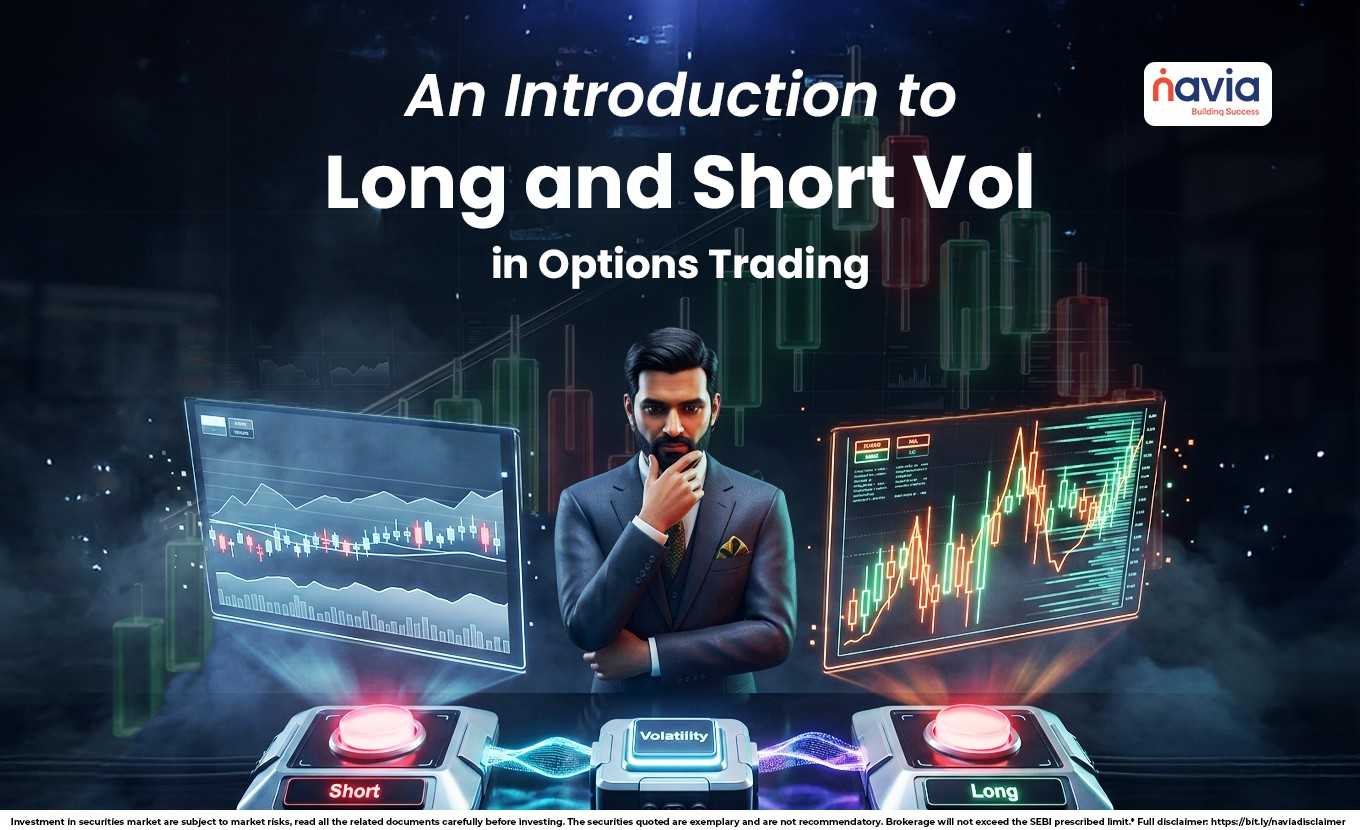
Many beginners focus solely on direction — asking whether a stock will go up or down. But some market participants look at the market through a different perspective: volatility. In options, “Vol” refers to Implied Volatility (IV), which represents the market-implied expectation of price movement.
Whether you are buying or selling, every trade you place generally places a position into one of two categories: Short Vol or Long Vol. So, understanding these stances is one of the important concepts of option trading for beginners.
💡 Quick Answer
In options, “Vol” means Implied Volatility (IV) — the market’s expectation of how much a price will move. Every options position leans one of two ways: Long Vol, which may benefit when actual movement (or IV) turns out higher than the market expected, and Short Vol, which may benefit when the market stays calm and IV falls. Long Vol carries limited, defined risk but pays away time decay; Short Vol collects time decay but carries much larger risk.
What is Volume in Options Trading?
Before diving into volatility, it’s important to clarify a common point of confusion: the role of volume in options trading. So, what is volume in options trading? In simple terms, options trading volume represents the total number of contracts traded for a specific security during a given period (usually a day).
In the context of “Vol” (volatility), by contrast, the terms short volume vs long volume refer to your exposure to price swings. High-volume option trading indicates that a contract is relatively liquid. Monitoring short volume versus long volume may help in assessing market sentiment and liquidity before considering a strategy.
Long Volatility (Long Vol)
A Long Vol stance may benefit if the actual (realized) volatility of the asset exceeds what the market currently expects (implied volatility). Essentially, this approach assumes that the price will move more than the market predicts.
Key Characteristics
| Gamma Positive | May benefit from price movement. |
| Vega Positive | May benefit when implied volatility rises. |
| Theta Negative | May result in losses every day due to time decay. |
Long Vol Strategies (educational purpose only)
| Long Straddle | Buying an At-The-Money (ATM) Call and Put. This is focused on capturing significant price movement in either direction. |
| Long Strangle | Buying Out-of-The-Money (OTM) Calls and Puts. This is cheaper than a straddle but requires relatively larger price movement. |
| Long Calendar Spread | Buying a long-term option and selling a short-term one. Since far-month options have higher Vega, may benefit from an increase in volatility. |
Short Volatility (Short Vol)
A Short Vol stance is the opposite; here, this approach assumes the realized volatility to be lower than the implied volatility. This approach is based on the expectation that the asset will stay within a specific range, or that a decline in implied volatility may occur.
Key Characteristics
| Gamma Negative | Large price movements hurt your position. |
| Vega Negative | May benefit when implied volatility drops. |
| Theta Positive | May generate returns over time as the option’s time value decays. |
Short Vol Strategies (educational purpose only)
| Short Straddle | Selling an ATM Call and Put. This is the commonly used approach on a tight trading range. |
| Iron Condor | Selling an OTM strangle and hedging with further OTM “wings.” This limits your risk while allowing you to may benefit in low volatility conditions. |
| Covered Call | Selling a call against shares you already own. This may generate premium income via theta decay, representing a mild short vol bias. |
Difference Between Long Vol vs. Short Vol
| Features | Long Vol (Buyer) | Short Vol (Seller) |
|---|---|---|
| Market Outlook | May anticipate higher price movement or a spike in market uncertainty/fear. | Expects price stability, a range-bound market, or a “calming” of fear. |
| Primary Greek (Vega) | Positive (+): May profit if Implied Volatility (IV) rises. | Negative (-): May profit if Implied Volatility (IV) falls (Vol Crush). |
| Time Decay (Theta) | Negative (-): May result in time decay losses if the stock stays still. | Positive (+): May benefit from time decay. |
| Gamma (Price Speed) | Positive (+): Returns may increase as the stock moves further into the money. | Negative (-): Risk exposure may increase as the stock moves against your strikes. |
| Risk Profile | Risk is limited to premium paid. | Risk may be significantly high. |
| Probability of Profit | Lower: Needs a specific event or large move to overcome time decay. | Higher: Statistically wins more often as markets spend more time consolidating. |
| Typical Strategies | Long Straddle, Long Strangle, Buying Naked Calls/Puts. | Short Straddle, Iron Condor, Covered Calls, Credit Spreads. |
Conclusion
Understanding “Vol” is simply about differentiating levels of understanding. While options trading volume tells you how many people are in the room, your volatility stance tells you how you expect the room to move. So, understanding these concepts may help in reducing reactive decisions on every price tick and focus on volatility dynamics.
- In options, “Vol” refers to Implied Volatility (IV) — the market’s expected size of future price moves — not trading volume (the number of contracts).
- A Long Vol position may benefit when realized volatility (or IV) rises above expectations; it is Vega- and Gamma-positive but Theta-negative (loses value to time decay).
- A Short Vol position may benefit when the market stays range-bound and IV falls; it is Theta-positive but Gamma- and Vega-negative, with potentially large risk.
- Common Long Vol strategies include the Long Straddle, Long Strangle, and Long Calendar Spread; Short Vol strategies include the Short Straddle, Iron Condor, and Covered Call.
- Long Vol risk is limited to the premium paid, while Short Vol can carry significantly higher risk — position sizing matters.
Did you find this article helpful?
Your feedback helps us write better content.
Frequently Asked Questions
What is short vol in option trading?
“Vol” refers specifically to implied volatility, which represents the expected future movement of an asset. Trading options essentially classifies a position as either a short vol or long vol position. If a trader assumes lower realized volatility, they are trading short vol.
What is long and short in options trading?
Long options involve purchasing call or put contracts for a premium, providing limited risk and unlimited profit potential for bullish or bearish outlooks. Short options involve selling or writing contracts to collect premiums, offering limited profit with high or unlimited risk, while benefiting from stagnant prices and time decay.
Is it better to trade long or short?
The distinction between going long and going short is brief but essential: being long a stock means you own it and may benefit if the price rises. Being short a stock means you have a negative position and may benefit if the price falls.
Why is short selling more risky?
Short selling requires a margin account because it typically involves borrowing shares to sell. The primary objective is to benefit from an expected price decline. A major risk is the possibility of significant losses should the stock price continue to increase.
What are the disadvantages of short selling?
Financial experts view short selling as highly volatile, with the potential for unlimited losses. Lenders have the right to recall borrowed stock at any time. To execute short sales, traders are required to maintain a margin account and pay specific costs.
DISCLAIMER: Investment in securities market are subject to market risks, read all the related documents carefully before investing. The securities quoted are exemplary and are not recommendatory. Full disclaimer: https://bit.ly/naviadisclaimer.