

ESG Investing: Why Sustainable Stocks Are Gaining Popularity
The way people invest has changed over the past decade. They are no longer just looking for financial returns – they also want their money to make a positive impact on society and the environment. This shift in mindset gave rise to Environmental, Social and Governance (ESG) investing, a strategy that considers not only profits but also a company’s impact on the environment, on society and on the way it is governed.
As awareness of social responsibility and corporate ethics grows, sustainable stocks are becoming popular among both retail and institutional investors. In this blog, we will explore what ESG investing is, what it means, and why it is gaining such rapid momentum in financial markets.
💡 Quick Answer
ESG investing screens companies on three factors — Environmental, Social and Governance — alongside their financials. It has grown because of climate awareness, demand for corporate transparency and a younger investor base, though inconsistent ratings and reporting standards remain its biggest limitation.
What is ESG Investing?
Before going deeper into the term, let’s understand what ESG investing is. It is an investment strategy that evaluates companies on three main factors:
- E – Environmental: How does an organization impact the planet? It includes green energy, waste management, deforestation, biodiversity, water conservation, and so on.
- S – Social: How does a company treat society and its people? It includes human rights, workplace safety, employee welfare, customer satisfaction and data security.
- G – Governance: How is the company managed? It looks at political contributions, bribery and corruption, and business ethics.
In simple terms, ESG investing means analysing a company’s ethical and sustainable practices alongside its financial health. Most investors use ESG metrics to judge whether a company is genuinely sustainable over the long term. It is a useful complement to ordinary quality screening — as we have argued before, a great company is not automatically a great investment.
Why ESG Investing is Becoming Popular?
There are several reasons why ESG investing is rapidly gaining popularity worldwide. Let’s look at some of them.
Growing Environmental Awareness
With climate change, deforestation and pollution becoming major issues, investors are choosing companies that focus on sustainability. Firms adopting renewable energy and eco-friendly practices are gaining investor confidence and trust.
Social Responsibility
Modern investors care more about how businesses treat their employees, their customers and the wider community. Companies that promote diversity, fair trade practices and employee well-being tend to attract long-term investors.

Corporate Transparency
Strong governance is an important factor in building investor confidence. Firms that maintain transparency, ethical leadership and fair shareholder rights get support from ESG investors.
Better Long-Term Returns
Studies have suggested that companies with higher ESG scores can outperform firms that ignore sustainability. By reducing risks such as environmental fines, ESG stocks may deliver steadier growth for their investors. The same argument is often made for blue-chip stocks, where governance quality is already priced in.
Shifting Investor Demographics
Younger investors, including Gen Z, are actively seeking sustainable investment opportunities. Their preference for ethical investing pushes companies and funds to adopt ESG frameworks. It is one of the forces behind the growth of ETFs in India, where thematic and ESG-linked funds have found a natural home.
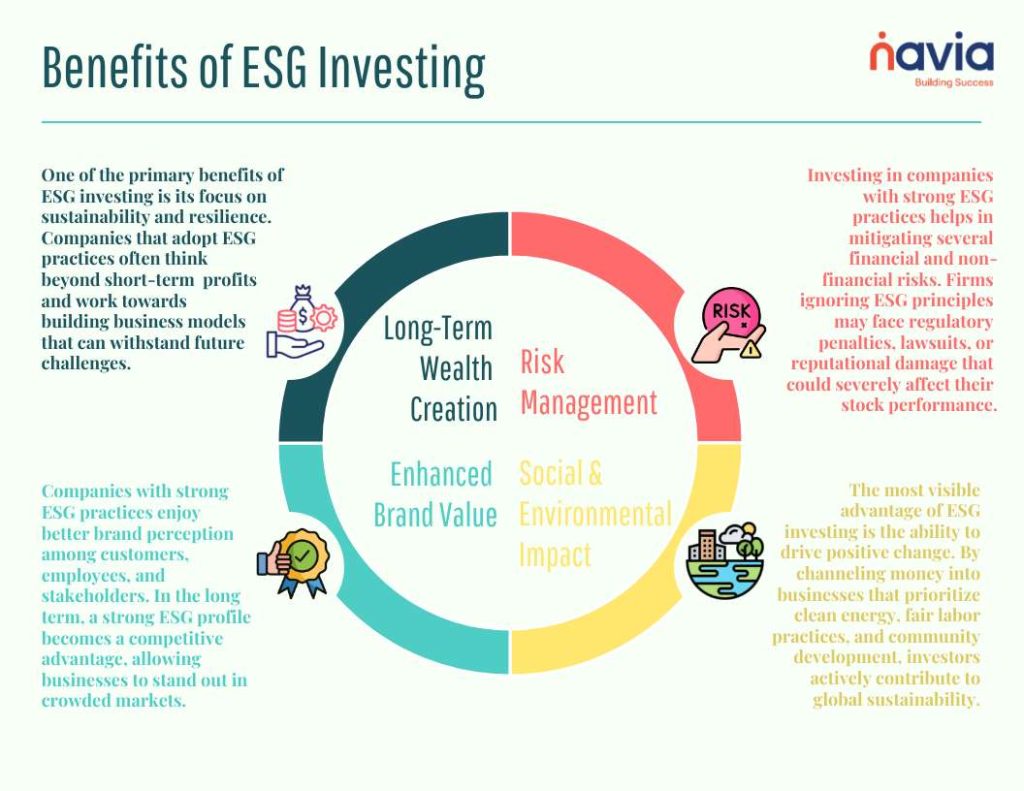
Benefits of ESG Investing
You should understand that ESG investing isn’t just about ethics; it offers tangible financial and non-financial benefits. Some of them are given below.
Challenges of ESG Investing
Every strategy has a difficult side, and ESG investing faces a few challenges too:
- Data Management: ESG covers environmental, social and governance areas, so it requires both financial and non-financial data. In most organizations that data still sits in separate, unconnected systems, which makes it hard to pull together.
- Multiple Reporting Frameworks: There is no single unified reporting standard, so companies use several frameworks such as the Global Reporting Initiative (GRI) and the Sustainability Accounting Standards Board (SASB) standards.
- Understanding the impact of ESG: Without integrating ESG reporting into budgeting and planning tools, leaders can’t test scenarios or measure the real impact on profits, cash flow, or balance sheets.
- Defining ESG risks: Many organizations discuss ESG risk, but not all have formal definitions and monitoring systems in place, which is considered the major challenge.
- Complex Regulations: Sustainability reporting rules are becoming stricter and more detailed, making compliance challenging.
Future of ESG Investing
The future of ESG investing looks promising, because climate action policies, social awareness and corporate accountability are all growing, making it a mainstream investment strategy. Several global financial institutions already build these criteria into their decision-making process.
Using AI-driven tools, investors can analyse the ESG performance of an organization far more easily than before. Keep in mind that these metrics are becoming an important input in evaluating a company’s worth.
Conclusion
ESG investing is not just a financial trend; it is a movement towards responsible and sustainable growth. Focusing on the three factors — environmental, social and governance — supports organizations in building a better future alongside long-term financial returns. Whether you are a beginner or an experienced investor, understanding the term will help you make better investment decisions.
ESG strategies may help investors build portfolios that balance financial growth with positive social and environmental impact.
Key Takeaways
- ESG investing evaluates a company on Environmental, Social and Governance factors alongside its financial health.
- Its growth is driven by climate awareness, demand for corporate transparency and a younger, values-led investor base.
- Better governance and lower regulatory risk are the usual arguments for steadier long-term returns.
- The main obstacles are fragmented data, multiple reporting frameworks and tightening disclosure rules.
- The single biggest risk is the lack of standardization, which makes ESG ratings hard to compare across companies.
Did you find this article helpful?
Your feedback helps us write better content.

Frequently Asked Questions
What is meant by ESG investing?
ESG investing means putting money into companies that follow strong practices in Environmental, Social, and Governance areas. It considers not just financial returns, but also how a business impacts the planet, society, and how responsibly it is managed.
What is an example of ESG investing?
An example of ESG investing is buying shares in a company that uses renewable energy, treats its employees fairly, and maintains transparent corporate governance.
Is ESG investing a good idea?
Yes, ESG investing is considered a good idea for long-term investors. It helps you support responsible businesses while also managing risks related to climate change, regulations, and social responsibility.
What are the 4 pillars of ESG?
The four pillars of ESG are:
- Environmental – impact on nature.
- Social – treatment of employees, customers, and communities.
- Governance – business ethics, transparency, and management accountability.
- Sustainability – the overall ability to balance growth with long-term responsibility.
What is the biggest risk of ESG?
The biggest risk of ESG investing is the lack of standardization. Different rating systems, unclear definitions, and inconsistent reporting make it difficult to compare companies.
DISCLAIMER: Investment in securities market are subject to market risks, read all the related documents carefully before investing. The securities quoted are exemplary and are not recommendatory. Full disclaimer: https://bit.ly/naviadisclaimer.