


An Introduction to the Three Inside Up Candlestick Pattern
- What is the Three Inside Up Candlestick Pattern?
- The Psychology Behind the Pattern
- The Mirror Image: Three Inside Down Candlestick Pattern
- Understanding the Three Inside Up Pattern in Market Analysis
- Three Inside Up vs. Morning Star
- Common Pitfalls to Avoid
- Conclusion: Adding the "Inside" Edge to Your Charting
- Frequently Asked Questions
In technical analysis, traders often look for indicators that may suggest potential trend changes – the moment a downtrend loses its grip and begins a new upward price movement. Many people use single candles like Hammer or the Doji, some market participants observe the use confirmation in analysis of the market.
This leads us to one of the commonly observed three-day reversal signals in existence: the three inside up candle pattern. Whether you are navigating the volatile market in 2026 or not, understanding this formation can be helping traders interpret potential trend changes in price charts.
What is the Three Inside Up Candlestick Pattern?
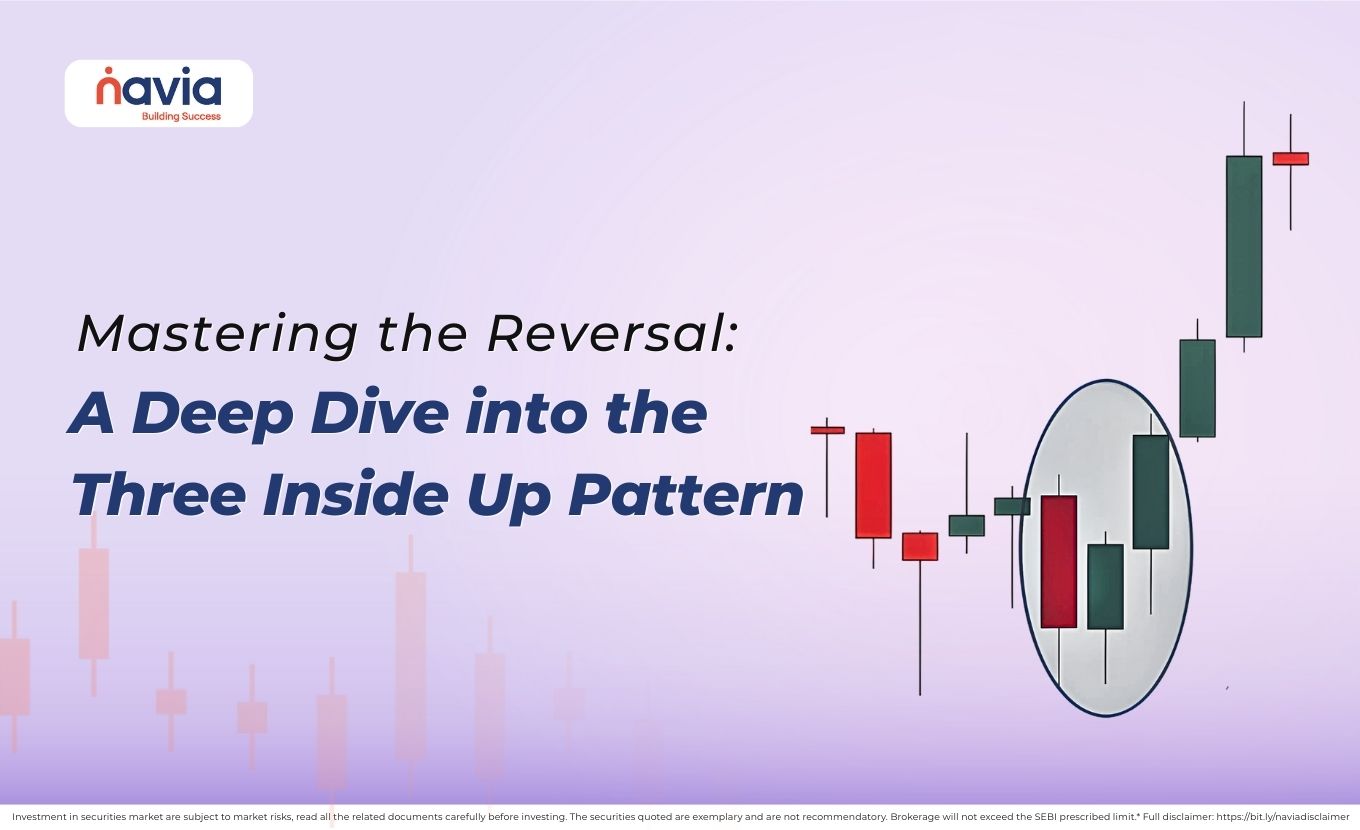
The three inside up candlestick pattern is a bullish reversal formation that appears at the end of a prolonged downtrend. This three-candle sequence tells a story of reduction in selling pressure followed by an increasing in buying interest.
To identify a valid three inside candle pattern, you must look for three specific components;
1. The Large Bearish Candle: A long red (or black) candle that continues the existing downtrend. This shows that the bears are still seemingly in control.
2. The Small Bullish Candle: A small green candle that opens and closes inside the body of the previous day’s large red candle. This indicates that downward momentum has slowed.
3. The Confirmation Candle: A large green candle that closes above the high of the first candle. This may indicate a possible shift in market sentiment.
The Psychology Behind the Pattern
Why does the three inside up candle pattern is interpreted? It’s all about shifts in market sentiment. Just see how;
On Day 1, the downward trend continues, pushing prices to new lows. However, on Day 2, despite the bearish momentum, the price fails to make a new low. Instead, it stays tucked inside the previous day’s range. This creates a “Harami” (which means “pregnant” in Japanese), may indicate a potential trend change.
By Day 3, when the price breaks above the high of Day 1, all the short sellers are may close their positions, and sidelined increased buying activity may occur. This collective action may lead to upward price movement.
The Mirror Image: Three Inside Down Candlestick Pattern
The direct opposite of our bullish signal is the three inside down candlestick pattern (sometimes referred to as the 3 inside down candlestick pattern). This bearish reversal occurs at the peak of an uptrend and consists of:
🔸A long bullish candle (showing the late stage of an upward trend).
🔸A small bearish candle contained within the first candle’s body (forming a Bearish Harami).
🔸A third bearish candle that closes below the first candle’s low (confirming the reversal).
Just as the “Up” version signals a bottom, the three inside down candlestick pattern warns you that the some market participants may begin reducing positions, and a potential change in price direction may occur.

Understanding the Three Inside Up Pattern in Market Analysis
You can’t utilize the pattern by not only spotting it, but you must also need a structured approach to trade it. Below you can see an approach for (educational purpose only) the three inside up candlestick patterns to better understand the pattern in market analysis.
| Context is King | Some participants avoid analyzing a three inside candle pattern in the middle of a sideways range. For the reversal to be meaningful, it is generally observed after a clear, sustained move lower. Look for the pattern to form near a major support level or a significant moving average |
| Volume Verification | Watch the volume on the third day. If the “confirmation” candle is accompanied by a increase in trading volume, it suggests that increased market participation may be observed. Low-volume breakouts are often “potentially unreliable signals” that can quickly reverse. |
| Entry and Stop-Loss | Entry: Some traders observe price movement after the third candle forms above the first candle’s high. Stop-Loss: Place your stop-loss just below the low of the first (large bearish) candle. This allows for price allocation while some traders use as a reference level for risk management. |
Three Inside Up vs. Morning Star
Most traders confuse the three inside up candle pattern with the morning star. Both are three-candle bullish reversals, but there are some differences too, let’s see what they are;
| Feature | Three Inside Up | Morning Star |
|---|---|---|
| Structure | A “Bullish Harami” followed by a third confirming bullish candle. | A “Star” (small candle) sandwiched between a long bearish and a long bullish candle. |
| Psychology | Shows an price moves away from lower levels as buying activity may increase inside the previous day’s range. | Shows a moment of period of indecision or a “pause” before the reversal. |
| Confirmation | The 3rd candle must close above the high of the 1st bearish candle. | The 3rd candle must close at least halfway into the body of the 1st bearish candle. |
| Middle Candle Type | Usually a small, standard bullish candle. | Often a Doji or a Spinning Top (indecision candles). |
| Visual Shape | Looks like a “pregnancy” (Harami) followed by a movement beyond a defined range. | Looks like a “V” shape or a “bottoming” cradle. |
Common Pitfalls to Avoid
A strong 3 inside up candlestick pattern also made mistakes, so avoid these common errors;
➣ Jumping the Gun: Some traders avoid early entry before confirmation. The small “inside” candle is just a pause; it does not necessarily indicate a confirmed reversal. Always wait for Day 3 to close.
➣ Ignoring the Trend: In a massive, multi-year bear market, a single three inside up candlestick pattern might just be a “temporary price recovery.” Always look at the bigger picture.
➣ Tight Stop-Losses: Placing your stop-loss too close to the entry price can lead to being “stopped out” by normal market noise before the subsequent price movement occurs.
Conclusion: Adding the “Inside” Edge to Your Charting
The three inside up candle pattern is a testament to the power of confirmation. Waiting for that third candle to prove buyers may be showing increased participation, you help identify more reliable patterns that plague shorter-term traders.
Whether you are looking for a long entry using the three inside candle pattern or monitoring price patterns by spotting a three inside up candlestick pattern at a peak, these formations can help illustrate shifts in market sentiment.
Do You Find This Interesting?
We’d Love to Hear from you-

Frequently Asked Questions
What is the three inside candle strategy?
The three inside candle strategy is a trend-reversal method based on a specific three-day formation. It comes in two versions: Three Inside Up (bullish) and Three Inside Down (bearish).
What does a 3-candle mean?
In technical analysis, a 3-candle pattern (or triple candlestick pattern) is a formation where three consecutive bars work together to provide an indication.
✔ Candle 1 (Context): Shows the current trend (e.g., a long red candle in a downtrend).
✔ Candle 2 (Indecision): A smaller candle that signals the trend is stalling or “pausing.”
✔ Candle 3 (Confirmation): A strong move in the new direction that may indicate a shift in market sentiment.
What does “reversal” mean in trading?
A reversal is a complete turnaround in the price direction of an asset.
🔹Bullish Reversal: When a downward trend (lower lows and lower highs) stops and begins moving upward (higher highs and higher lows).
🔹Bearish Reversal: When an upward trend peaks and begins moving downward.
🔹Reversal vs. Pullback: A reversal is a long-term change in direction, whereas a “pullback” or “retracement” is just a temporary dip within a larger, ongoing trend.
Is a triple top bullish or bearish?
A triple top is a bearish reversal pattern. It occurs when the price attempts to break through a specific resistance level three separate times and fails each time.
The Result: Once the price breaks below the “neckline” (the support level connecting the lows between the peaks), it may indicate a potential change in trend direction.
What time frame is best for patterns?
While candlestick patterns appear on every timeframe, many traders prefer analyzing patterns on higher timeframes:
✦ Best for Accuracy: The Daily (1D) and 4-Hour (4H) charts are the gold standard. They filter out the random “noise” of the day and reflect the true intent of institutional investors.
✦ Best for Day Trading: The 15-Minute (15M) and 1-Hour (1H) charts strike a good balance between seeing the pattern clearly and finding enough trading opportunities.
✦ Avoid: 1-minute and 5-minute charts for complex 3-candle patterns, as high-frequency trading algorithms often create “fake” patterns that don’t lead to real reversals.
DISCLAIMER: Investment in securities market are subject to market risks, read all the related documents carefully before investing. The securities quoted are exemplary and are not recommendatory. Full disclaimer: https://bit.ly/naviadisclaimer.