

March Recap: Analyzing Equity Benchmarks and Sectoral Trends

- Nifty 50 Performance in March
- March Market Roundup
- Sectoral Movements
- Company Performance
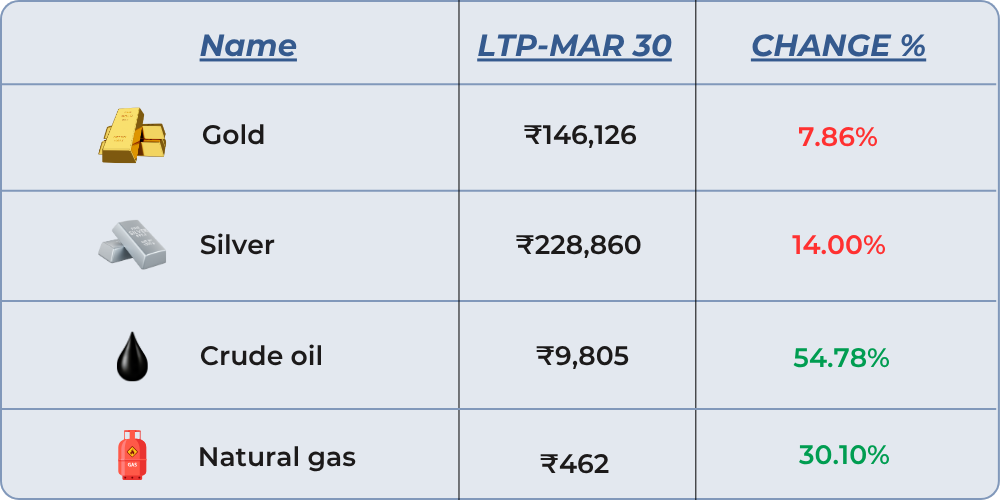
- Commodities Month's Change
- SME IPO Performance – March
- Top Reads From March!
- Interactive Zone!
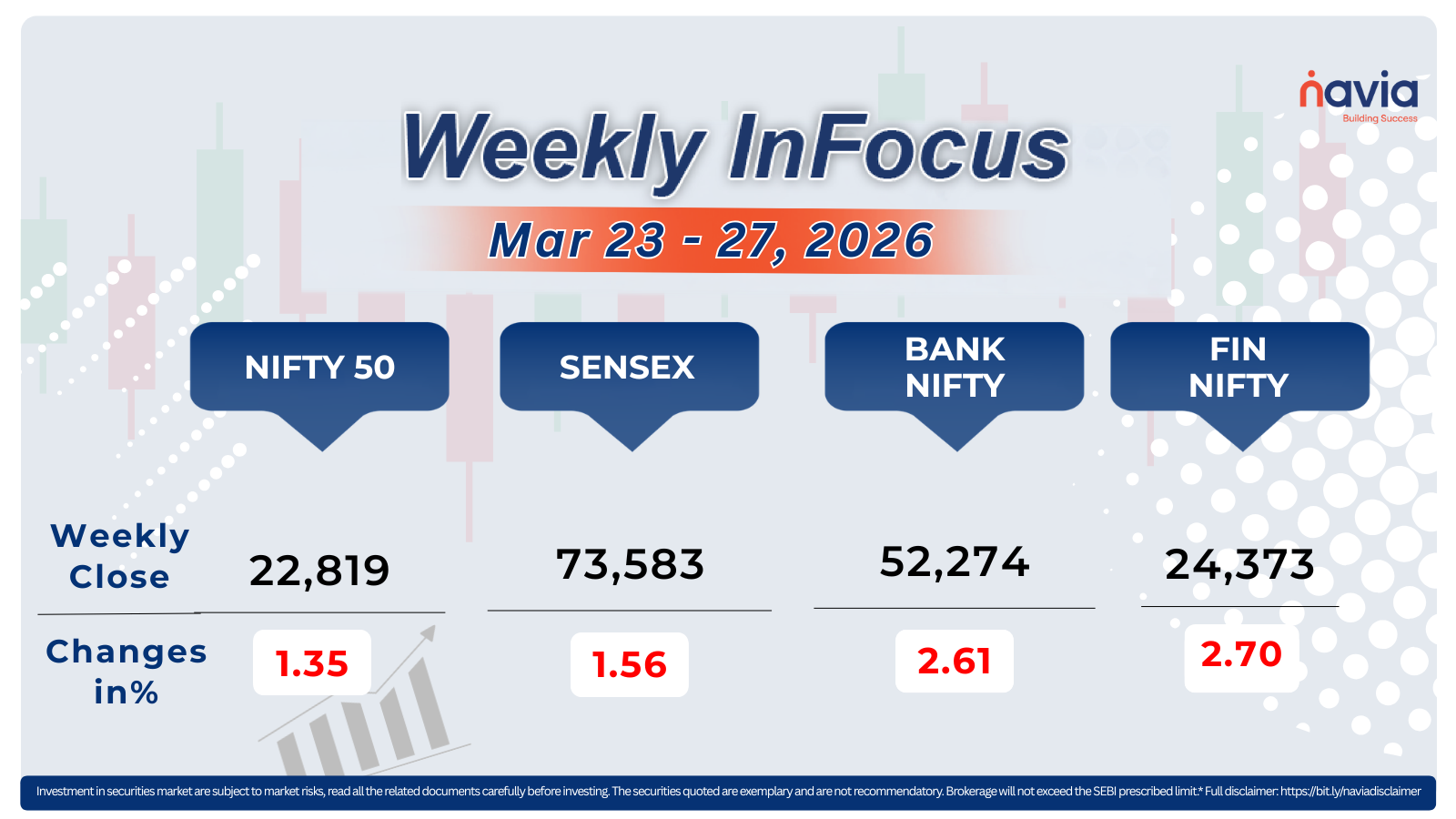
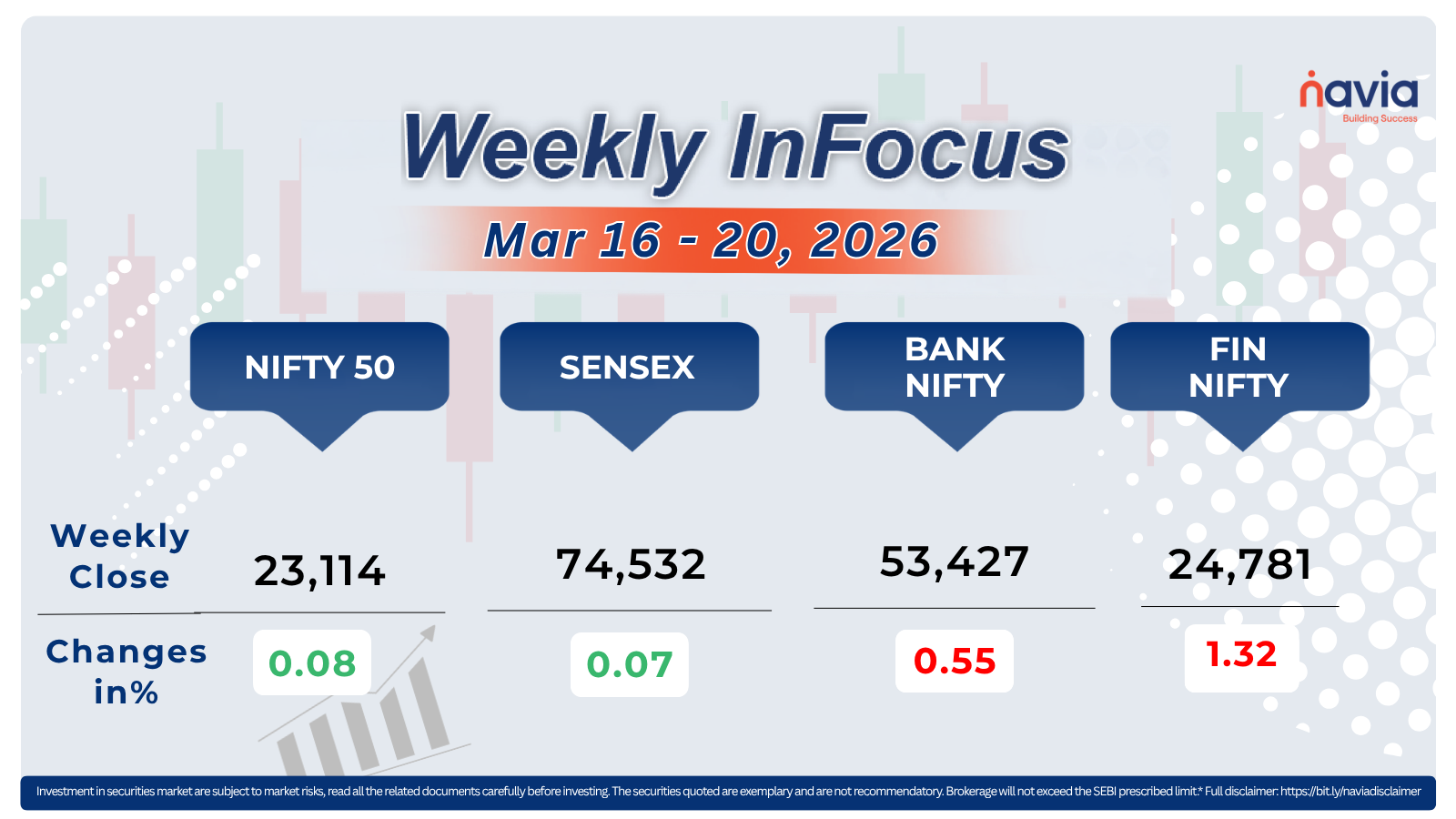
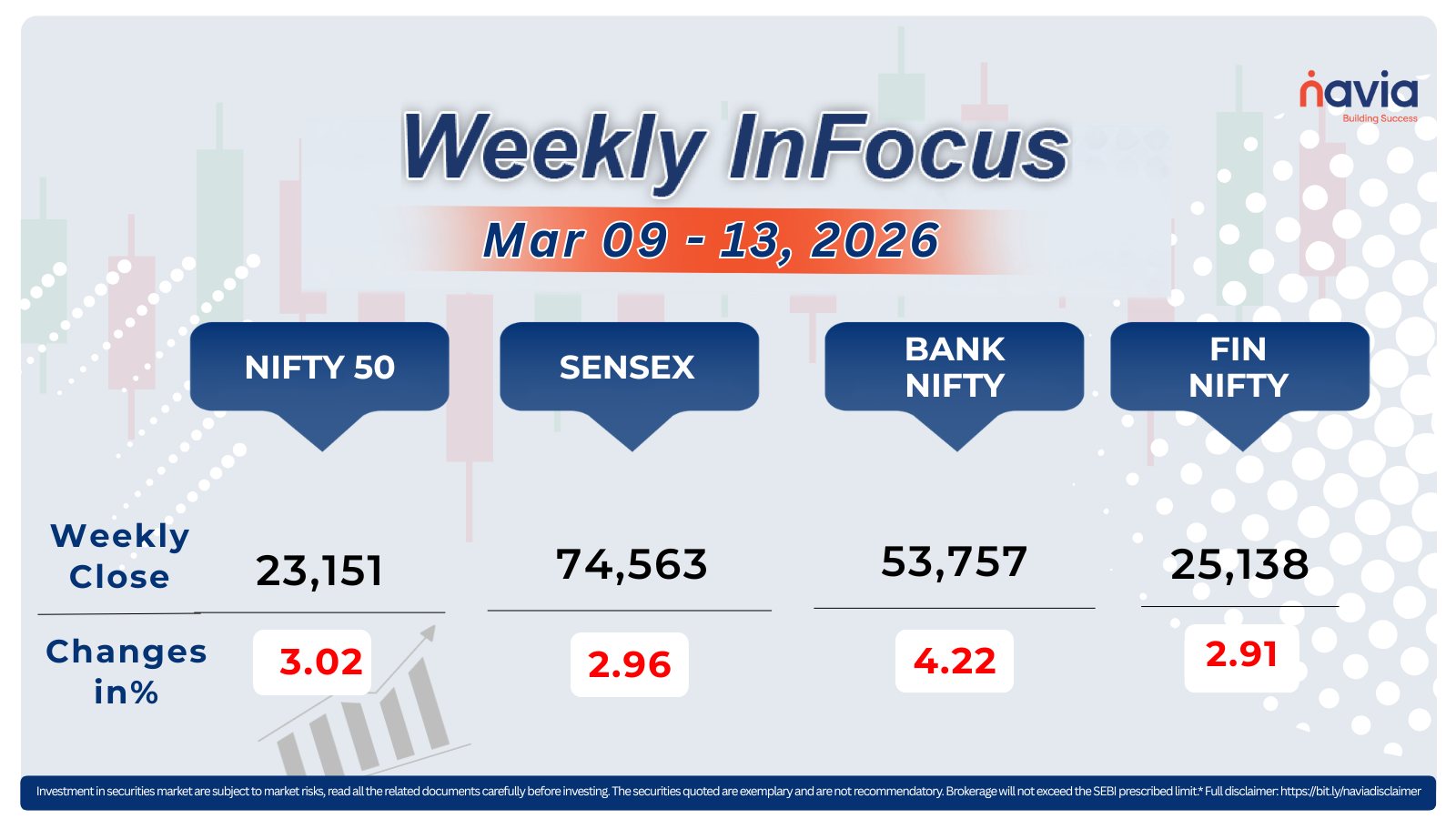
March 2026 turned out to be a sharp‑correction month for the Indian stock market with crude shock, geopolitical fear, and FII‑driven profit‑booking turning the period into one of the most volatile and correction‑heavy months for Indian equities in recent years.
Nifty 50 Performance in March
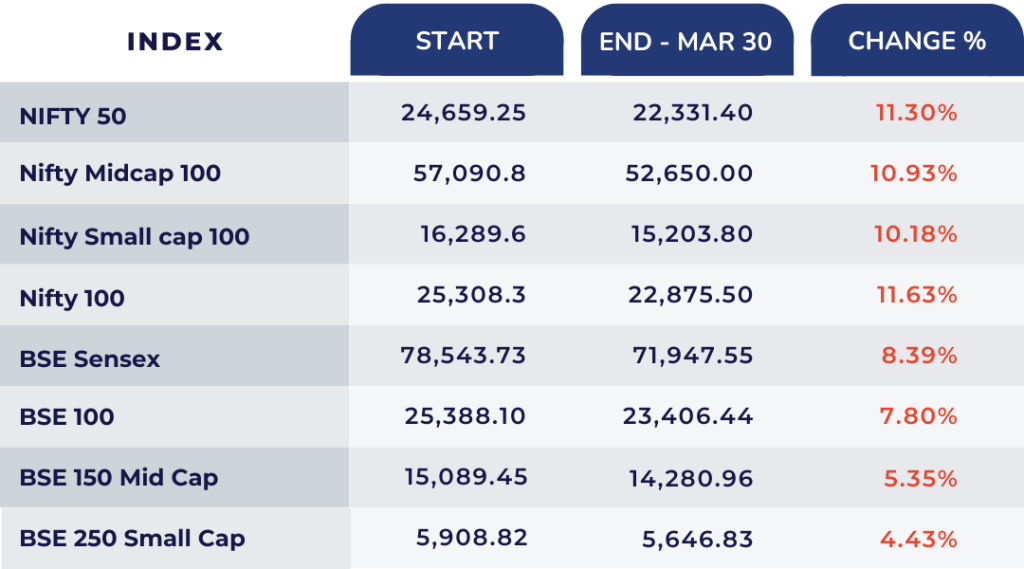
March Market Roundup
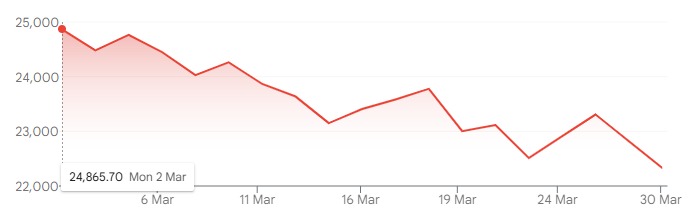
March 2026 turned out to be a sharp‑correction month for the Indian stock market, as the exuberance of late February dissolved into profit‑booking, global risk‑off sentiment, and continued FII outflows. The Nifty 50 and Sensex ended well below their mid‑February peaks while domestic‑oriented flows remained broadly supportive.
Key Highlights:
Risk‑off Sentiment and Global Cues:
Markets opened March in fragile territory after the Budget‑driven bounce in February, with crude oil volatility, geopolitical tensions, and a strong‑dollar backdrop weighing on risk appetite.
FII Selling vs DII Buying:
FIIs resumed heavy selling, with net outflows running into thousands of crores on several days, including a net institutional outflow of ₹‑2,142.4 crore on March 24 alone, as foreign investors rotated out of India‑equities‑linked ETFs and cut leveraged positions. DIIs, however, continued to step in as buyers, netting large‑cap inflows on the NSE‑BSE complex, limiting the downslide on selected days and keeping the fall more orderly than a full‑blown crash.
West Asia War, Crude Oil and LPG Shock:
The West Asia war and related crude oil and LPG price spikes were arguably the dominant macro drivers for the Indian stock market in March 2026, turning the month into a sharp risk‑off episode rather than a purely technical correction. Rising geopolitical shock, energy inflation, and currency‑pressure combined to trigger large‑scale FII selling and broad‑based equity de‑risking.
Price Hikes & Rupee Weakening:
LPG price hikes in domestic cylinders (e.g., 14.2 kg LPG in Delhi rising to ₹913 in March 2026 from ₹853 in February) added to household inflation anxiety and reinforced the view that India’s import‑billed energy‑shock would weigh on consumption and corporate earnings. The Rupee weakened amid higher import‑bill concerns and global risk‑off sentiment, reinforcing the selloff on rate‑sensitive financials and import‑driven sectors.
Crude Oil Surge:
An escalating conflict in West Asia, involving Iran, the U.S., Israel, and regional actors, led to a rapid tightening of global oil supply and a ~50% monthly rally in crude prices, with Brent crude rising to over $110–112 per barrel in March, its largest monthly gain in years.
Outlook
For equity investors, March 2026 thus stands out as a corrective month where global risk‑off, FII‑driven profit‑taking, and technical breaks in banking and IT drove the indices lower, even as the underlying macro framework, GST‑driven consumption, fiscal‑prudence signals, and stable policy rates remained intact. The presence of strong DII buying suggests that Indian‑owned capital is still willing to accumulate at current levels, setting the stage for either a test of the 22,300–22,400 support in April or a recovery if global cues stabilise and FII sentiment turns less risk‑averse.
Sectoral Movements
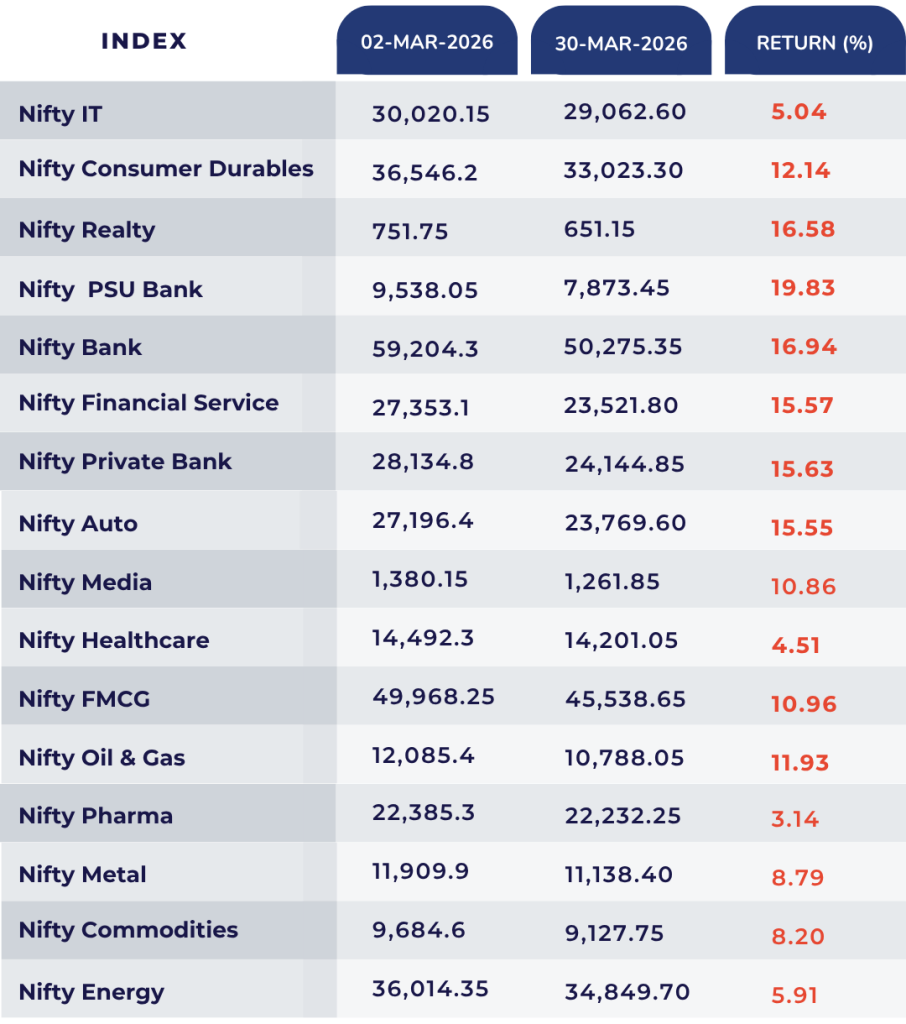
March 2026 witnessed a broad-based sell-off across the Indian equity markets, with every major sectoral index ending the month in the red. This universal decline was spearheaded by the PSU Bank sector, which emerged as the month’s biggest loser with a staggering 19.83% drop. The bearish sentiment extended heavily into high-beta and interest rate-sensitive pockets, as the Realty, Bank, Financial Services, Private Bank, and Auto indices all served as significant drags, plummeting by more than 15% each. This synchronized retreat underscores a period of intense risk aversion and a sharp correction across India’s primary growth and credit engines.
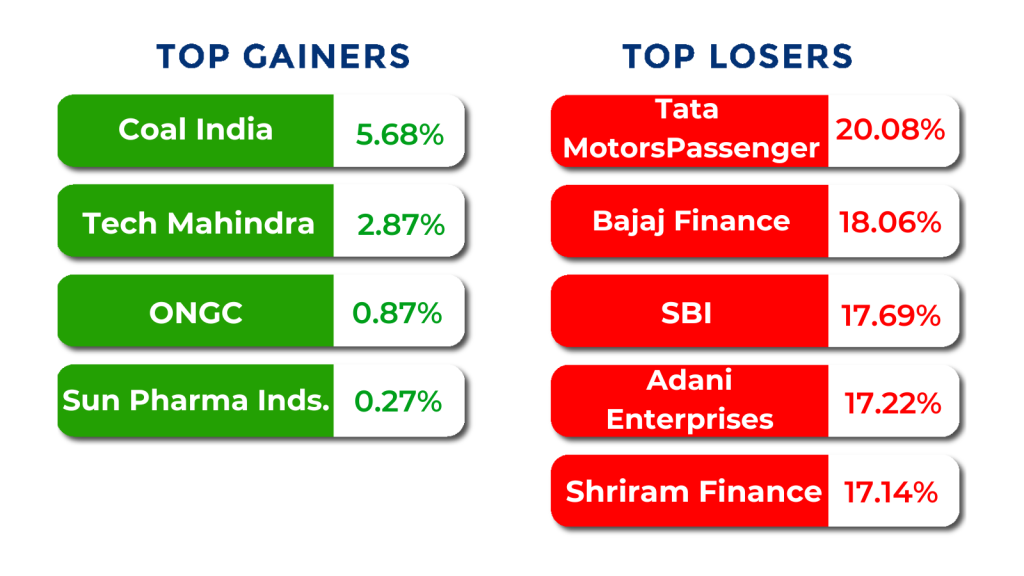
Company Performance
Commodities Month’s Change
SME IPO Performance – March
SME March IPO:
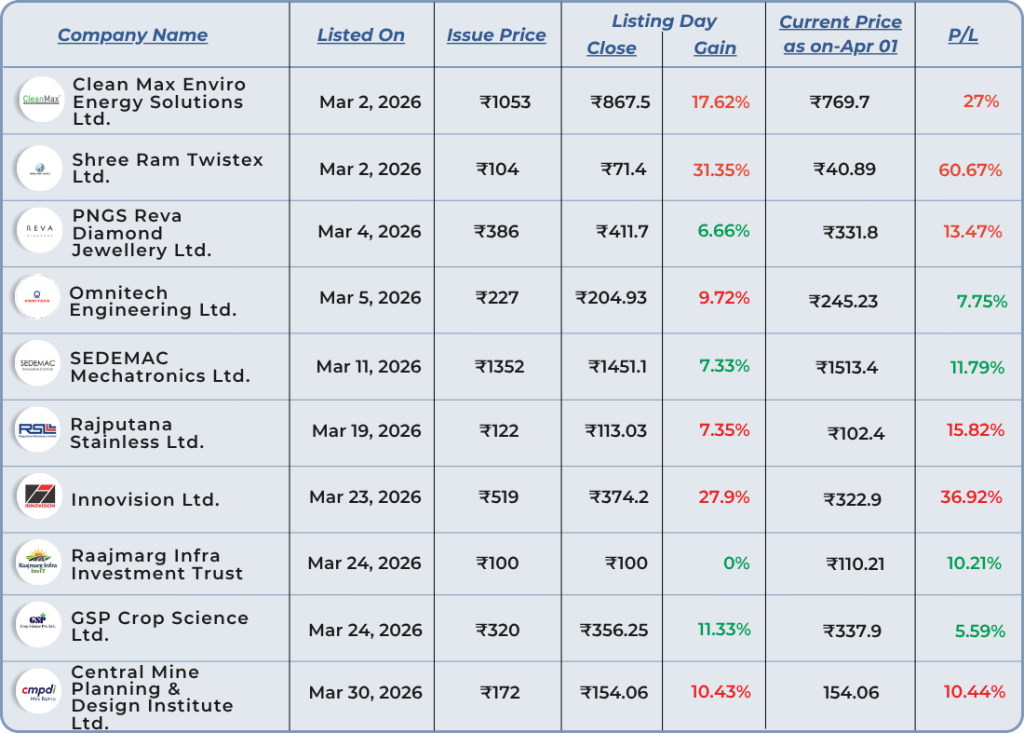
The Indian IPO market in March 2026 reflected a challenging environment characterized by cautious sentiment and significant volatility. Out of the 10 companies that debuted this month, the landscape was tilted toward underperformance, with 6 listings ending in the red while only 4 managed to post gains.
The month’s top performers were led by Sedemac, which achieved a 11.79% listing-day gain, closely followed by Raajmarg with a 10.21% increase. However, these modest successes were overshadowed by severe corrections among the laggards. Shree Ram faced the steepest decline, plummeting 60.67% below its issue price, while Innovision also struggled significantly, recording a 36.92% loss. This performance profile serves as a stark reminder of the heightened selective nature and pricing pressure currently defining the primary market.
Disclaimer: The IPO performances mentioned are historical examples and not investment recommendations.
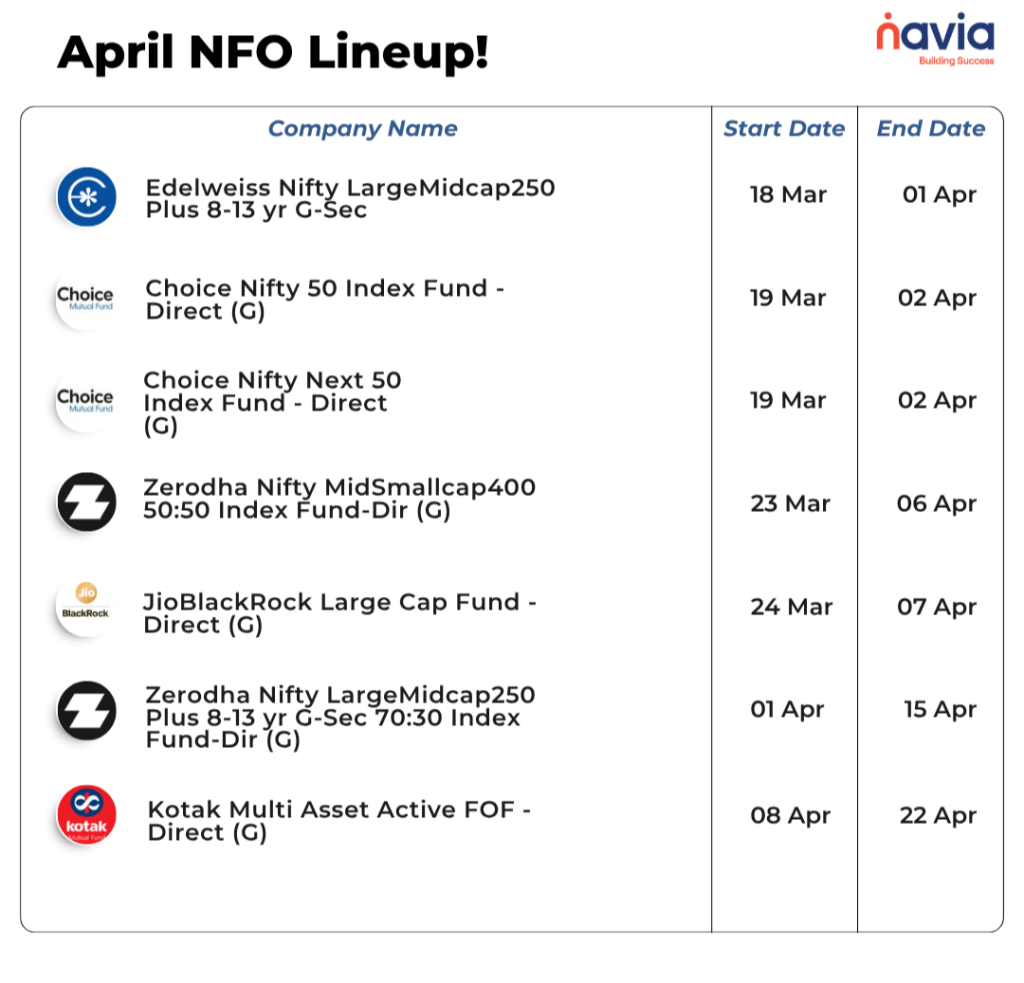
Top Reads From March!
Explore our March selection of essential reads, featuring deep-dive analysis on market corrections, sector-specific performance benchmarks, and the critical psychology behind navigating a volatile landscape!
🔸 Understanding Pharmabees ETF: An Overview of Healthcare Sector Exposure
🔸 Market Volatility: Understanding Market Movements During Periods of Uncertainty
🔸 Understanding Recent Developments in India’s IPO Market in 2026
🔸 Introduction to Trend Following in Commodities
🔸 Exploring SME Sectors: Meaning, Scope, and Economic Contribution
🔸 Why is Silver More Volatile Than Gold? Key Reasons Explained
🔸 Beyond the Ticker: A Comprehensive Guide to Understanding Stock Mergers
Interactive Zone!
Test your knowledge with our Markets Quiz! React to the options and see how your answer stacks up against others.
Ready to take a guess?

Do You Find This Interesting?
We’d Love to Hear from you-

DISCLAIMER: Investment in securities market are subject to market risks, read all the related documents carefully before investing. The securities quoted are exemplary and are not recommendatory. Full disclaimer: https://bit.ly/naviadisclaimer.