


Dow Theory: Definition, Principles, and Its Use in Technical Analysis

The Dow Theory is one of the foundational concepts in market analysis. It is used to study price movements through market trends, trend confirmation, and volume behaviour. In simple terms, it explains the concept of Dow Theory and its relevance in technical analysis.
This topic is commonly referenced by market participants who want a clear framework for identifying the primary trend, corrections, and understanding when a move may be continuing or reversing.
💡 Quick Answer
Dow Theory is a foundational framework for reading market trends, built on Charles Dow’s observations. Its six principles hold that the market discounts everything, that trends come in three types (primary, secondary and minor) and three phases, that indexes must confirm each other, that volume should confirm the trend, and that a trend continues until clear reversal signals appear.
What is Dow Theory?
The dow theory definition is a technical analysis framework developed from Charles Dow’s market observations. It says that market prices move in trends and that these trends can be analysed to understand market behaviour over time.
If you want to explain Dow Theory simply, it is the idea that the stock market movements may show identifiable patterns. Instead, it may exhibit trend patterns over time that can be observed through price action and confirmation across market averages.
Principles of Dow Theory
The dow theory principles are usually explained through six core ideas. First, the theory suggests markets reflect available information, meaning the theory suggests that available information is reflected in market prices. Second, there are three kinds of trends: primary, secondary, and minor.
The third principle says primary trends unfold in three phases. The fourth says indexes must confirm each other. The fifth says volume should support the trend. The sixth says a trend may continue until indications of reversal appear.
Dow Theory in Technical Analysis
The dow theory of technical analysis is used to study market direction and used to study market direction and assess trend characteristics. In practice, traders look at the overall market trend first, then watch for secondary reactions, and finally check whether the main trend resumes with volume support. It pairs well with tools like price channels that map the same trend structure.
In dow theory in technical analysis, confirmation is considered important. If one market average rises but another fails to follow, the trend may be uncertain.

Dow Theory in Stock Market
In the dow theory in stock market context, the focus is on whether the broader market is in a bullish or bearish phase. This is why Dow Theory is often linked to major indices and their movement over time.
It is also helpful for understanding market sentiment. When prices move higher with strong volume and index confirmation, the trend may indicate continued trend participation. When the opposite happens, it may indicate potential changes in trend direction.
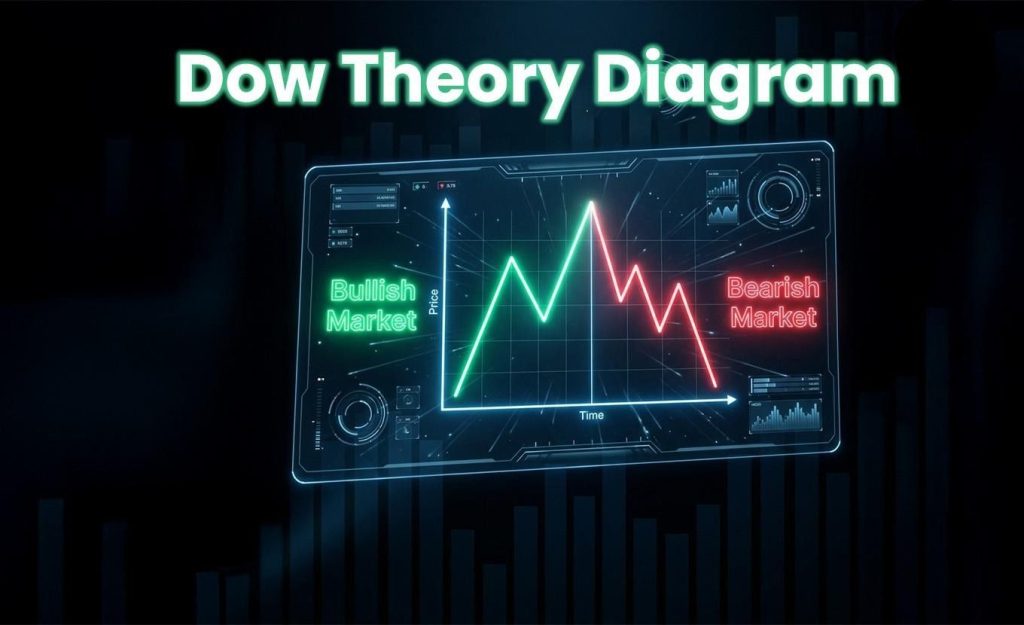
What is Dow Theory Diagram?
A dow theory diagram usually shows three market trend types: the primary trend, the secondary trend, and the minor trend. The primary trend is the big move, the secondary trend is the correction, and the minor trend is the short-term fluctuation within the move.
Why It Still Matters?
Dow Theory remains relevant because it provides a structured framework to read about market behavior. Even with modern tools like the simple moving average indicator, the basic idea that trends matter, and confirmation is important continues to be used in technical analysis.
For content aimed at readers and search traffic, the topic works well because it answers common queries like what is Dow Theory, dow theory definition, and dow theory in technical analysis while remaining practical and educational.
Conclusion
Dow Theory is a foundational concept in market analysis that explains how trends form, continue, and reverse. It continues to be referenced because it connects price action, volume, and trend confirmation in a simple framework.
For anyone searching for Dow Theory, Dow Theory Principles, or Dow Theory principles, the main takeaway is that market behavior may follow identifiable pattern. It can often be studied through trend structure and confirmation, which makes Dow Theory a commonly referenced strating point in technical analysis.
Key Takeaways
- Dow Theory is a foundational framework for analysing market trends using price and volume.
- It rests on six principles, starting with the idea that the market discounts everything.
- Trends are classified as primary, secondary and minor; primary trends move through three phases.
- Index confirmation and supporting volume are central — averages should confirm each other.
- A trend is assumed to continue until clear reversal signals appear.
Did you find this article helpful?
Your feedback helps us write better content.

Frequently Asked Questions
What is Dow Theory?
Dow Theory is a technical analysis framework that studies market trends, volume, and index confirmation to understand price movement.
What are the Dow Theory principles?
The main principles are the market discounts everything, there are three trend types, primary trends have phases, indexes confirm each other, volume confirms the trend, and trends continue until reversal.
Is Dow Theory still relevant in the stock market?
Yes. It is still used as a basic framework for understanding trend behavior and market confirmation.
What is the meaning of Dow Theory in simple words?
It means markets move in trends, and those trends can be studied using price and volume patterns.
DISCLAIMER: Investment in securities market are subject to market risks, read all the related documents carefully before investing. The securities quoted are exemplary and are not recommendatory. Full disclaimer: https://bit.ly/naviadisclaimer.