

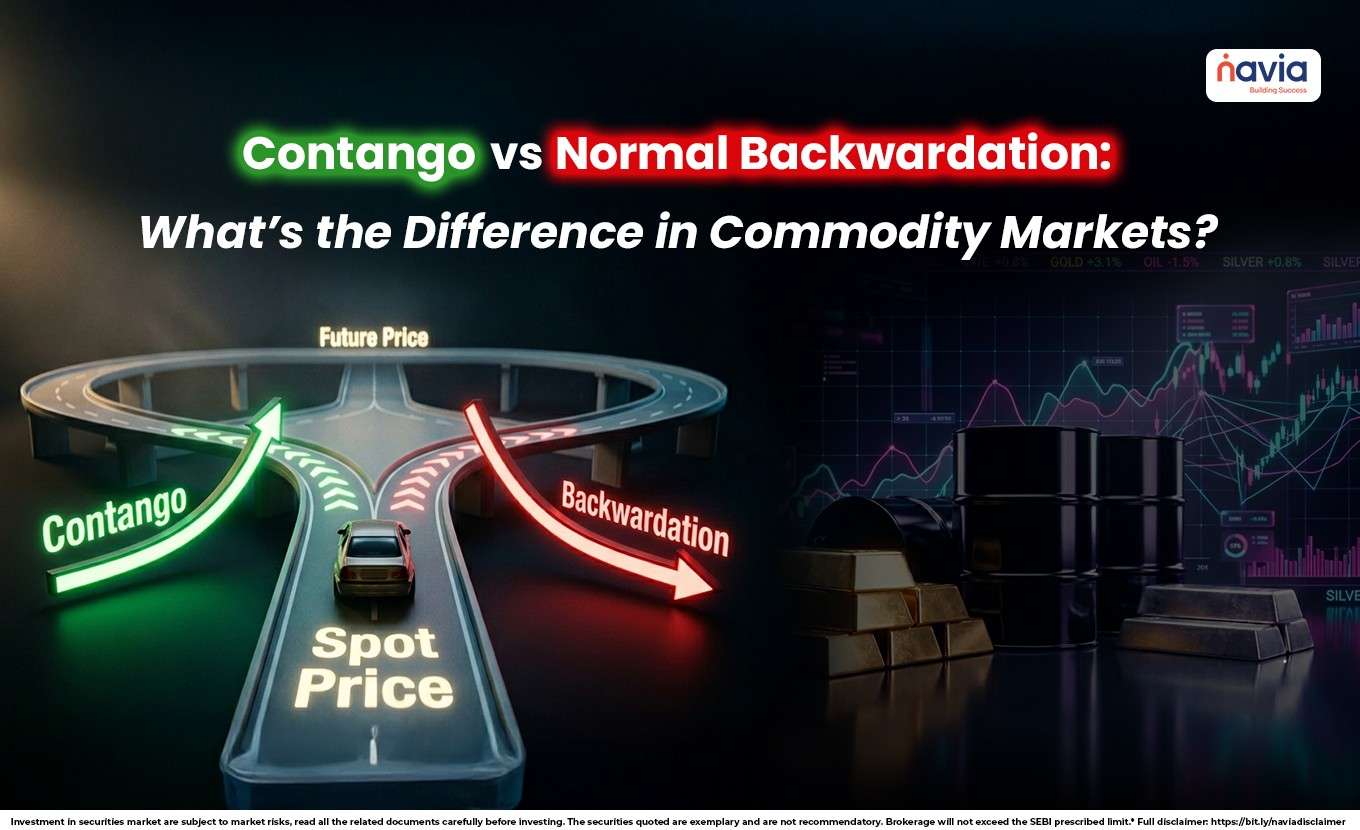
Contango vs Normal Backwardation: What’s the Difference in Commodity Markets?
- What is Backwardation and Contango?
- Understanding Contango: Paying for the Future
- Understanding Backwardation: The Value of "Right Now"
- Contango vs Normal Backwardation: Key Differences
- Impact on Investors and "Roll Yield"
- Conclusion
- Frequently Asked Questions
Nowadays the global commodity markets are experiencing supply chain changes, so the market participants often track from crude oil to agricultural products and understand the relationship between current spot prices and future delivery prices are essential. If you’ve ever looked at a futures curve and wondered why prices for delivery six months from now are higher or lower than today’s price, you are looking at the phenomena of contango and backwardation.
This blog provides a deep dive into contango and backwardation explained, providing an overview of the complexities of the futures market with confidence.
What is Backwardation and Contango?
Backwardation and Contango terms describe the shape of the futures curves; the line that plots the prices of futures contracts across different expiration dates.
| Contango | It occurs when the futures price of a commodity is higher than the current spot price. In this scenario, the curve is sloping upward. |
| Backwardation | It occurs when the futures price is lower than the current spot price. In this scenario, the curve is downward sloping. |
Understanding contango and backwardation meaning is important because these may reflect market expectations regarding supply, demand and the costs associated with holding a physical commodity.
Understanding Contango: Paying for the Future
Contango is commonly observed in certain market conditions. When you see contango and backwardation, contango is often linked to the “cost of carry.” It includes storage costs, insurance, and the interest foregone on the money tied up in the physical asset.
For example, if the spot price of gold is ₹75,000 today, but the contract for delivery in six months is ₹76,500, the market is in contango. The extra ₹1,500 accounts for the expense of keeping that gold safe in a vault until the delivery date.
Why it happens? There are some reasons behind the state;
🔸 Ample Supply: When there are plenty of commodities available right now, spot prices stay low.
🔸 Storage Costs: Commodities like oil or wheat require physical space, which costs money.
🔸 Future Demand Expectations: If there are expectations of increased demand or a shortage later in 2026, future prices may rise.
Understanding Backwardation: The Value of “Right Now”
Backwardation is the opposite of contango. In this state, the spot price will be higher than the futures price. And this may indicate tighter supply conditions.
For example, if the spot price of copper is ₹850.00 per kilogram today, but the price for delivery in one year is ₹785.00, the market is in backwardation. This may indicate that the commodity is valued higher in the present.
Why it happens? There are some reasons behind the state;
🔸 Immediate Shortages: If a mine closure or a geopolitical event; like the 2026 tensions in the Strait of Hormuz, restrict immediate supply, spot prices may increase.
🔸 Convenience Yield: This is the non-monetary benefit of holding the physical commodity. If a manufacturer needs oil today to keep a factory running, they will pay a premium for immediate delivery rather than waiting for a future contract.
Contango vs Normal Backwardation: Key Differences
| Feature | Contango | Backwardation |
|---|---|---|
| Price Slope | Upward-sloping (Futures > Spot) | Downward-sloping (Spot > Futures) |
| Market Signal | Over-supply or high storage costs | Under-supply or immediate demand |
| Roll Yield | Negative (May result in negative roll yield rolling contracts) | Positive (May result in positive roll yield rolling contracts) |
| Consumer Benefit | Benefit from buying now for later | Benefit from holding physical stock |
Impact on Investors and “Roll Yield”
Some investors who are using ETFs to track commodities, contango and backwardation translate directly into gains or losses through roll yield.
The negative roll yield or contango impacts, if an ETF needs to maintain exposure to oil, it must sell the expiring cheap contract and buy the expensive next month’s contract. This constant buying higher-priced contracts and selling lower-priced contracts may impacts returns.
The negative roll yield or backwardation impacts, in a backwardation market, the ETF sells the expiring expensive contract and buys the cheaper next-month contract, which may support returns.
Conclusion
If you are planning to trade on energy and metals, the relationship between contango vs normal backwardation provides insights into global economic conditions. In a volatile environment, these curves will shift rapidly, so understanding what is backwardation and contango can support informed analysis of market conditions.
will help to interpret market signals, manage the risks of roll yield and position your portfolio for stability and growth.
Do You Find This Interesting?
We’d Love to Hear from you-

Frequently Asked Questions
Is backwardation bullish or bearish?
Backwardation is often associated with higher current demand conditions within commodity markets. This perspective stems from the fact that current spot prices exceed established future prices, signaling strong demand conditions and potential supply constraints.
What’s the difference between contango and backwardation?
A commodity is in contango when each following month on the futures curve is priced higher than the previous ones. Conversely, when subsequent months are priced lower than preceding months, the situation is referred to as backwardation.
Is backwardation good or bad?
Backwardation is not inherently negative: While some perceive it as a sign of a struggling market, it can actually signify robust demand for immediate delivery.
Why is contango bearish?
Alternatively, a contango may be associated with certain market conditions such as higher supply levels, particularly if a substantial gap exists between spot and futures prices. This scenario may indicate an oversupplied market, explaining why spot prices remain notably lower than those for future delivery.
DISCLAIMER: Investment in securities market are subject to market risks, read all the related documents carefully before investing. The securities quoted are exemplary and are not recommendatory. Full disclaimer: https://bit.ly/naviadisclaimer.