

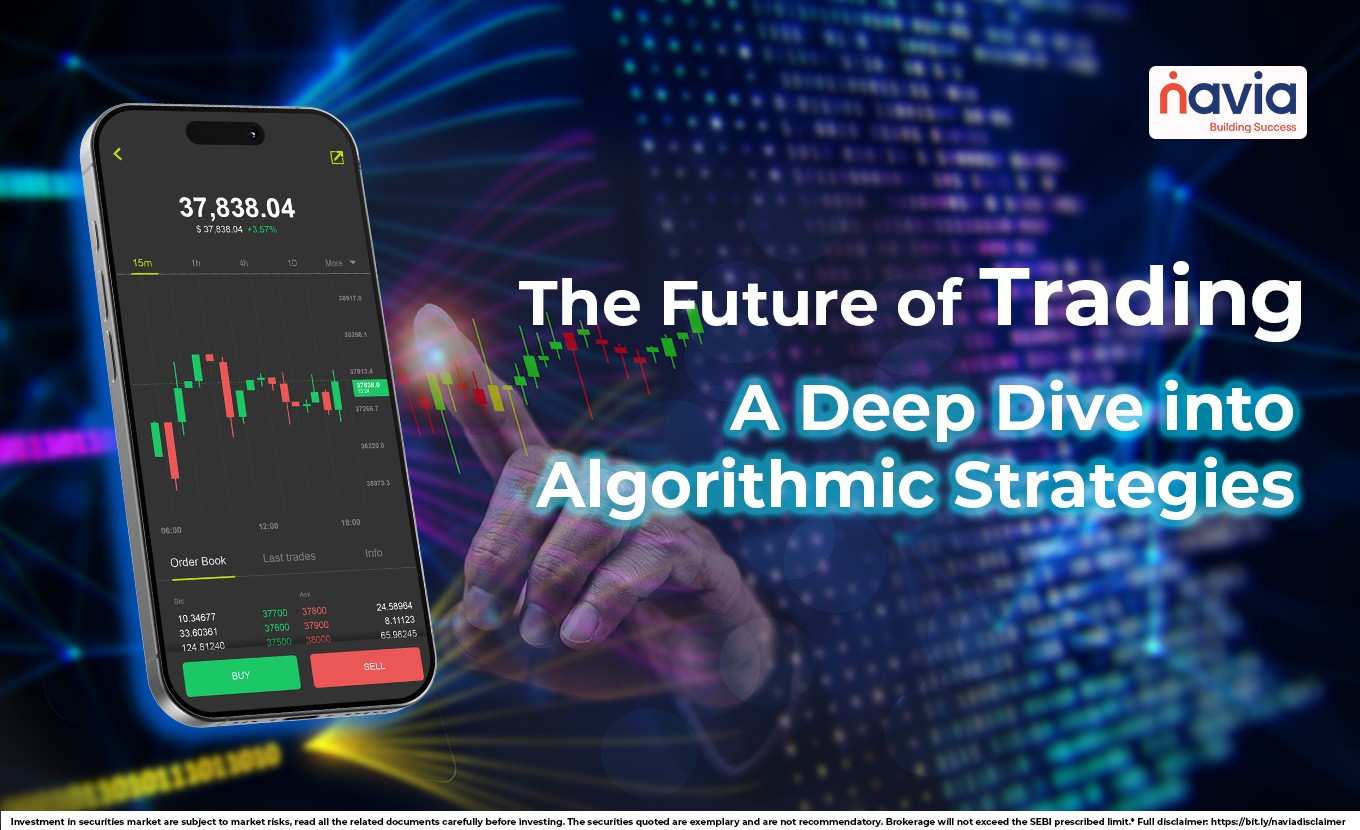
The Future of Trading: A Deep Dive into Algorithmic Strategies
- What are Algorithmic Strategies?
- Why Use Algorithmic Trading Strategies?
- Best Algorithmic Trading Strategies
- How Algorithmic Methods are Structured?
- Conclusion
- Frequently Asked Questions
In the rapidly evolving landscape of modern finance, the days of floor traders shouting orders are long gone. Now the heartbeat of the stock market is digital, driven by lightning-fast execution and complex mathematical models. If you’ve wondered about how institutional investors manage to execute thousands of trades in a split second with pinpoint accuracy, the answer lies in algorithmic strategies.
The market becomes more sophisticated; retail traders are shifting toward algo trading strategies to remove emotional bias and improve execution speed. This blog will help you understand the world of automated trading.
What are Algorithmic Strategies?
An algorithmic strategy is a set of defined rules and instructions programmed into a computer to execute trades automatically. These instructions are based on timing, price, quantity, or any mathematical model. The primary goal of using algorithmic techniques is to execute orders at speeds and frequencies that are impossible for a human trader to achieve.
If you use algorithmic strategy, the computer will monitor the market data, identify the opportunities, and place the trade without manual intervention. The entire process ensures that the “human element” like fear, greed and hesitation is entirely removed from the execution phase.
Why Use Algorithmic Trading Strategies?
The shift to algorithmic trading strategies isn’t just a trend; it’s a necessity for those looking to complete in high-frequency environments. Here you can see some core benefits of using algorithmic trading:
➣ Speed: Algorithms can react to market changes in milliseconds.
➣ Accuracy: Automated orders are placed precisely at the desired price points, reducing the risk of manual entry errors.
➣ Backtesting: Before risking real capital, you can test your algorithmic methods against historical data to see how they would have performed in the past.
➣ Consistency: An algorithm doesn’t get tired or stressed; it follows the plan 24/7 without deviation.
Best Algorithmic Trading Strategies
There is no one-size-fits-all approach when it comes to automation; the best algorithmic trading strategies are those that align with your risk appetite and also the market outlook. Here you can see the most common strategies that are used in the industry (for educational purpose only).
| Strategies | Definition |
|---|---|
| Trend Following Strategies | This is the most popular algorithmic strategy used by both beginners and experienced traders. It relies on technical indicators like moving averages, channel breakouts, and price level movements. The algorithm is programmed to buy when a trend is identified and sell when the trend reverses. Since it doesn’t involve predicting the future, only following current momentum. |
| Arbitrage Opportunities | It is considered the classic algorithmic methods where a computer identifies price discrepancies of the same asset across different exchanges. |
| Mean Reversion (Pairs Trading) | The logic behind mean reversion is that asset prices eventually return to their historical average. Algorithmic strategies based on this concept identify stocks that have deviated significantly from their “mean” price. The system then places a trade expecting the price to move back toward the average. |
| Scalping and High-Frequency Trading (HFT) | These algorithmic techniques involve making a large number of trades to capture tiny price movements. HFT systems use complex math to stay ahead of the market, often holding positions for only seconds or even microseconds. |
| Mathematical Model-Based Strategies | Some of the best algorithmic trading strategies involve neutral trading. This allows traders to bet on the volatility of an asset rather than its direction. These are often used in options trading through complex delta-neutral or “black-box” models. |
How Algorithmic Methods are Structured?
To build a successful algorithmic strategy, traders typically follow a structures path of development:
🔸 Hypothesis Generation: Identifying a market anomaly or a repeatable pattern.
🔸 Coding the Logic: Translating the strategy into a programming language like Python or C++.
🔸 Backtesting: Running the algorithmic techniques through years of historical market data to identify the win rate and maximum drawdown.
🔸 Optimization: Refining the parameters to ensure the strategy is robust enough for live market conditions.
🔸 Execution: Deploying the algo onto a trading platform that supports API integration.
Conclusion
Mastering algorithmic strategies is more than just knowing code; it’s about understanding market dynamics and translating that knowledge into a disciplined and automated system. Whether you are using simple trend-following algorithmic trading strategies or complex high-frequency algorithmic methods, the goal remains the same: to trade with efficiency, speed, and objectivity.
To provide sophisticated API access to retail traders, the world of algorithmic strategy is no longer reserved for Wall Street elites. It is now accessible to anyone with a strategy and the drive to automate their financial future.
Do You Find This Interesting?
We’d Love to Hear from you-

Frequently Asked Questions
What are algorithmic strategies?
Algorithmic trading strategies function as automated frameworks that utilize mathematical models, statistical analysis, and complex programming logic to execute trades based on predetermined rules. By shifting the decision-making process from humans to sophisticated software, these strategies ensure high-speed execution and precision while systematically eliminating the emotional biases and inconsistencies associated with manual intervention.
What are the examples of algorithmic trading strategies?
Algorithmic trading utilizes diverse methodologies such as systematic trading, market making, and inter-market spreading to streamline execution. By leveraging automated algorithmic techniques like arbitrage and trend-following speculation, traders can exploit price discrepancies and market momentum with a level of speed and precision that manual trading cannot achieve.
Is algo trading 100% profitable?
While algorithmic trading eliminates emotional bias and offers superior execution speed, it is not a guaranteed path to profit; rather, its success depends on a robust strategy, rigorous backtesting, and strict risk management.
DISCLAIMER: Investments in the securities market are subject to market risks, read all the related documents carefully before investing. The securities quoted are exemplary and are not recommendatory. Brokerage will not exceed the SEBI prescribed limit.